



KCBD (Texas): Jane King Morning Tech Report from NYSE
Jane King reports on new survey data from Mark43’s 2026 Public Safety Trends Report.


Jane King reports on new survey data from Mark43’s 2026 Public Safety Trends Report.

NEW YORK – Dec. 9, 2025 – Mark43, the leading cloud-native public safety operations platform, today announced the results of a national survey of U.S. first responders and law enforcement, along with complementary perspectives gathered from policing professionals across the United Kingdom. The new research reveals overwhelming support for AI with human oversight; rising stress around internal threats; a clear opportunity to leverage data and modern technology to drive efficiency, improve work experiences, and secure critical grant funding; and the importance of consolidation of the tech stack to enable interoperability, data sharing, and faster response. The new Mark43 2026 Public Safety Trends Report released today documents the complete results and charts the best path forward for leading agencies.
“Public safety is at a pivotal moment. Agencies are navigating real challenges—from staffing shortages to outdated systems that limit efficiency, collaboration, and morale,” said Bob Hughes, CEO of Mark43. “Modernization is about empowering people, connecting operations, and strengthening communities. Innovations like cloud-native, AI-enabled platforms, strong cybersecurity, and user-centered design are helping agencies build a stronger foundation for the next generation of public safety.”
Here are five public safety trends the Mark43 2026 Public Safety Trends Report has uncovered.
Trend 1: AI in public safety is a reality, and forward-looking agencies need to ensure that it remains intentional, human-centered.
Trend 2: Cybersecurity must be a defining factor when evaluating and modernizing technology.
Trend 3: Accurate, timely, standardized data unlocks operational efficiency, strategic decision-making.
Trend 4: Modern technology can be an enabler to strengthen job satisfaction and maximize impact.
Trend 5: A consolidated tech stack improves interoperability, data sharing, and response.
Mark43’s 2026 Public Safety Trends Report includes complete survey results and trends shaping the future of public safety in 2026 and beyond. To learn more, download the full report here.
Survey methodology
Propeller Survey: An online survey of 487 public service professionals, including EMTs, firefighters, police officers, and telecommunicators, was fielded by Propeller Insights from Oct. 2 to Oct. 21, 2025. Participants were recruited from a verified online research panel and targeted using demographic and occupation-based criteria. Eligibility was validated through screening questions in which respondents self-identified their current role within one of the four public service categories. The margin of sampling error for the total sample is ±5 percentage points at the 95% confidence level.
UK Survey: Data was collected through a survey administered to attendees of national UK policing events held during September and October 2025. A total of 49 individuals participated in the survey. Respondents represented a range of professional roles within UK policing, including constables, inspectors, respondents at the rank of superintendent or above, and civilian staff or other personnel. The survey aimed to capture insights and perceptions across both sworn officers and civilian employees involved in policing operations.
About Mark43
Mark43 brings modern technology to enhance public safety, making state, local, and federal agencies faster, smarter, and their communities safer. Its integrated Records Management System, Computer-Aided Dispatch, and Data Analytics form the backbone of a unified, real-time public safety operating platform to streamline workflows, improve response times, and foster collaboration. Trusted by over 300 agencies, Mark43 increases effectiveness and efficiency amid rising demands and limited resources. By supporting first responders with innovative tools, AI technology, and a strong cybersecurity foundation, Mark43 equips public safety agencies to address the challenges of today and tomorrow. For more information, visit www.mark43.com.
Media Contact
Devora Kaye

As cybersecurity talent shortages persist, many organizations are bolstering their defenses with unified identity strategies and managed detection and response services. These external partnerships can help ease staffing gaps and accelerate threat detection, but they also create a risk of overreliance when internal teams lose visibility or control. Strengthening long-term resilience requires leaders to rethink how much of their security strategy can be delegated and how much must remain inside the organization.
Sustainable cybersecurity depends on more than tools or vendor expertise—it calls for stronger internal muscle, clearer accountability and intentional investment in people, processes and architecture. Below, members of Forbes Technology Council highlight strategic shifts that can help organizations build security from within and avoid placing mission-critical defenses entirely in the hands of outside partners.
As a SASE vendor, we advise businesses to adopt a zero-trust framework that integrates identity, network and cloud security into a unified architecture. This reduces vendor dependency by consolidating controls, automating threat response and enabling in-house teams to manage security holistically. – Etay Maor, Cato Networks
Leaders must champion a companywide “security-first” culture. This strategic shift moves accountability from a siloed IT team or external vendor to every employee. It involves embedding security awareness and responsibility into all roles and processes, from product development (shifting security left) to finance and HR. This approach makes security a shared business enabler. – Priyadarshni Natarajan, Walmart
Organizations can outsource security activity, but they cannot outsource full context or liability. Third-party partners can execute on your defense strategy, but the organization has to maintain ownership of the “what,” “why” and “how” of risk. Organizations need to maintain ownership of their core decision-making while carefully selecting and curating partners to help them execute. – John Linkous, Phalanx Security
Stop treating cybersecurity as a tool to be bought. Instead, treat it as a muscle you build. Leaders should embed cyber thinking into every team, not just IT. Invest in internal threat simulations, cross-train analysts in business teams, and reward secure decision-making. This builds resilience that no external vendor alone can provide. – Rahul Wankhede, Humana
Business leaders should prioritize building in-house cybersecurity capabilities by upskilling teams, implementing zero-trust architectures and embedding security into every business process. This approach reduces dependency on external vendors while creating resilient, proactive defenses aligned with the organization’s unique risk profile. – Balasubramani Murugesan, Digit7
Use your own ground-truth data (IdP, EDR, cloud, CI/CD) to score exploitability and impact per asset and user in near-real time, then drive detections, access and response off those scores. Vendors (IdP, EDR, MDR) become interchangeable sensors and actuators that feed and follow your model. The result is vendor-portable decisions, higher signal-to-noise, and faster, auditable risk reduction. – Michael Roytman, Empirical Security
Many organizations are missing the continuous data activity monitoring element of their security strategy. AI is becoming the new insider threat. However, an ongoing monitoring solution can detect anomalies—whether malicious or simple mistakes—quickly and protect organizations, no matter who is accessing their data, including inside and outside users or AI agents. – Todd Moore, Thales Group
Business leaders should work with their department heads to identify the repetitive tasks that could be automated to increase efficiency. Automation isn’t about replacing developers or security analysts. Instead, it’s about freeing up time from mundane, routine work to allocate to strategic, higher-value thinking in the realms of cybersecurity, finance, marketing and R&D. – Matthew Polega, Mark43
Shift from perimeter defense to making data itself unusable if breached. Encryption alone won’t cut it—quantum computing will easily crack today’s encryption. Fragment and scatter data across multiple locations instead. Even if your systems are breached, attackers get meaningless fragments with no way to reconstruct anything. It’s architectural resilience that doesn’t depend on vendors staying one step ahead. – Greg Salvato, TouchPoint One
Shift from outsourced defense to shared accountability. Build internal “cyber fusion” teams where security, IT and business units co-own risk decisions. External MDRs are force multipliers, but resilience comes when every employee becomes part of the detection fabric. – Sai Krishna Manohar Cheemakurthi, U.S. Bank
Leaders should shift from outsourcing security to orchestrating trust. Instead of buying more tools or services, build a culture where every team treats identity and detection as shared responsibilities. When employees become the first layer of defense and technology becomes the enabler, security transforms from a vendor-delivered service into an organizationwide instinct. – Nishant Sonkar, Cisco
Business leaders should shift from outsourcing detection to building internal context and control. External vendors can monitor threats, but only the organization understands its unique people, processes and risk signals. Investing in AI that learns internal communication and behavior patterns strengthens defenses from within, turning identity, not infrastructure, into the new security perimeter. – Mike Britton, Abnormal AI
It’s a mindset shift: Stop viewing compliance mandates as painful checklists or tasks to simply outsource. Instead, see them as strategic levers to fund and advance your internal zero-trust architecture. The technical controls in frameworks like CMMC are the very building blocks of ZTA. Architecting this way builds true organizational resilience and strengthens your overall security posture. – Neil Lampton, TIAG
Adopt a “breached-by-default” design. Assume every endpoint and vendor token is compromised and implement least privilege with short TTLs, identity rate limits, per-app kill-switches and blast-radius SLOs (contained in under 15 minutes). Build a tiny resilience engineering team and use MDR to audit, not defend. – Margarita Simonova, ILoveMyQA
Modern organizations leveraging cloud platforms such as AWS, GCP or Azure should be aware of the foundational security capabilities that are already integrated into these environments. The strategic shift that leaders should make is to fully utilize and configure these native security features before engaging additional third-party tools or vendors. – Metin Kortak, Rhymetec
Business leaders should create cyber resilience hubs that unite internal expertise, automation and shared intelligence frameworks. Training teams in AI-driven detection, threat simulation and response builds lasting in-house capabilities. This reduces vendor dependency while fostering a culture of proactive defense and continuous improvement. – Nicola Sfondrini, PWC
It is critical for enterprises to identify vulnerabilities during system design rather than treating security as an afterthought. While relying on vendors can be beneficial for their research capabilities, 100% dependence is not recommended. I suggest investing in building internal threat modeling expertise to ensure better alignment with your enterprise-specific architecture. – Vasanth Mudavatu, Dell Technologies
Put money into making your systems more resilient against cyberattacks, not just protecting them. Give your internal teams the tools they need to do threat modeling, automate response playbooks and build zero-trust principles into the design of your products. External MDRs can help with capacity, but the best way to stay safe is to build up your own intelligence and keep learning. – Jyoti Shah, ADP
Replace outsourced alerting with in-house narrative. Establish a cyber storytelling council—security engineers, data analysts and HR—to translate incidents into business lessons within hours. Each story updates policy, training and design patterns. Turning breaches into cultural code creates adaptive immunity that vendors can’t replicate, making security a living discipline rather than a rented service. – Jagadish Gokavarapu, Wissen Infotech
Original Story: https://www.forbes.com/councils/forbestechcouncil/2025/12/08/how-companies-can-improve-security-without-more-vendor-support/
Manchester, UK – 8 December 2025 – Mark43, the leading public safety operations platform, today announced it has achieved both Cyber Essentials and Cyber Essentials Plus certifications in the United Kingdom. These UK government-backed accreditations demonstrate Mark43’s commitment to upholding the highest standards of cybersecurity and protecting sensitive policing data across the UK.
Developed by the National Cyber Security Centre (NCSC), the Cyber Essentials framework defines critical security controls designed to defend against the most common and disruptive cyber threats. Achieving Cyber Essentials Plus—the highest level of certification—required an independent, in-depth technical audit validating Mark43 UK’s security controls are well-designed and also proven effective in real-world environments.
This milestone reflects Mark43 UK’s proactive, transparent, and measurable approach to cybersecurity. The company’s systems, networks, and processes are built for resiliency, compliant with the UK General Data Protection Regulation (GDPR), and aligned with the National Cyber Security Centre’s (NCSC) Cloud Security Principles.
“Achieving Cyber Essentials and Cyber Essentials Plus confirms that our safeguards meet the national standard and underscores our commitment to being a strong, long-term partner to UK forces,” said Bob Hughes, CEO of Mark43. “These certifications reflect the rigor with which we approach our responsibilities and our focus on supporting operational policing. We are committed to enabling forces with the most secure, best-in-class technology as they work to keep their communities safe.”
Lawrence F. Zorio III, CISO & CIO of Mark43 added, “Cybersecurity and trust are foundational to our mission. Earning both Cyber Essentials and Cyber Essentials Plus reinforces our ongoing commitment to delivering secure, reliable, and resilient technology to police forces.”
Alongside Mark43’s recent ISO 27001 achievement, these certifications reflect a security programme that is both proven and internationally recognised. UK forces can be confident that their data is protected by a platform designed to meet the most stringent policing and information security requirements.
Learn more about Mark43’s security and compliance programme.
About Mark43
Mark43 brings modern technology to public safety, helping policing and emergency services work faster, smarter, and keep communities safer. Its integrated Records Management, Command & Control, and Data Analytics solutions form a unified, real-time platform that streamlines workflows and improves response times. Trusted by more than 300 agencies across the UK and U.S., Mark43’s cloud-native platform equips public safety professionals with innovative tools, AI capabilities, and a robust cybersecurity foundation to help agencies meet the challenges of today and tomorrow. Visit www.mark43.com
Media Contact
Devora Kaye
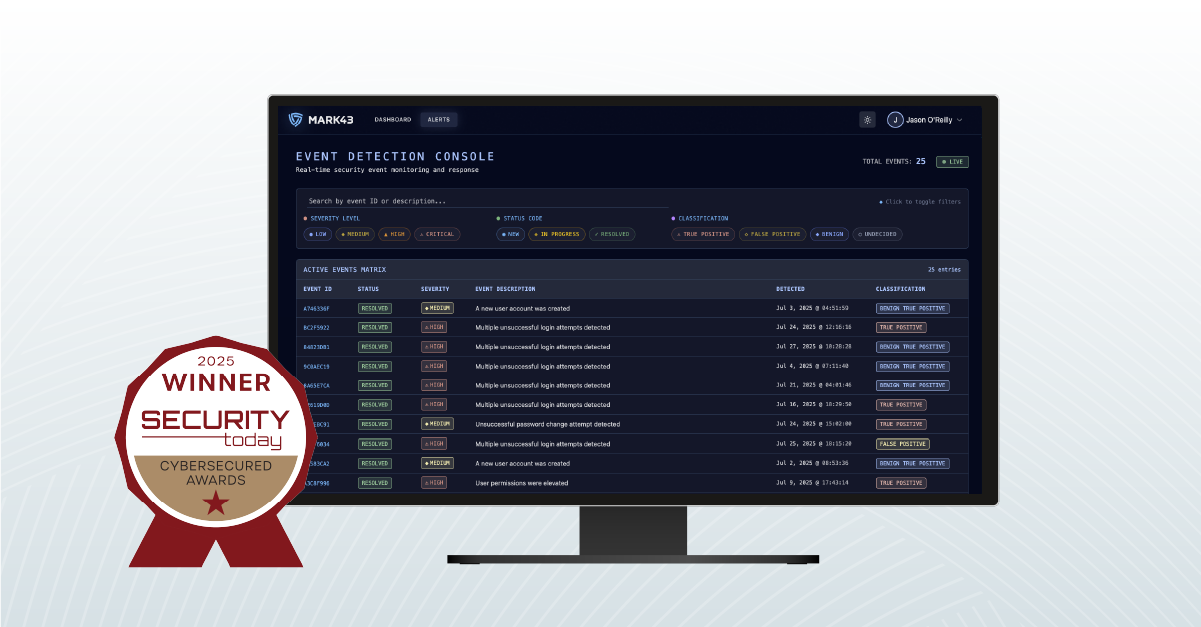
NEW YORK – Dec. 5, 2025 – Mark43, the leading cloud-native public safety operations platform, today announced that its Mark43 Fortified solution has earned Security Today’s CyberSecured Award in the Automated Security Controls Assessment (ASCA) category. A dedicated security and compliance monitoring solution purpose-built for public safety agencies, Mark43 Fortified transforms compliance from a checklist into a continuous, automated defense system for the mission-critical computer-aided dispatch (CAD) and records management system (RMS) environments that 9-1-1 dispatchers, police officers, and first responders rely on every day.
Mark43 was one of 16 companies honored by the program, which Security Today’s Editor-in-Chief and Publisher Ralph C. Jensen said recognizes companies that exemplify “ingenuity and leadership” and “set the standard for what the future of security innovation looks like.”
As cyberattacks on public safety grow more frequent and sophisticated, Mark43 Fortified empowers agencies with real-time visibility, proactive monitoring, automated control assessments, guided workflows, and a single source of truth that enables agencies to stay secure and compliant against external and internal threats.
Key Mark43 Fortified capabilities include:
“We appreciate Security Today recognizing the impact Mark43 Fortified is already having for public safety agencies,” said Lawrence F. Zorio III, CISO and CIO of Mark43. “Agencies are facing increasingly sophisticated cyber threats, and 80% of cyberattacks leverage identity-based techniques. Yet, many still lack real-time insight and control over what their users have access to and are doing in their mission-critical systems. Mark43 Fortified changes that by giving them continuous visibility into their CAD and RMS environments, automated checks on security controls, and guided directives to quickly resolve issues. By bringing monitoring, access management, and compliance validation into one place, Mark43 Fortified helps agencies detect and address risks before they disrupt critical operations.”
Recently ISO 27001 certified, Mark43 is the only provider offering both a cloud-native CAD and RMS platform that has achieved FedRAMP and GovRAMP High authorization and has signed the CISA Secure by Design pledge, underscoring its commitment to best-in-class cybersecurity controls and continuous improvement. Mark43 Fortified builds on that foundation, giving public safety agencies continuous assurance that their systems, data, and users remain protected, empowering them to stay secure, compliant, and ready.
“Public safety agencies shouldn’t face the burden of security and compliance alone,” said Bob Hughes, CEO of Mark43. “With more than 1,000 cyberattacks targeting public safety agencies in the past two years and over 700 new Criminal Justice Information Services requirements introduced last year, Mark43 Fortified takes on that challenge. By delivering proactive monitoring, automation, and AI, agencies can stay ahead of threats and focus on protecting their communities. We appreciate Security Today recognizing Fortified for the rigor and value it brings to public safety agencies who deserve secure, reliable systems they can count on every day.”
Additional Resources
About Mark43
Mark43 brings modern technology to enhance public safety, making state, local and federal agencies faster, smarter, and their communities safer. Its integrated Records Management System, Computer-Aided Dispatch, and Data Analytics form the backbone of a unified, real-time public safety operating platform to streamline workflows, improve response times, and foster collaboration. Trusted by over 300 agencies, Mark43 increases effectiveness and efficiency amid rising demands and limited resources. By supporting first responders with innovative tools, AI technology, and a strong cybersecurity foundation, Mark43 equips public safety agencies to address the challenges of today and tomorrow. For more information, visit www.mark43.com.
Media Contact
Devora Kaye
press@mark43.com

By: Lanna Deamer
Greater Manchester Police has appointed Mark43 to deliver its new Records Management System (RMS), following a procurement process. The new cloud-native system will replace GMP’s current platform and is expected to ease administrative workloads and support officers and staff with quicker access to information.
Mark43 will work with GMP leadership and frontline teams during implementation to ensure the system reflects operational needs and delivers long-term benefits for the public.
The Mark43 RMS is already used by several police forces across the UK and US. It aims to streamline workflows, improve data resilience and scalability and make critical information available when and where it’s needed.
“We are honoured to have been selected by Greater Manchester Police to deliver this mission-critical system. This milestone reflects the UK’s commitment to cloud-native tools to support police, and we are excited to move forward in partnership with GMP to help officers and staff spend more time in the community, where they are needed most.”Bob Hughes, CEO of Mark43.
Original Story: https://emergencyservicestimes.com/2025/12/04/force-selects-mark43-to-roll-out-new-records-management-system/

NEW YORK – December 3, 2025 – Mark43, the leading cloud-native public safety operations platform, today announced the launch of Surprise Police Department (SPD) on the Mark43 Public Safety Platform, marking a major milestone as the first agency in Arizona to deploy Mark43 Computer-Aided Dispatch (CAD). The deployment also includes Mark43 Records Management System (RMS), OnScene, First Responder, and the reactivation of Arizona’s statewide data exchange (DEx).
“We’re proud to announce the successful launch of the Mark43 platform with the Surprise Police Department, the first agency in Arizona to deploy our end-to-end solution including records, dispatch, and analytics,” said Bob Hughes, CEO of Mark43. “SPD’s leadership is setting a new benchmark for innovation and efficiency by streamlining operations, saving time, and getting officers back into the community faster, while accelerating a broader technology modernization movement to support a safer Arizona.”
For SPD’s officers, this launch marks a new era of connected, data-driven policing. Transitioning from a legacy on-premises system to Mark43’s secure, cloud-native platform now brings dispatch, records, evidence, and mobile operations together under one modern system. The result is greater reliability, stronger data security, and real-time access for officers in the field.
“The Mark43 system is much more up to speed with the times,” said Chief Evan Becher. “The technology is more advanced, and the interface is a lot more user-friendly.”
The move has also redefined how SPD’s IT team supports its operations.
“With our previous setup, our staff was constantly tied up managing servers, troubleshooting, and performing manual upgrades,” Chief Becher explained. “Now, that burden is gone, and our team can focus on supporting officers and advancing public safety technology.” He added, “IT departments can be hesitant to relinquish oversight of data, but it’s been great to entrust that to Mark43. Our users now have seamless access to our data in one place. It’s transformational.”
With Mark43 CAD, dispatchers and officers can work from a single, intuitive system that improves workflows and response times, and gives officers greater autonomy through real-time AVL mapping and self-dispatching. In addition, the integration between CAD and RMS creates a single source of truth across the department. “The intelligence behind the system is impressive. It’s a seamless transition from the CAD into RMS,” said Chief Becher. “I can look something up in CAD, and it redirects me right into RMS. The search function is really intuitive; I just plug in a few things and get a lot of helpful results or suggestions. The fuzzy searches have gotten great feedback, and that’s something we didn’t have before.”
Mark43 RMS improves data integrity and streamlines reporting by ensuring that every report is completed accurately before submission.
“When I look at Mark43, I see quality control built into the system. Reports can’t move forward until everything is complete, so by the time a report gets to a supervisor, prosecutor, or defense attorney, it’s already top notch,” said Chief Becher.
The built-in NIBRS compliance also ensures accurate, compliant data for both internal operations and community transparency.
“The system forces correct data entry for NIBRS, which means what we share with the public is more accurate. It’s a big step forward for data quality,” added PIO Richard Hernandez.
Mark43 RMS also improves data sharing and collaboration with city officials. Chief Becher shared, “When I get a call with questions from the mayor, I’m able to log in on my phone and access what I need immediately. Before, I had to wait for multiple people to collect the information and call me back. Now, it’s in the palm of my hand.”
SPD has also deployed Mark43’s mobile tools, including OnScene and First Responder, which extend the platform’s power to officers in the field. Officers can access and update calls, query records, upload evidence, and self-dispatch directly from their mobile devices.
“The biggest feedback from officers is that it doesn’t matter where they are, they have everything they need in the field. Before, if you wanted to check history, you’d have to go back to your vehicle or call dispatch. Now, officers are staying in the field and dispatching themselves to jobs, meaning they get there faster and are keeping lines of communication clearer,” said Chief Becher, adding that mobility has already enhanced situational awareness and operational coordination. “We’ve already had a few examples where the mapping in Mark43 has helped. During two large crash scenes, supervisors could see exactly where officers were – even when they were out of their cars – because they were logged into Mark43 on their phones. That let them direct investigators straight to witnesses and manage the scene more efficiently.”
Chief Becher credited the success of the deployment to the partnership between SPD’s dedicated IT team and Mark43.
“During implementation and training, we had about 10 officers become internal experts,” he said. “They helped train others, and Mark43 was right there with us throughout. The team was receptive, collaborative, and responsive. Even now, if someone brings up a small issue or suggestion, Mark43’s engineering team is already looking into it. That kind of support has made all the difference.”
The Surprise Police Department’s shift to a cloud-native platform marks a transformative step toward smarter, safer, and more connected policing across the state of Arizona.
“Technology is a huge part of where policing is headed. Systems like Mark43 are a force multiplier; they make us more efficient. It’s also attractive to new recruits who want to work with modern tools. I’m most excited about how the platform will keep evolving and integrating with other systems over time. There’s really no limit to what Mark43 is going to provide us and we’ll be able to do together,” shared Chief Becher.
To learn more, visit www.mark43.com.
Additional Resources
About Mark43
Mark43 brings modern technology to enhance public safety, making state, local and federal agencies faster, smarter, and their communities safer. Its integrated Records Management System, Computer-Aided Dispatch, and Data Analytics form the backbone of a unified, real-time public safety operating platform to streamline workflows, improve response times, and foster collaboration. Trusted by over 300 agencies, Mark43 increases effectiveness and efficiency amid rising demands and limited resources. By supporting first responders with innovative tools, AI technology, and a strong cybersecurity foundation, Mark43 equips public safety agencies to address the challenges of today and tomorrow. For more information, visit www.mark43.com.
Media Contact
Devora Kaye
press@mark43.com
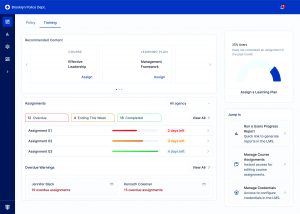
LexOne is the first platform to unify policy, training, wellness, and reporting—bringing together every element that shapes operational readiness. Built on Lexipol’s trusted policy content and management tools used by thousands of agencies, LexOne goes further, integrating training and policy for a seamless experience. The platform’s Activity Center streamlines assignments and tasks, while the Insights Center delivers real-time visibility into your agency’s readiness—from department-wide to individual levels. With LexOne, agencies save time, strengthen compliance, and enhance data security—all while automating routine processes like updates, tracking, and reporting.
Lexipol is transforming public safety operations through an integrated approach to policy, training, wellness, and accountability. By connecting critical functions in one ecosystem, Lexipol helps agencies strengthen readiness, reduce risk, and enhance performance at every level. Our technology and expertise empower leaders to make informed decisions and support the people who serve their communities. Trusted by thousands of agencies nationwide, Lexipol delivers a unified foundation for safer, smarter, and more resilient operations—because when public safety professionals are prepared and supported, communities thrive.

Wold Architects and Engineers is a full-service planning, architecture, and engineering firm with offices in Colorado, Minnesota, Illinois, and Tennessee. Recently, Wold announced the completion of the Buena Vista North-End Public Safety Complex for Chaffee County, Colorado, designed to enhance emergency response capabilities, bringing together an EMS station, sheriff’s office annex, and multi-use community meeting and training space. Wold recognizes the importance of tailoring each aspect of a facility to the needs of every future use case. Throughout the design and construction process, the team collaborates with agencies to make the most of every dollar of their investment.

Pocketalk launched the Pocketalk Enterprise App in November 2025, unlocking the industry-leading translation technology directly on any enterprise customer’s iOS or Android device for fast, accurate, secure, and cost-effective translation. The app is able to instantly translate 92+ languages without the need to adopt a new internal hardware device, which is a significant development for the public safety and police industries where professionals are often provided with organization-issued mobile devices. The technology offers high security standards with enterprise-grade data protection to ensure all conversations remain secure. The app is available on the Enterprise App Stores for Android and iOS devices.

The Oracle Public Safety Wearable Computer System is designed to enhance officer safety and community trust. The AI-powered, officer-worn devices automatically record interactions and stream high-quality, live footage to command centers to deliver real-time situational awareness during incidents. Its seamless integration with Oracle’s Public Safety Suite ensures that video, audio, and dispatch data are automatically linked to case reports. With automated evidence uploading and streamlined reporting, officers can save time previously spent on manual processing. Real-time video streaming allows remote team members, including command center personnel, to provide immediate guidance and support as events unfold, improving decision-making and officer safety.
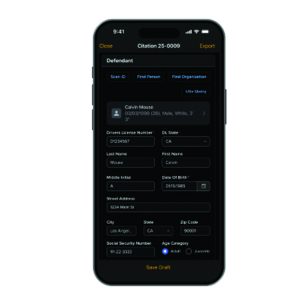
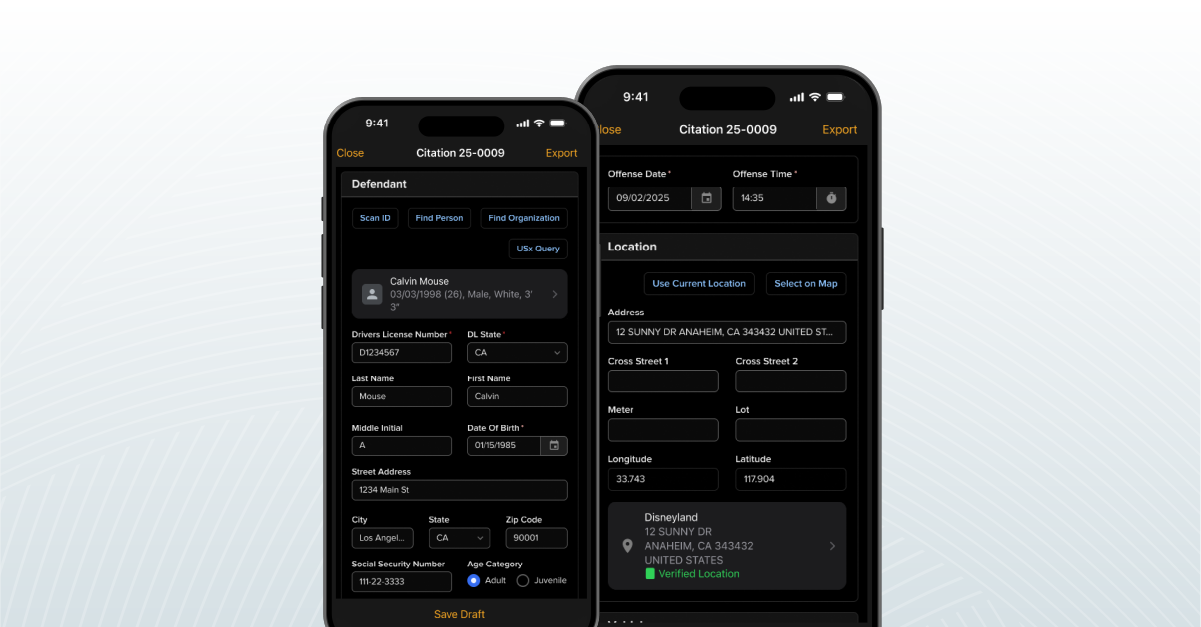
Mark43 offers the Mark43 eCitations, a modern, mobile-first solution that enables police officers to issue faster and more accurate citations for enhanced efficiency and officer safety. Built on cloud-native architecture, Mark43 eCitations is secure and always available, updates seamlessly, and removes the burden of maintenance or compliance from IT while helping agencies stay aligned with evolving state and regulatory requirements. It allows officers to capture, print, issue, and submit citations from a single application, even when offline. Key benefits include the ability to scan driver licenses, VINs, and plates or query DMV and NCIC databases to prefill key data.

Pro-gard Products expands its line of Pro-Cell Transport Systems and vehicle safety solutions that are focused on officer protection and secure prisoner transport with the P1300 Pro-Cell Transport System for 2021 to current Ford F-150 and Super Duty vehicles. The system includes a new transport seat and manual outboard seat belt, allowing secure single-prisoner transport while leaving two-thirds of the rear seat available for standard use. The front driver seat’s ability to travel and recline remains unrestricted without compromising safety or security. The P1300 is compatible with the Cargo Cab Pro Storage System, giving police agencies enhanced organization and improved fleet efficiency.
The Sonim MegaConnect is rugged and small enough to be held in one hand, giving public safety more power, faster speeds, and more flexibility than ever before. This ultra-portable, ruggedized high-powered Wi-Fi hotspot is built to withstand the demanding conditions first responders face, providing coverage in rural areas and dense urban buildings beyond the reach of traditional cellular networks. It features next-generation AirJet solid-state active cooling from Frore Systems and 6x the transmission power of standard hotspots, running on Band 14—the high-quality spectrum set aside specifically for FirstNet. It allows first responders to stay connected wherever the mission takes them.
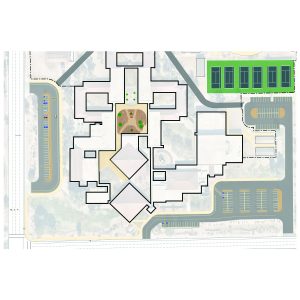
SmartSafety Software announces the release of AutoScene Draw, designed to help capture, document, and visualize any scene. Police can automatically generate to-scale roadways, intersections, and building layouts, all with a single click, creating precise, standardized layouts directly from geolocation data. Its flexible capabilities support a wide range of police applications, including SWAT and tactical entry plans, warrant service layouts, disaster and emergency response mapping, and crash scenes. This versatility allows agencies to consolidate several processes into one platform, reducing the need for multiple applications. It integrates with many RMS platforms and even operates in areas without internet access.
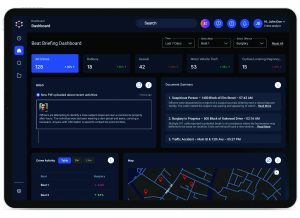
SoundThinking Inc. offers CrimeTracer Gen3. The new release expands CrimeTracer from an investigative tool into a comprehensive, agencywide crime-fighting solution, delivering automated patrol briefings, natural language search, and AI-driven analysis, among more than a dozen new capabilities to support patrol officers, analysts, investigators, and command staff. It connects more than 1 billion CJIS-compliant records across agencies. The platform offers configurable dashboards for patrol officers, analysts, and command staff and advanced entity extraction that utilizes data from unstructured narratives to be used when attempting to make connections across entities such as people, addresses, and vehicles.
Original Story: https://www.policechiefmagazine.org/exposition-december-2025/

By: Jonah Gilmore

The New Orleans Police Department says it is entering a new era, one focused on accountability, precision and transparency, as federal oversight comes to an end.
Top department leaders sat down with WDSU, stressing that the work behind these reforms began long before the consent decree officially lifted.
Over the past year, NOPD has advanced a slate of modernization efforts aimed at strengthening internal controls, improving documentation and ensuring policies are carried out consistently across all districts and divisions.
These changes include clearer supervisor guidance, upgraded timekeeping procedures, more rigorous documentation standards, and enhanced internal tracking tools designed to improve accuracy and reduce errors.
Superintendent Anne Kirkpatrick said the department is committed to proving that accountability and reform do not depend on external monitoring.
“The community expects a police department that is precise, consistent and transparent. These improvements reflect our commitment to earning public trust through continuous improvement, not crisis response,” said Kirkpatrick.
A major part of NOPD’s modernization effort involves overhauling how staffing and overtime are handled. The department has introduced new biometric timekeeping systems at district stations and is evaluating additional technology to further reduce inaccuracies and prevent abuse.
Historically, overtime tracking relied on manual entries, systems that supervisors say created unnecessary room for mistakes. The new approach requires officers to physically clock in and out of overtime assignments, tightening oversight and simplifying review.
“They used to fill out trip sheets and say what they did and the hours they worked, and the supervisor would put that in,” said Ganthier.
Kirkpatrick said the department is now aligning deployments based on peak needs, reducing unnecessary overtime and focusing resources in areas with the highest crime or the greatest operational demands. That includes major events like Mardi Gras, special deployments and districts experiencing upticks in violence.
Assistant Superintendent Hans Ganthier said data guides where overtime is allocated and how much each district receives.
“We’re reducing hours where we can but prioritizing districts with higher crime or larger geographic demands. As the systems prove effective, we’ll continue scaling back overtime responsibly,” said Ganthier.
Ganthier, who has been with NOPD since before the consent decree, said the department’s internal culture is dramatically different than it was more than a decade ago.
Processes that didn’t exist before, such as weekly audit reviews, standardized policies, and modernized tracking, are now deeply embedded in the department’s operations. As a result, officers have seen morale improve and crime strategies become more data-driven.
“It’s a sense of accomplishment,” said Ganthier.
The department’s push to modernize goes well beyond overtime. NOPD is now using new data platforms such as Mark43 and Paragon to link crime trends, identify suspects with shared characteristics and pinpoint zones requiring heavier patrols.
Kirkpatrick said technology gives officers a clearer picture of which strategies work and which don’t.
“Data informs us. It tells us how our policing strategies are working, and it’s part of why we continue to see improvements in violent crime,” said Kirkpatrick.
The superintendent has also requested a department-wide audit from the Office of Inspector General, emphasizing that independent review is part of NOPD’s long-term plan, not a response to any single issue. Routine internal reviews, community feedback, and monitoring are already used to identify concerns and launch administrative investigations when necessary.
“A modern police department does not wait for others to identify areas for improvement, we identify them ourselves, we act on them, and we hold ourselves to the standards our community deserves,” said Kirkpatrick.
While NOPD does not discuss ongoing administrative investigations, leaders say updates will continue as the department advances its internal control improvements.
As New Orleans enters its first year without federal oversight in more than a decade, police leaders say the goal is simple: maintain public safety while proving the department can uphold the reforms it worked years to build and continue raising the bar.
“We’re going to embrace every single form of reform that we have spent 13 years accomplishing,” said Kirkpatrick.
Original Story: https://www.wdsu.com/article/new-orleans-police-department-launches-internal-controls-enters-new-era-of-self-oversight/69598879

By: Emily J. Thompson, Senior Investment Analyst
Original Story: https://intellectia.ai/news/stock/greater-manchester-police-selects-mark43-for-new-records-management-system
Mark43 is the trusted leader in public safety technology, providing a secure, all-in-one platform for agencies to save time, stay compliant, and ensure community safety.