Solutions Review: AI Appreciation Day Quotes and Commentary from Industry Experts in 2025

By: William Jepma

AI Appreciation Day Quotes and Commentary from Industry Experts in 2025

For AI Appreciation Day 2025, the editors at Solutions Review have compiled a list of quotes, predictions, and commentary from leading experts across industries.

As part of this year’s AI Appreciation Day, we called for the best and brightest minds in the enterprise technology market to share best practices, predictions, and personal anecdotes about the impact artificial intelligence has had on their careers, companies, and more. The experts featured represent some of the top influencers, consultants, and solution providers with experience across industries, and each projection has been vetted for relevance and ability to add business value.

AI Appreciation Day Quotes from Industry Experts in 2025


Dan Adams, Executive Vice President and General Manager of Enrich at Precisely

“AI thrives on context, and few sources provide it more reliably and powerfully than high-quality location data. While most companies focus on training larger models or collecting more behavioral data, they often overlook a critical layer: where events, transactions, and decisions take place. This is the spatial intelligence advantage.

“At Precisely, we help organizations evolve beyond metadata and internal records to integrate precise location-based insights, ranging from points of interest and property boundaries to weather patterns and risk zones. This enriched spatial context enables smarter AI-driven decisions across industries.

“For insurers, it improves risk modeling in the face of extreme weather. For retailers, it sharpens site selection and customer targeting. And for logistics firms, it empowers dynamic planning and resource allocation. As AI becomes more integrated into operational workflows, spatial awareness won’t just be a differentiator—it will be a requirement.


Michael Adjei, Director of Systems Engineering at Illumio

“AI is rapidly transforming how security teams operate by accelerating insight, automating the mundane, and expanding visibility across complex environments. But progress without protection is a risk in itself. As AI systems become more embedded in our digital infrastructure, the stakes rise. Trust must be earned, not assumed. That’s why enforceable, transparent frameworks are essential, not just to guide innovation, but to ensure it’s grounded in accountability and resilience. Without them, we risk building powerful tools on fragile foundations.”


Roy Akerman, the VP of Identity Security Strategy at Silverfort

“AI is the defining force of our time—reshaping how we live, work, and secure the digital world. It’s no longer just enhancing our tools—it’s becoming the tool. Autonomous, fast, and increasingly unpredictable, AI is accelerating innovation at machine speed. But as we unlock its power, we must confront a new reality: we’re not just building smarter systems—we’re building entities that can act on their own. And we must secure them accordingly.

“In identity and cybersecurity, AI flips the script. It enables real-time risk decisions, predictive access control, and autonomous response—faster than any human can act. But that same speed is now in the hands of attackers, using AI-driven agents that evolve, adapt, and evade traditional defenses.

“Organizations must adopt AI boldly, but with visibility, guardrails, and precision. Gradual integration, layered privilege management, and continuous oversight by humans or AI are essential. AI can be our greatest ally or our most dangerous threat. Securing AI identities—human, machine, or autonomous—is no longer optional.

“AI is becoming the pilot, not the co-pilot. But without a control tower, even the smartest flight crashes. Identity is that tower—our fuse box, our failsafe. If AI is the electricity of the future, identity security ensures it doesn’t short-circuit the mission.”


Doug Anderson, Chief Product Officer at AvidXchange

“AI is transforming finance and accounting by streamlining processes that were once manual, time-consuming, and error-prone. Instead of replacing people, AI supports them by simplifying complexity and delivering meaningful insights. It keeps users in control and builds the trust needed for confident deployment.

“For finance teams, it is simplifying complex workflows, reducing friction in approvals, and improving the experience for both internal stakeholders and vendors. As adoption grows, we expect to see even more ways AI can help teams work smarter, adapt faster, and deliver better outcomes. This is just the beginning of how AI can reshape the future of finance for teams and the customers they support.”


Todd Ariss, Founder and CEO of GoDark Bags

“AI isn’t here to replace our team but to amplify what makes us exceptional. It helps us think bigger, move faster, and serve smarter, without losing our human touch.

“As a team, we still bring the ideas, the heart, and the human connection, but AI helps us get more done and do it better. It smooths out our workflows, cuts the busywork, and frees us up to focus on building trust and growing the brand. At the end of the day, it’s not about working harder, it’s about working smarter… together.”


Dilip Bachwani, Chief Technology Officer at Qualys

“AI is reshaping enterprise operations and redefining the front lines of cybersecurity. From large language models (LLMs) to generative AI, these technologies are the ultimate force multipliers impacting Risk Operations Centers (ROCs), automating detection, predicting threats, and triaging risks at a scale humans simply can’t match. AI pinpoints anomalies in seconds, speeding up incident response and transforming reactive security teams into proactive defense engines.

“That same tech also opens up new attack surfaces. From prompt injection and data leakage to model manipulation and hallucinations, AI introduces a fresh class of vulnerabilities. Organizations that harness AI must also secure it across the full lifecycle: from development and deployment to monitoring and governance. That means embedding security by design, enforcing real-time oversight, and setting clear, ethical boundaries for AI behavior.

“On AI Appreciation Day, let’s go beyond the hype. Let’s celebrate AI’s impact and reckon with its risks, ensuring security and compliance remain top priorities in our race towards innovation.”


Ron Baker, Chief Technology Officer at Trustwise

“The gap between AI prototypes and production systems, and how to bridge it, is on my mind this AI Appreciation Day. Traditional security approaches simply don’t work in practice when dealing with agentic systems that can reason around your controls. Prompt injections, hallucinations, and unauthorized tool usage aren’t theoretical risks anymore, and the stakes are high. They’re showing up in our red team tests. To have successful and secure AI deployments, trust and governance need to be embedded directly into agent decision loops, not bolted on afterward. This will speed the transition from experimentation to safe production use of AI in enterprise use cases.”


Colin Banas, M.D., M.H.A., Chief Medical Officer at DrFirst

“People are so busy marveling (or panicking) about the future of AI in healthcare that they’re overlooking its real superpower today: making the boring, broken stuff actually work. AI has tremendous potential to fix fundamental problems this industry has kicked down the road for decades. It’s taking on everyday speed bumps that delay care and frustrate everyone, like prior authorizations that take seven days when they should take seven minutes.”


Nate Barad, the VP of Product Marketing at Algolia

“I am most appreciative of the customers who use conversational agents to genuinely help their customers.  This looks like a thoughtful, empathetic approach to understanding my situation and either answering it as quickly as possible with a digital experience or engaging me with a service representative who is more informed because of it.  This genuine intent to help is easy to recognize and appreciate, and distinguishes greatly from the generic feeling agents that repeat the same questions, take too long to respond, and feel like a deterrent to a customer more than a benefit.

“This is possible with care and the right technology. I am thankful for the advancements in MCP, which enable this shift to genuinely help customers with a branded, curated experience that observes, applies reason, and responds in real time. Connecting with the live context of the customer and the business, personalized experiences mean customers can engage productively and safely.”


Geoff Barrall, Chief Product Officer at Index Engines

On the ROI of Investing in AI for Cybersecurity

“With the average cost of a data breach in the U.S. nearing $10 million, and public companies typically seeing a 3–5% drop in share price following a breach disclosure, the business case for investing in cybersecurity software is clear. For corporate IT organizations, this isn’t just about risk mitigation but financial responsibility. When you factor in legal fees, reputational damage, and the fact that recovery can take six months or more, the true operational cost to the business can far exceed the initial breach impact. Proactive cybersecurity investment is not a discretionary expense—it’s a strategic imperative.”


Adam Bennett, Co-Founder & CEO at SureStack

“AI’s real value in many fields, including my own field of cybersecurity, isn’t about replacing humans—it’s about helping the humans to cover more ground. One of the biggest blind spots we encounter across organizations isn’t just external threats, but misconfigurations and vulnerabilities hidden inside their existing security stacks. Teams often assume that once tools are deployed—firewalls, endpoint protection, SIEM, intrusion prevention, identity systems—they’re set and secure. However, environments evolve, new vulnerabilities are discovered, integrations break, and settings drift, and that’s where risk creeps in. AI is essential for continuously validating those stacks in real-time, monitoring, analyzing, and alerting on changes or gaps that might otherwise go unnoticed until it’s too late.”


Rajiv Bhat, Co-Founder & CEO at martini.ai

“The thing about AI that really stands out is how it cuts through the usual BS when it comes to ratings and opinions. It’s not trying to please anyone or protect its reputation—it just works with whatever data it has and gives you the best take it can. You see this playing out everywhere now. People used to fight endlessly about planning itineraries—whether it’s a meeting agenda, a vacation schedule, or a trade show booth tour—but now they just ask AI to build it, and everyone’s fine with it. Same with settling arguments—instead of going back and forth, people just look it up and move on. There’s something refreshing about that neutrality, especially when you’re dealing with subjective stuff where human bias usually creeps in.

“What’s funny is that AI’s flaws might actually be its biggest asset here. Unlike credit rating agencies that have to stand behind every decision no matter what, AI can basically say, ‘here’s my best guess, but I could be wrong.’ That makes people more comfortable with it. When someone shares feedback with an AI system, they’re not worried about being judged as they might be with a human. And when you get an AI-generated rating or assessment, it feels more trustworthy than something a company paid for, precisely because it’s neutral and there’s no money changing hands. The fact that it’s not perfect leaves room for interpretation, which is honestly more realistic than pretending any rating system can capture the full complexity of real life.”


Josh Blalock, Chief Evangelist at Jabra

“As AI becomes more embedded in our daily work, its potential to influence something deeply human, our happiness, is coming into sharper focus. New research from Jabra and The Happiness Research Institute found that employees who use AI daily report 34% higher job satisfaction and are significantly more optimistic about their future at work compared to those who rarely use the technology. The findings suggest that AI’s biggest impact may not be just on productivity, but on how people feel.

“We now live in a world where people collaborate not just with each other, but also with AI. That means technology should support not only human interaction but also give AI the audio and video input it needs to be more helpful, more contextual, and more emotionally intelligent.”


Andrew Bolster, Senior Manager of Research and Development at Black Duck

“Wow, what an exciting couple of years for AI in Cybersecurity! As with any new technology, Large Language Models launching on to the scene after the release of ChatGPT set everyone’s minds and tongues and fingers aflame, claiming simultaneously that AI was going to take away everyone’s jobs, but make all the security mistakes, but would also be able to fix them all, but would end the world, but we might all live in a simulation anyway!

“The real impact that we’ve seen on the ‘Rise of the Machines’ in cybersecurity has been both a little more mundane but also much more transformative long term; AI now means that our software engineering teams all have ‘co-pilots’ to rubber-duck their ideas and challenges, and ‘talk’ with our documentation and ticketing systems, greatly accelerating their interaction with these systems and reducing wasteful context-switching. Large Language Models help us understand customers’ support questions en masse to identify gaps or potential improvements in our documentation and product capabilities. Our management teams use internal MCP-like interfaces to ‘check in’ on their teams and colleagues, and to draft reports based on their activity. And that’s before we start talking about applications of AI to the actual cybersecurity domain.

“AI did change the world for cybersecurity, as it did for everyone else; it made it easier to bridge the interface between Natural Language and Machines and made it easier for subject matter experts to collate, assess, and act on their data and their context, and above all, to scale expertise in ways that wouldn’t have been possible just a few years ago.”


Soniya Bopache, GM & VP of Data Compliance at Arctera.io

“AI, particularly generative AI (GenAI), is quickly becoming a key driver of competitive advantage through capabilities such as rapid analysis of large data sets for strategic decision making. Whether an organization is using GenAI to analyze market trends, identify risks, or any number of other applications, its transformative power helps make sense of complex information faster than ever before to protect and grow businesses.

“Plus, there is increasingly better awareness and education among organizations around how to use Large Language Models (LLMs) to unlock new levels of insight and efficiency without introducing compliance risk. Historically, many organizations have feared opening a can of worms by enabling the use of public LLMs, since they lacked the tools needed to restrict teams from uploading sensitive data.

“We’re starting to see organizations have success using automated compliance frameworks to safeguard sensitive data without stifling their AI innovation. By deploying compliance filters as part of a proactive strategy, businesses don’t have to rely on employees to manually screen the information entered into an LLM, removing the risk of human error. This not only mitigates the risk of compliance-failure-related fines, but it also helps to improve customer trust. With a responsible, scalable approach, more organizations can move beyond experimentation to fully leverage the benefits of LLMs while ensuring regulatory adherence.”


Andy Boyd, Chief Product Officer at Appfire

“AI is becoming a cornerstone of how organizations approach problem-solving and innovation, helping teams work more efficiently and make smarter decisions. Its ability to streamline workflows and uncover new insights continues to redefine what’s possible across industries. As adoption accelerates, we’re seeing AI optimize the way we work and open doors to entirely new ways of thinking and creating. AI Appreciation Day is a perfect opportunity to celebrate these advancements while looking ahead to how this technology will further shape the way we work, create, and connect.”


Arie Brish, Business Professor

“Automation has replaced human jobs since the Industrial Revolution, yet our quality of life, employment rates, and size of paychecks keep improving. One hundred years from now, AI will be just another step in the same evolution.”


Christian Buckner, SVP of Data and AI Platform at Altair

“What should AI Appreciation Day really mean? It could be a celebration of progress—of machines that now read contracts, detect anomalies in real-time, and accelerate discoveries in materials, medicine, and manufacturing. Or maybe it should be something quieter. A day to take stock and reflect on how fast this technology is moving, and how uneven its impacts may be.

“Appreciation doesn’t have to mean blind admiration. It can mean stewardship. Acknowledging both the extraordinary possibilities AI unlocks and the instability it can cause. We should appreciate what AI can do—not just because it’s impressive, but because it demands something from us in return: a commitment to use it deliberately, to keep humans in the loop, to ensure that speed doesn’t come at the cost of trust, and that progress doesn’t outpace our principles.

“AI Appreciation Day should remind us that we are not passive observers in this transformation—we’re the architects of how it unfolds.”


Chris Burchett, Senior Vice President of Generative AI at Blue Yonder

“AI has opened new possibilities across every part of the supply chain, as it integrates automation and explainability into what were once time-consuming and disconnected processes. Decision-makers have begun implementing AI agents, moving beyond the pilot stage, as they become powerful tools that address disruptions, such as tariffs, weather, and geopolitical unrest, improving supply and transportation planning efficiency. What were once processes and decisions made based on dashboards with only a pinhole view of the supply chain network are now synthesized by AI agents, allowing organizations to understand the entire landscape and take explainable and informed actions.

“We are only just beginning to realize what AI is capable of. AI agents will continue to reshape processes across the supply chain, from suppliers to consumers, as organizations implement cost-saving measures. There are many applications for AI agents across the supply chain. A few examples we’re seeing include the use of AI in slotting warehouse inventory, which makes sure products are available where and when they are needed, based on forecasts, so that orders can be filled quickly. Another example is retailers using technology to develop planograms, ensuring proper product placement across different store layouts. In addition, another great example is how AI contributes to sustainability within the supply chain by helping organizations select sustainable suppliers and carriers and making transportation decisions that reduce miles and carbon emissions.

“However, organizations will need to address two main things before they can properly implement AI: their people and their data. A cultural shift will be needed to effectively implement AI into workplaces, such as acknowledging the technology as a teammate that can help alleviate time spent on non-collaborative and non-strategic tasks. These organizations will also need to have a big data strategy in place, ensuring that the information processed by AI models encompasses an end-to-end view for the most efficient decision-making. Addressing these challenges will enable the next innovations in AI, such as multi-agent orchestration, to come to fruition.”


Geoff Burke, Senior Technology Advisor at Object First

“AI has accelerated technological innovation and opened our minds to new ways of working and living. However, on this AI Appreciation Day, I urge us to take off the rose-colored glasses and recognize the risks and unpredictability the tech creates.

“Bolstered by AI, cyber-attacks are quicker and more sophisticated, and threat actors are finding and exploiting vulnerabilities in quick succession. This essentially means AI has made falling victim to a cyber-attack all but inevitable. I don’t believe all these threats and the extent of their potential scope are fully understood by anyone at this early stage. Large enterprises are most likely to be aware of the risks, to the extent that they would be able to assign dedicated teams of experts to monitor all the evolving problems related to AI and apply fixes as soon as they appear.

“However, mid-sized and small companies, which are likely pursuing AI because of a lack of resources, will be hard-pressed to keep up with emerging threats and challenges. We are not talking about the odd new exploit or virus, to which these types of companies fall victim regularly, but instead about a potential tsunami of new attack vectors. Immutable data backups (i.e., backups that cannot be changed or deleted) are the only sure way to protect data from the potential effects of AI-generated attacks and security shortcomings.”


Joel Burleson-Davis, Chief Technology Officer at Imprivata

“On this AI Appreciation Day, it’s important to look beyond the headlines about risk and focus on the measurable, positive impact AI is already having, especially in mission-critical sectors like healthcare and manufacturing.

“In healthcare environments, for example, traditional AI and machine learning are helping security teams stay ahead of increasingly sophisticated cyber threats while maintaining continuity of care. These tools also provide deeper insight into user behavior and system performance, guiding smarter investments and workflow improvements.

“While we should always consider the future risks of a new technology, we should recognize AI as a present-day asset, one that’s helping organizations make faster, more informed decisions. Advances in Generative AI with LLMs are a continuation and evolution of the AI journey we’re already on. The challenge now isn’t whether to embrace AI in cybersecurity–it’s how to scale and govern it responsibly to unlock its full potential.”


Nick Burling, SVP of Product at Nasuni

“As Artificial Intelligence (AI) has rapidly evolved from a futuristic concept to a practical enabler of innovation across global industries, AI Appreciation Day acts as a timely reminder that while AI’s potential is thrilling, its promise can only be realized when built on a solid foundation of trusted, high-quality data. As every IT leader is under immense pressure to fast-track AI initiatives, rushing implementation without first establishing a centralized, accurate, and accessible data infrastructure introduces security risk, bias, inaccuracies, and delays in ROI.

“With recent data finding that while 92% of enterprises have AI budgets, only 20% feel their data is AI-ready, and only 27% of AI projects show measurable ROI, organizations need to reflect on their data maturity and the readiness of their infrastructure. Prioritizing a strong data foundation, through a hybrid cloud architecture, for example, not only unifies fragmented data across silos but ensures that AI systems are trained on the most current and reliable information and create the most accurate output, a necessary component for AI’s success.

“True appreciation for AI means recognizing that the magic of agentic AI, machine learning, and other AI-powered innovations starts with disciplined data management and a commitment to the foundational work that will make AI responsible and impactful.”


Rick Caccia, CEO of WitnessAI

“On AI Appreciation Day, we celebrate not just the power of artificial intelligence but also the opportunity it gives us to lead responsibly. AI is already here; employees are using it, and enterprises are racing to adopt it. But like any high-performance machine, AI needs more than just power—it needs control.

“Think of AI as a sports car: the engine is powerful, but without brakes and steering, it’s a liability. AI governance isn’t about slowing down progress—it’s what enables us to move faster, with confidence. Our latest survey shows 63% of employees are already using AI to boost productivity. But most say they lack clear guidance. That’s a gap and a risk. Enterprises must meet this moment with clarity, gaining full visibility into how employees use AI and establishing control without hindering progress.

“The AI revolution isn’t coming. It’s here. And we have a choice: bolt on safety later or build it into the frame. Let’s choose the latter and make every intelligent decision a secure one.”


Garrett Calpouzos, Principal Security Researcher at Sonatype

“Amidst the noise about AI’s potential to drive business impact, it’s easy to lose sight of a key cohort that has seen immense progress catalyzed by the implementation of AI: developers. Beyond code creation, AI helps reduce the potential for human errors and minimizes manual, tedious tasks, thereby speeding the time-to-market and improving the quality and maintainability of software. This value cannot be overstated.

“While genAI has driven exciting advancements for this group, it doesn’t come without challenges. Many developers are running into issues with threat detection, hallucinations, and malware. AI Appreciation Day is an important moment to both celebrate how AI has improved the developer experience and shine a light on the need to protect developers from the inherent dangers it brings. We must acknowledge the importance of a balanced coexistence between AI tools and their human counterparts. While AI is changing the landscape of software development, the prevailing sentiment remains that AI is aimed at enhancing human abilities rather than replacing them. Regardless of the momentum we see propelled by AI, strong, human developers are – and will remain – the backbone of progress, governance, and trust. It’s our job to protect our developers on this transformational journey with AI.”


Ben Canning, Chief Product Officer at Alteryx

“Rather than relegating generative AI to a sidebar function, we are witnessing the shift from AI as an ‘add-on’ to AI as a core part of the workflow. It is about building systems where AI serves as a practical, integrated, and democratized force, putting data and insights into the hands of those who understand the business best.

“The enterprises that are truly benefiting from AI are those that implement it in collaboration with the people using the tool, not as a replacement. AI removes technical barriers, but it is people who move ideas forward. By empowering users with tools that once required teams of engineers, we unlock creativity, speed, and impact at every level of the organization, inspiring a new wave of innovation.”


Rom Carmel, Co-founder and CEO of Apono

“Unlike static on-prem environments, cloud infrastructure is distributed and dynamic, requiring real-time capabilities to manage access securely and efficiently. As organizations scale and adopt multi-cloud architectures, traditional access controls often fall short, lacking the agility and context awareness needed to keep pace.

“Artificial intelligence plays a critical role in modern access management by enabling just-in-time, least privilege access decisions based on real-time context such as user behavior, access history, and risk signals. This intelligent automation reduces manual overhead, strengthens compliance, and minimizes the attack surface while supporting operational speed and flexibility.

“Modern access management demands smarter, more adaptive solutions to keep organizations secure, compliant, and agile in today’s complex digital landscape.”


Boris Cipot, Senior Sales Engineer at Black Duck

“AI is a transformative technology that offers numerous benefits across various sectors, including healthcare, where it is used to detect diseases earlier, suggest personalized treatments, and accelerate the discovery of new medicines. However, AI also introduces new risks, particularly cybersecurity and application security. Cyber-criminals leverage AI to automate phishing attacks, bypass traditional defense mechanisms, and create convincing deepfakes.

“Organizations must adopt proactive security measures to mitigate these risks, such as integrating AI-trained security tools to detect AI threats in real-time and protecting AI models from data poisoning and manipulation through robust DevSecOps practices. By staying vigilant and addressing the evolving threats enabled by AI, we can embrace AI at scale with confidence and harness its potential to improve our lives while minimizing its risks.”


Sean Collins, Vice President of Cross-Border eCommerce & Enterprise Procurement at UniUni

“At UniUni, AI helps us scale speed, reliability, and flexibility in last-mile delivery. We use it to dynamically route drivers based on real-time traffic and weather, flag potential delivery issues before they happen, and offer full visibility to both retailers and customers. Through predictive analytics, we forecast demand, reposition inventory, and scale delivery capacity, especially during peak seasons. The industry is moving from using AI reactively to making it part of long-term planning.”


Derek Collison, Founder & CEO at Synadia

“As we take the time to reflect on how quickly Agentic AI has evolved over the past year and think about the massive potential benefits it can deliver, it’s also important to think about how users can improve how they communicate with AI agents to avoid Agentic AI failures.

“While many people complain that their ‘AI’s don’t work,’ agents often fail because of poor direction from the user. In reality, the AI likely did exactly what the user wrote, but not what they meant or intended, because the instructions they were provided weren’t clear enough or lacked essential details. To avoid these challenges, users need to become better communicators when interacting with their AI (whether written or spoken). Providing more detail as early as possible helps agents become more attuned to a user’s style of communication, better at inferring what a user may be looking for based on previous interactions, and ultimately improve the accuracy of future recommendations. Additionally, implementing a closed, deterministic feedback loop is also a great way to interact with AI agents.”


Zander Cook, CRO of Lease End

“At Lease End, we’ve seen firsthand how task-specific AI agents can transform operations and drive real growth. Our text-based follow-up agent now generates 25 percent of our lead-driven revenue, and our Automatic Buyout Financial Agent reduced decision times by 30 percent while boosting customer satisfaction by 20 percent. It’s proof that practical AI can empower teams, scale processes, and deliver better experiences—no Silicon Valley headquarters required.”


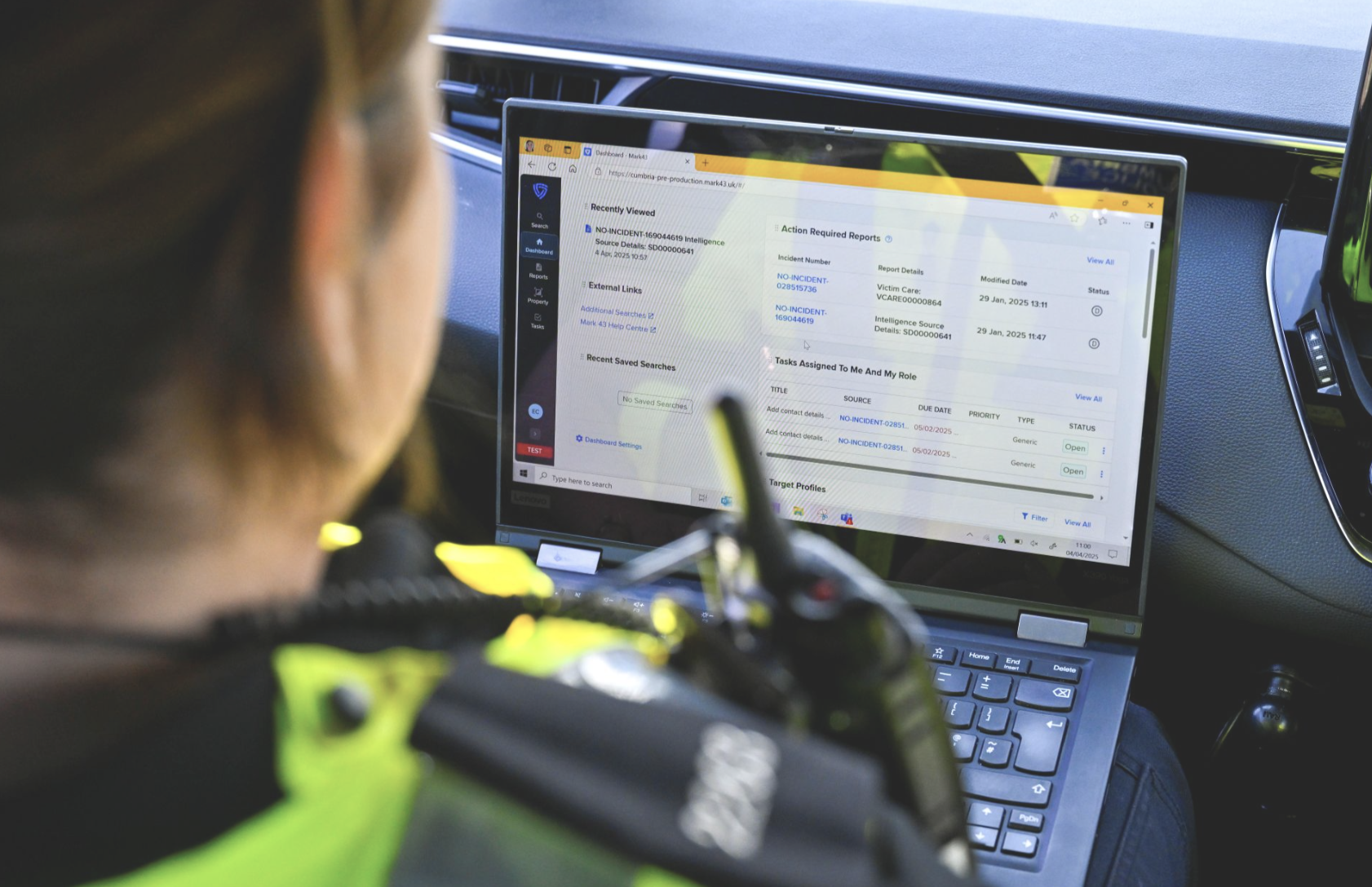
George V. Cornell, Senior Vice President of Engineering at Mark43

“At Mark43, we see the potential that AI has to be a driving force for public safety to work smarter and faster, and keep their communities and their teams safer. Integrated into public safety workflows, AI can enable first responders to concentrate on what matters most: protecting communities and fostering public trust by automating administrative and time-consuming tasks, such as sharing information with responders, writing reports, searching for leads, and summarizing cases.

“AI offers exciting possibilities for agencies to extract real-time insights for improved operations and strategic response – arriving at emergency scenes faster and more prepared, leveraging their teams effectively and efficiently, and solving cases faster. We envision a future where AI-powered public safety solutions enhance officer judgment, accelerate operational speed, and ultimately, save lives.”


Alex Cox, Director of Threat Intelligence, Mitigation, Escalation (TIME) at LastPass

“Like most other tech areas, AI is storming into the cybersecurity world, and defenders and attackers use it to enhance and advance their operations. In a general sense, it’s making it easier for non-technical users to do technical things around summarization, tool building, anomaly detection, and more. Historically, we’ve seen cybersecurity analysts use programming languages to build tools to solve investigative problems, like parsing large datasets for anomalies or building infrastructure maps. The downside of this approach is that it requires expertise in programming, which not all analysts possess.

“With the recent and rapid advances in large language models (LLMs), it’s simpler to quickly build analysis tools with plain language, which opens this skill to a much wider range of analysts. It is a force multiplier that enhances security worldwide. Likewise, the massive amounts of data a typical security team manages are becoming much more useful with AI summary assistance.

“Attackers, however, are also using this technology, and we’ve seen nation-states and cyber-criminals leveraging AI to their advantage. In the criminal underground, threat actors are building custom LLMs that bypass the guardrails present on most commercial AI platforms, allowing them to also use the power of AI to advance their goals. On the commercial side, leading AI firms have observed threat actors using LLMs to learn more about targets, craft much more convincing phishing emails and fix code areas as they develop tools.

“Soon, we expect to see attackers using AI to craft custom malware. Red Teams have had early success in this area by training their AIs to create malware that can beat widely deployed protective mechanisms, and this sort of research is typically followed by criminal use. It’s an extremely exciting time in technology, but that excitement needs to be tempered with a strong dose of caution as the ‘bad guys’ are excited about it too.”


Tom Craig, Chief Technology Officer at Resonate

“On this AI Appreciation Day, we celebrate how this technology is fundamentally changing the methods and effort involved in how we understand and reach consumers. We’re moving beyond broad demographic targeting to systems that segment, personalize, and optimize interactions through more precise AI-powered data and conversational tools. What used to take weeks of manual work now happens instantly, with results that far exceed traditional methods.

“Marketing teams can more quickly interpret, refine, and deploy campaigns that respond to market shifts as they happen. The adoption of AI agents will lead the charge as they begin to monitor, notify, and ultimately make data-informed decisions on our behalf. This isn’t about replacing creativity or strategic thinking but amplifying what marketers do best. Smart companies aren’t just trying to get the same results with fewer resources; they are envisioning how to get way more done with what they’ve already got.

“The AI wave is upon us, and early movers are already seeing massive benefits. Now is the time for everyone who wants to shape rather than chase the future to experiment, learn, and integrate AI into everyday work. The tools are accessible, the learning curve is manageable, and the upside is massive. And it’s all happening with increasing focus on privacy-preserving methods that deliver meaningful insights without invasive tracking—a win for everyone.”


Michael Curry, President of Data Modernization at Rocket Software

“AI holds immense promise for transforming how businesses operate, but that promise can only be realized through a strategic, deliberate approach. For many organizations, the most effective starting point is integrating AI with the foundational systems that already power their operations, like the mainframe.

“What often derails early AI efforts isn’t a lack of ambition but a lack of infrastructure readiness. Secure, scalable deployment demands a solid foundation, and too many environments aren’t set up to support that. At Rocket Software, we’re enabling companies to unlock AI’s potential by building on what already works. That means connecting AI initiatives directly to the systems and data that run the business today. By aligning projects to clear business goals and using existing trusted data, organizations can take targeted steps that add up to long-term transformation.

“The leaders in this space aren’t rushing to adopt the latest trend; they’re making smart, sustainable decisions that allow AI to enhance operations without disruption. With the right groundwork, AI becomes a force for insight, automation, and meaningful productivity gains, one step at a time.”


Leonardo De Araujo, SAP Technology Innovation Leader at Syntax

“As we gear up for another AI Appreciation Day, it’s amazing to see how much Generative AI has grown this year. Organizations are really leaning into Agentic AI to simplify processes across industries like manufacturing, retail, finance, and IT support. These intelligent agents are taking on tasks like using predictive analytics to anticipate maintenance needs in manufacturing, keeping an eye on real-time sales data and inventory in retail supply chains, taking action on system exceptions, and helping finance teams turn month-end reporting into quick, actionable insights.”


John DiLullo, CEO of Deepwatch

“AI Appreciation Day is a great reminder of how far technology has come and how much stronger we are when human insight and machine intelligence work together.

“In cybersecurity, that partnership is essential. Threats don’t take breaks, and neither do the teams working to stop them. AI helps by spotting patterns, flagging suspicious activity, and speeding up response times. But it’s the people like analysts, engineers, and threat hunters who bring the experience and judgment needed to make the right call or provide detailed insights on what is important.

“It’s not about choosing between humans or AI. It’s about combining the best of both. AI handles the scale and speed; humans bring the insight and strategy. Today we’re not just appreciating AI–we’re celebrating the partnership between people and technology that keeps organizations secure every day.”


Luiz Domingos, CTO and Head of Large Enterprise R&D at Mitel

“As AI reshapes how organizations operate, its most meaningful contributions lie not in novelty but in delivering practical, trusted outcomes. Real impact comes from implementing AI with a clear purpose and weaving it into everyday workflows. When applied thoughtfully, AI can streamline operations, enhance customer experience, and boost enterprise productivity. We already see this with tools like conversational chatbots, real-time analytics, and intelligent virtual assistants. However, true progress also demands responsible execution. Especially in regulated industries, success hinges on balancing innovation with a strong commitment to data privacy, compliance, and long-term sustainability. AI Appreciation Day reminds us that the future of business transformation isn’t just about what AI can do, but how intentionally and securely we choose to deploy it.”


Laura Grace Ellis, Vice President of Data and AI at Rapid7

“AI has completely changed how businesses operate. It streamlines processes and helps teams make smarter decisions, leading to better customer outcomes. However, it is important that every day, not just on AI Appreciation Day, we honor the people who tirelessly dedicate their time, knowledge, and drive to building and leveraging these technologies. Their work ensures that AI is a tool for efficiency and a force that can make the world a better place. It is now our responsibility to use this technology with intention, keeping it human-centric, transparent, and ethical, so it can continue to drive meaningful impact.”


Lisa Erickson, Founder of CoachProAI

“Most people are using AI to work faster. I use it to slow down—to create spaciousness, savor my life, and let my business scale while I sleep well.”


Devin Ertel, CISO at Menlo Security

“Today, AI is both an asset and a risk for users and organizations navigating the complex landscape of browser security. On one hand, cyber-criminals are using AI to become more innovative and successful in their attacks, fueling a significant rise in sophisticated threats. Menlo’s 2025 State of Browser Security Report revealed a 140% year-over-year increase in browser-based phishing attacks, with nearly 600 incidents of generative AI fraud, demonstrating the efficacy with which threat actors are leveraging AI to craft convincing phishing scams, impersonate trusted brands and websites, and embed malware into documents that appear to be harmless. With the help of AI, these attacks can now bypass traditional security tools by exploiting zero-day vulnerabilities and using evasive techniques.

“On the other hand, enterprises can stay one step ahead by harnessing AI to fight back against these threats, making it a critical tool to help organizations prioritize defense. For example, AI-powered techniques like computer vision and real-time behavioral analysis can be leveraged to identify highly evasive threats and stop them in their tracks before they cause harm (and without disrupting the user’s experience on the browser). By taking advantage of the intelligence and protection these tools can provide, organizations can ensure that the browser remains secure, even in the face of sophisticated, AI-driven threats.

“To remain defensive against AI as it continues to evolve and pose security concerns for enterprises, organizations must have the resources in place to detect, understand, and anticipate emerging threats.”


Sarah Evans, Partner, Head of PR at Zen Media

“AI is the infrastructure now shaping how people discover, evaluate, and trust. I am moving from PR executive to visibility architect expert, and it is the new frontier. For so long, we were focused on getting press; now we help brands train the models that write the summaries that shape the buying cycle. AI Day is an opportunity to highlight the inseparability of strategy and search and to demonstrate that media has become the new metadata.”


Paula Felstead, Chief Information Officer at HBX Group

“There is huge potential for AI models to enhance and improve the customer experience in travel, which is just one of many common use cases. The challenge for many organizations lies in integrating and utilizing AI solutions at scale across departments, while delivering the accuracy and reliability that customers expect and demand.

“Companies should adopt a human-first approach to AI, seeing it as an enabler. The real value of AI is in supporting employees, not replacing them. AI can help increase efficiency in repetitive, well-defined tasks and assess customer sentiment to better meet their needs. This is especially exciting because it allows professionals to focus on innovation and delivering the kinds of experiences travelers truly want.

“AI has the potential to transform many aspects of business operations, and for forward-thinking companies, it can be a major competitive advantage. But it’s not a cure-all or magic solution. Its impact will depend largely on how well companies understand, manage, and curate their data as a foundation. It will also depend on how thoughtfully the AI model is designed and implemented to solve specific problems. We’re at a fascinating turning point. If we can leverage AI to solve real customer challenges, offer meaningful choices, and empower more informed decisions, everyone wins—and customers will be delighted. If not, the travel industry risks falling short of fully realizing AI’s incredible potential.”


Russell Fishman, the Sr. Director of Product Management at NetApp

“AI begins with data, not algorithms. Seamless access, strong governance, and secure data foundations are crucial for maximizing the value of data and transforming AI’s potential into real-world impact. Without these, even the most advanced models remain just theoretical promises.”


Christina Fung, SVP and Head of Global AI Enablement Center of Excellence at CGI

“Excitement and anticipation for AI technology continue to build, and for good reason. According to the 2025 CGI Voice of Our Clients, AI and automation have become top investment priorities for executives across industries, driven by their ability to deliver results and unlock value. At the same time, AI has seen unprecedented growth among consumers, with generative AI tools like ChatGPT now accessible across nearly all personal devices.

“Yet, as adoption accelerates, the question is not just what AI can do, but what it should do. AI for good starts with intentional design, addressing real business problems while enabling new opportunities, with values and ethics woven into every decision. For example, when sustainability is already part of a company’s DNA, AI becomes a natural extension of that mission. By aligning early use cases to business strategy, organizational values, and broader societal goals, organizations can scale responsibly and boldly.

“On this AI Appreciation Day, we celebrate how far AI has come, the promise of a responsible future built with intention, and the humans who continue to shape what comes next and who will be the beneficiaries of its progress.”


Munu Gandhi, Executive Vice President, President at Xerox IT Solutions

“This AI Appreciation Day is an opportunity to recognize how far the technology has come and how quickly it is evolving from a behind-the-scenes tool into a true digital co-worker. At Xerox, we are focused on deploying agentic AI to handle high-volume, document-based tasks like contract reviews, IT support tickets, and finance workflows. These agents do more than wait for instructions; they anticipate needs and surface insights and take action, helping us accelerate cycle times, improve visibility, and scale our services business.

“One of the most powerful advantages is their ability to bridge the gap between structured and unstructured data, aggregating information across formats to drive smarter decisions and boost productivity. However, unlocking AI’s full potential means training our human colleagues just as much as the models themselves. Teaching people how to collaborate with AI is as critical as deploying it, and that is how we will truly reinvent how work gets done.”


Matt Garst, SVP at Mendix Americas

“In the world of application development, every day is AI appreciation day. But as AI-produced code is leveraged more widely, it’s important to consider a few key principles to avoid faulty results and maximize ROI on these major investments.

  • Quality in is quality out, and data must be sourced ethically and from a variety of origins to ensure a diverse dataset. This helps minimize repetition and reduce bias.
  • AI agents must be actively monitored; the worst thing you can do is ‘set it and forget it.’ The modern SDLC requires developers to shift their focus from builders to strategic orchestrators, effectively guiding automation tools.
  • Upskilling the existing workforce is non-negotiable. While internal AI use can be a polarizing topic, failing to capitalize on this technology now could leave organizations quickly falling behind. Fortunately, there’s a wealth of resources available, many of them are free.”

Mark Geene, Senior VP of Product Management at UiPath

“Artificial intelligence has evolved from a helpful tool to an irreplaceable teammate—one that’s reshaping the future of enterprise work. This is especially true given recent developments around AI agents, which are capable of non-deterministic work, serving as an ideal complement to RPA tools that thrive with rule-based tasks.

“This new frontier is not just about AI that thinks, but about creating workflows that allow for responsible, efficient execution based on that thinking. LLMs excel at interpreting nuances and gathering insights, but when it’s time for transactional work, a different set of skills is required, one that prioritizes precision over all else. That’s where deterministic systems—like enterprise-grade robots—come in. The fusion of these capabilities provides the best of both worlds, leveraging agents for the context-based thinking they’re best at, while using automation to extend what they’re capable of. Today, we celebrate AI not just for what it can do, but for how it will continue to enable humans and machines to work smarter together.”


George Gerchow, Chief Security Officer (CSO) at Bedrock Security

“As we celebrate the endless innovation of artificial intelligence, my thoughts turn to the fundamental elements that truly unlock its potential. Much of my work involves designing Model Context Protocol (MCP) servers, the powerful engines that drive today’s most dynamic AI systems. These advanced AI capabilities, while transformative, naturally interact with large and often sensitive datasets. This is precisely where Bedrock Security steps in. We’re committed to ensuring that the incredible power of AI is used responsibly, providing the essential protection for the data flowing through these intelligent systems. On this AI Appreciation Day, let’s consider how a proactive approach to security enables both innovation and trust. By securing the foundation of AI, we’re not only advancing technology; we’re building a more secure and confident future for artificial intelligence.”


Mike Giresi, Global CIO at Vertiv

“This AI Appreciation Day, as the world prepares to enter the ‘next phase’ of AI, industry leaders must prioritize future-ready AI critical infrastructure. That is only possible if we design systems and cultures that unlock–and even build upon–human potential. All too often, business leaders rush to deploy AI models without clear goals in mind. When applied thoughtfully, AI can eliminate inefficiencies, simplify business processes, and give humans more time to focus on things like innovation and strategic thinking.

“Organizations will need to focus on the right talent, incentives, and workflows around emerging AI tools and infrastructure to successfully outpace competition and deliver lasting impact.”


Saurabh Giri, Chief Product and Technology Officer at Voltage Park

“On AI Appreciation Day, we reflect on AI’s profound impact on humanity. It’s already helping to accelerate scientific discovery, satisfy curiosity, create better products, enhance productivity, and unlock new avenues for creativity. At Voltage Park, our mission is to fuel this progress. We believe that the immense power of AI shouldn’t be confined to a select few. By providing world-class AI infrastructure at incredible value, we empower a diverse community of thinkers and builders—from individual researchers to nimble startups and large enterprises. We handle the complexity of the hardware and software stack so our customers can focus on what they do best: use AI to continue to transform our world for the better.”


Phillip Goericke, Chief Technology Officer of Engineering at NMI

“Reflecting on AI Appreciation Day, I’m most intrigued by the rise of agentic AI in development workflows. It represents a real shift from AI as a passive assistant to a more autonomous problem-solver. As these agents integrate with more enterprise systems, I expect them to become increasingly reliable. The payoff? Top engineers can spend less time writing basic code, tests, and documentation, and more time on architecture, performance, innovation, and delivering great user experiences.

“Instead of just suggesting code snippets or summarizing docs, agentic AI is now tackling multi-step, complex tasks under developer guidance. It’s generating entire codebases, debugging, and triaging issues from start to finish. These tools are starting to behave more like proactive junior engineers than the autocomplete tools we used just a year ago.”


Lakshmikant Gundavarapu, Chief Innovation Officer at Tredence

“While we celebrate AI Appreciation Day, it’s important to recognize that our appreciation should extend beyond AI breakthroughs—it should also include responsibility. As agentic AI and gen AI systems become deeply embedded in how today’s businesses operate and make decisions, the need for strong, transparent governance has never been more crucial.

“We’re at a turning point where AI systems aren’t just supporting work; they’re making decisions on our behalf. That means explainability, auditability, and human oversight can’t be afterthoughts; businesses must keep them at the forefront. From model traceability to bias mitigation and regulatory alignment, governance will unlock AI’s full potential while maintaining public trust. It’s not just about moving fast; it’s about moving forward responsibly.”


Aditi Gupta, Senior Manager of Professional Services Consulting at Black Duck

“AI has transformed numerous aspects of our lives, from revolutionizing the pharmaceutical sector with faster and more efficient clinical trials to improving medical diagnosis and agricultural productivity. It has also enabled scientists to make significant strides in environmental conservation and even helped translate animal languages. As we celebrate the benefits of AI, we are reminded that with great power comes great responsibility. A single security flaw can render even the most advanced AI system useless, underscoring the need for careful consideration and robust security measures in AI development.”


Amy Harding, On-page SEO Manager at RankBrain

“AI is transforming almost every industry, removing barriers, aiding vital discoveries, and changing the landscape of work, home, and beyond. Understanding and strategically utilising AI is vital when it comes to competing in almost any marketplace. AI is providing the answers, but we’re still asking the questions. Those prompts are sculpting the future landscape. For AI to have the most value, it needs to be understood, given the full picture, and reviewed by experts in the field.”


Patrick Harding, Chief Architect at Ping Identity

“AI Appreciation Day is a timely reminder of the incredible promise and growing complexity that AI brings to our digital world. From deepfakes to autonomous agents, AI has transformed the landscape of identity-based cyber threats, making it increasingly difficult to verify who, or what, is behind a digital interaction. Without the right safeguards, these technologies risk eroding the trust that underpins everything from financial services to healthcare. Yet AI is also a powerful tool for defense. When deployed responsibly, it can enhance real-time risk detection, behavioral analysis, and adaptive authentication, helping organizations prevent fraud while improving the user experience.

“As AI continues to evolve and agents become more autonomous, now is the time for organizations to rethink identity models, ensure secure delegation, and prepare systems to recognize and authenticate not just people but also the intelligent processes acting on their behalf. Building and maintaining trust in every digital interaction is more essential than ever, and organizations must ensure their identity strategies evolve in lockstep with the technology driving today’s transformation.”


Patrick Harrington, Head of Artificial Intelligence and Machine Learning at MetaRouter

“Having witnessed AI’s evolution—from early data processing challenges to today’s agentic systems—what’s become increasingly clear is how we’ve moved from asking ‘what can we do with all this data?’ to ‘how can we do it responsibly while maintaining control?’ The real breakthrough isn’t just that AI can now handle complex workflows autonomously, but that we’re finally recognizing data ownership as the cornerstone of sustainable AI innovation. The most exciting chapter ahead is democratizing AI capabilities while keeping the most valuable asset—first-party data—exactly where it belongs: with the companies that generated it.”


Vall Herard, Founder and CEO of Saifr

“AI Appreciation Day provides an opportunity to reflect on the remarkable evolution we’ve witnessed—from large language models that impressed us with their content generation capabilities to the emergence of agentic AI systems that can plan, reason, and execute complex multi-step workflows. What strikes me most about this transformation is how it’s fundamentally changing our relationship with data quality and human expertise. The most successful AI implementations I’ve observed combine high-quality, curated datasets with meaningful human oversight, creating systems that are both more capable and more reliable. As we move into this new era of AI that can break down sophisticated business challenges and solve them systematically, the organizations seeing the greatest success view AI as a tool for human augmentation rather than total replacement.”


Jurgen Hekkink, Head of Product Marketing at AnywhereNow

“On AI Appreciation Day, we recognize the incredible impact that artificial intelligence (AI) is having on the people at the heart of customer service, the contact center agents. AI is quietly revolutionizing how contact centers operate. Intelligent automation now handles routine queries swiftly and accurately, drastically cutting wait times and improving customer satisfaction. This allows human agents to focus on what they do best: solving complex problems, connecting with customers, and delivering personalized experiences.

“AI-powered assistants play a crucial role behind the scenes, offering real-time guidance, surfacing relevant information, and reducing the stress of multitasking under pressure. With AI support, agents are better equipped to resolve issues on the first contact, boosting critical performance metrics like Customer Satisfaction (CSAT) and Net Promoter Score (NPS).

“However, it’s not just about customer outcomes. AI is also reshaping the agent experience for the better. By automating repetitive tasks, agents gain more time for meaningful work. They enjoy greater autonomy, reduced cognitive load, and have a clearer sense of purpose. This leads to higher job satisfaction, reduced burnout, and a stronger, more resilient workplace culture.

“Today, we celebrate how AI is enhancing the role of humans in contact centers. AI is helping agents work smarter, feel increasingly supported, and deliver service that’s faster, more consistent, and more human than ever.”


Ezzeldin Hussein, Regional Senior Director of Sales Engineering (META) at SentinelOne

“On this World AI Appreciation Day, we pause to reflect—not just on how far we’ve come, but on the limitless future ahead. A decade ago, artificial intelligence was largely experimental, often misunderstood, and cautiously adopted. Today, it shapes our everyday lives—from personalized healthcare and smarter cities to securing cyberspace and decoding complex global challenges.

“What once seemed like science fiction is now the pulse of progress. AI no longer just analyzes data; it reasons, predicts, and adapts. It collaborates with humans, augments our creativity, and even safeguards our digital and physical environments. In cybersecurity, for instance, AI has shifted the balance, empowering defenders with predictive insights and autonomous threat response.

“Yet this is only the beginning. The next frontier lies in ethical, responsible AI, where transparency, fairness, and human oversight are embedded into every algorithm. We are stepping into an era where AI becomes not just a tool, but a trusted partner.

“As we appreciate what AI has already enabled, let’s also imagine what it can do—if guided by human values, inclusive design, and bold innovation. The future is not about AI replacing us, but AI elevating us.”


Barbie Ann Jurolan, Head of Content at Which Real Estate Agent

“As Head of Content at Which Real Estate Agent, I’ve experienced firsthand how AI has transformed our content creation and SEO strategies. Over numerous prompts and projects, it’s remarkable to see how effectively AI can capture nuanced instructions, delivering tailored, insightful, and highly engaging content.

“What once took days can now be achieved in hours. AI allows us to scale efficiently, maintaining high-quality standards without compromising authenticity or creativity. It’s not just about productivity; it’s about enriching our ability to communicate more deeply with homeowners, understanding their journeys, emotions, and needs.

“From suburb-specific articles deeply rooted in local insights to emotionally engaging blogs supported by precise market statistics, it has consistently demonstrated an impressive ability to align with our brand voice and strategic goals. The partnership between human creativity and AI-powered efficiency has elevated our organic reach, refined our funnel, and enhanced our user experience.

“Thank you, AI, for becoming an indispensable part of our content journey. Here’s to continued innovation and impactful storytelling!”


Nicholas Kathmann, Chief Information Security Officer at LogicGate

“AI presents enormous opportunities for a vast array of enterprise value drivers, streamlining processes and increasing productivity across functions like governance, risk, and compliance (GRC). However, when implementing any new AI solution, it’s critical to do so with GRC top of mind. Fast and responsible AI implementation is possible, but success is dependent upon close alignment to organizational needs and goals, in addition to being able to monitor evolving AI regulations and risks in real-time. Having the ability to pivot and scale quickly with AI will allow organizations to derive the most value from the technology while keeping them secure and compliant as the risk landscape shifts with continued, and necessary, AI innovation.”


Spencer Kimball, CEO and co-founder at Cockroach Labs

“AI Appreciation Day should absolutely celebrate how far we’ve come, but it should also spotlight how far we still have yet to go with AI. We’re entering an era where machines don’t just think, they act autonomously and continuously. They don’t pause, and they don’t sleep. They operate at a frequency our systems were never built to withstand. So, the real constraint on AI isn’t model quality; it’s the fragility of the infrastructure beneath it. If we don’t modernize the legacy systems underneath, even the most powerful AI won’t perform when the architecture fails. The future of AI won’t be defined by what it imagines but by whether our systems can withstand what it unleashes. We can only unlock AI’s full potential if we first build the infrastructure to keep up. Until then, we can be proud of the progress we have made—and focus on building the foundation to take it even further.”


Oliver King-Smith, Founder of smartR.ai

“Never trust your AI, unless you know where its brain is!

“I believe in ‘Assistive Intelligence’ rather than AI. Why? Because the magic isn’t in having AI take over entirely—it’s in creating partnerships where human and machine intelligence contribute their unique strengths, together. In an environment increasingly dominated by tech scares, algorithms that control the content we see, and uncertainty over the future, we want to rebuild the relationship between humans and machines and create a world where exciting new technologies work for us to enhance our lives.”

“In the race to AI adoption, remember: it’s better to arrive safely than to crash spectacularly before reaching the finish line.”


Mark Klarzynski, Chief Strategy Officer, CTO, and Founder at PEAK:AIO

“As AI becomes a core part of how businesses operate, from private GPTs trained on internal knowledge to real-time insights at the edge, the infrastructure supporting it needs to evolve. Traditional IT systems were never built for AI. They stall under the demands of high-speed compute, large-scale data, and the energy intensity of modern workloads.

“Enterprises are now shifting to purpose-built solutions that match the scale and speed of AI itself. Whether it is enabling doctors to diagnose from imaging data in seconds or helping financial institutions run secure, in-house language models across terabytes of private data, the need for AI-native infrastructure is no longer optional. It is strategic. From research labs to enterprise boardrooms, the systems powering AI must be as advanced and agile as the AI they support.”


Ryan Knisley, Chief Product Strategist at Axonius

“Security and IT teams today struggle with disjointed tools and static inventories, creating the very data fragmentation that often makes AI unreliable. A cybersecurity asset intelligence platform addresses this foundational problem by correlating data from hundreds of sources to build a single, trustworthy source of truth for every asset. In this way, a comprehensive asset intelligence platform, when paired with AI, can provide the foundation for the decisive, intelligent action needed to preemptively tackle exposures, security risks, and operational inefficiencies with confidence. If deployed this way, AI can become a force multiplier, helping teams identify risks earlier, automate routine fixes, and zero in on the issues that deserve human attention.”


Mike Kovetskyi, Founding AI Engineer at PortalAI

“I appreciate AI for one powerful reason: it’s democratizing creation. We’re in the middle of a new technological revolution that empowers anyone, not just studios or professionals, to co-create art.

“At Portal.ai, we’re living this future. Anyone can launch a new intellectual property by creating the first episode of a story and opening it up for collaboration. Others can join in by continuing it with new episodes, together forming something bigger than any single creator. What emerges? A high-quality series born from the shared imagination of talented individuals. This model transforms how we build communities around stories and lets every fan shape the future of the movies and worlds they love.

“This isn’t just social media 2.0—it’s the foundation for the next cultural phenomenon. The next Harry Potter or Star Wars might not come from Hollywood, but from a group of inspired fans and creators on a platform like ours.”


Boris Kuiper, COO at Smoothstack

“AI isn’t a free lunch—it’s an accelerator, but only if you pair it with the right guardrails, oversight, and skills. At Smoothstack, we see AI as a tool to amplify great developers, not replace them. Our adapted training model equips talent with the skills to navigate AI confidently: when to trust it, when to intervene, and how to drive outcomes faster without cutting corners. We’re building a workforce that’s not just AI-aware, but AI-capable and future-ready.”


Aniket Kumar, Digital Marketing Team Lead at Kellton

“On AI Appreciation Day, we’re celebrating how artificial intelligence is not just streamlining operations but profoundly enhancing human capabilities within the enterprise. AI’s powerful ability to connect and synthesize vast, often disparate data streams leads to smarter decisions and unparalleled efficiencies in complex workflows. It’s revolutionizing how businesses innovate, enabling new levels of productivity and helping teams manage previously disparate information sources with ease. Ultimately, AI’s greatest contribution lies in its role as an indispensable co-pilot, augmenting human ingenuity and transforming how we leverage disparate insights to build the future of technology responsibly.”


Anjan Kundavaram, Chief Product Officer at Fivetran

“AI Appreciation Day is a moment to celebrate the incredible progress in artificial intelligence—but it’s also a reminder of the invisible foundation that makes it possible: data. AI is only as powerful, trustworthy, and transformative as the data infrastructure beneath it. That means unified, reliable, governed data accessible in real-time, not siloed or fragmented. As we look ahead, the focus shouldn’t just be on what AI can do, but what it stands on. Without a strong foundation, even the most advanced systems can’t succeed.”


JD Lasica, Startup Founder, Entrepreneur, Technologist, and Author

“While we’ve been working in the AI space for six years at Authors A.I. and remain huge proponents of how AI can modernize the craft of fiction writing, we’re constantly reminded of the deep skepticism the public has about AI. (Just look at the self-driving cars being set on fire in San Francisco, a city known for its embrace of tech innovations.) At its heart, I think there’s an underlying concern that for all its benefits, AI will chip away at our social fabric and lead us into a future where many of the values we hold dear will be replaced by something more cold, more efficient, less human. The best thing AI proponents can do for AI Appreciation Day is to keep in mind that AI and AGI are not ends in themselves but rather are vehicles to help us advance our shared humanity.”


Andrea Lechner-Becker, Chief Strategy Officer at GNW Consulting

“This AI Appreciation Day, let’s talk about what we should be appreciating:

  • Not AI’s ability to write a blog in 10 seconds.
  • Not the endless debate over whether AI will take our jobs.
  • But the very real shift AI is forcing in how we think, communicate, and run our businesses.

“Because here’s the truth: AI isn’t just a tool. It’s a mirror. It shows you exactly where your strategy is bloated. Where your positioning isn’t clear. Where your content is generic. Where your sales enablement actually needs work.

“We used to hide behind ‘That’s how it’s always been.’ Now AI says: Cool, but here’s a better way — and here’s three examples, two frameworks, and a fresh tagline while we’re at it.

“At GNW, we don’t treat AI like a novelty. We treat it like a strategic advisor with zero chill and a surprisingly good eye for brand tone. From custom GPTs that coach our consultants to AI-led audits of messaging and workflows, we’re not experimenting with AI. We’re scaling with it, and you should be too.”


Jay Litkey, SVP of FinOps & Cloud at Flexera

“For AI Appreciation Day, it’s important to recognize AI’s transformative impact on businesses, from automation to data-driven decision-making. Already, 72% of organizations report currently using GenAI either extensively or sparingly, and another 26% are experimenting with the technology. As AI becomes an increasingly powerful tool for enabling business operations, it’s critical to balance this technology innovation with cloud costs, effective governance, and digital literacy. A structured approach to AI integration also involves setting clear guidelines, evaluating AI tools based on security and efficiency considerations, and defining success metrics to measure impact and align with business goals.

“The future of AI is promising, and adopting effective best practices early on will help organizations unlock the full potential of AI and drive sustainable growth.”


Cyndy Lobb, Chief Product Officer at Forter

“Across industries, AI is no longer just operating behind the scenes, and digital commerce is no exception. AI is stepping into the role of the shopper, acting autonomously on behalf of consumers to compare prices, initiate checkouts, redeem loyalty points, and more. With more power comes new risks. Brands must layer in trust and identity intelligence at every step of the journey, upgrading beyond traditional fraud defenses to validate non-human identities in real-time. On AI Appreciation Day, it’s important to recognize that the future of commerce rests on responsible, outcome-driven AI innovation that preserves security, transparency, and trusted customer experiences.”


Adam Luciano, VP of Product Management at MariaDB

“On AI Appreciation Day, it’s clear we’re entering a transformative phase in how intelligent systems interact with the world. Over the next few years, we expect to see a shift from traditional AI models to more autonomous, context-aware AI agents—capable of reasoning, planning, and taking actions across tools and platforms.

“These agents are already beginning to move beyond chat interfaces and into systems that handle workflows, automate research, and collaborate with humans in more meaningful ways. To function effectively, they depend on real-time data access, semantic understanding, and the ability to integrate with a wide range of APIs, tools, and databases. This shift is creating new demands on infrastructure:

  • Vector search and retrieval are becoming foundational, enabling agents to work with embeddings and unstructured data for language, images, and more.
  • Open protocols and toolchains like LangChain and LlamaIndex are emerging as critical glue, as is the newer connectivity provided by MCP Servers, which connect AI models with memory, context, and action.
  • Open-source databases are evolving to meet these needs, adding native support for unstructured data, faster indexing, and integration hooks for AI-native workloads.

The era of intelligent agents is not a distant vision—it’s arriving now. And over the next few years, organizations that build on adaptable, AI-ready infrastructure will be positioned to lead in this new paradigm.”


Danny Manimbo, Principal and ISO & AI Practice Leader at Schellman

“AI Appreciation Day is a moment to reflect on how far we’ve come and to recognize the real, tangible impact AI is already having in our work. Across industries, AI is already transforming core functions, including accelerating software development, strengthening threat detection, enhancing decision-making, and more. But the real power of AI lies in how it elevates human potential, freeing teams from repetitive tasks so they can focus on insight, creativity, and the work that moves organizations forward.

“But appreciation must come with accountability. A new federal proposal to delay state-level AI regulation for a decade is framed as a way to boost innovation, but removing oversight doesn’t remove risk. It simply shifts responsibility from policymakers to practitioners.

“That’s why enterprise leaders can’t wait. When regulation hits pause, leadership must press forward. Responsible AI means embedding governance, transparency, and risk management into every phase of the lifecycle, not because compliance demands it, but because trust depends on it.

“Standards like ISO 42001 and the NIST AI Risk Management Framework offer a strong foundation. If we want AI to keep advancing in the right direction, we can’t just celebrate what it can do; we must shape what it should do.”


Stephen Manley, Chief Technology Officer at Druva

“AI innovation is exploding, but so are the risks. As organizations race from pilot to production, a successful AI environment is built on more than GPUs, LLMs, and optimism. AI demands built-in security, governance, and resilience. AI amplifies underlying data challenges, exposing weaknesses in many organizations’ data foundations. Security and IT leaders must drive accountability into the business. Are our training data and models secure? Can we store and explain AI outputs? Are we data privacy compliant? Most importantly, can we prove it?”

“If you ignore the fundamentals of data security, privacy, and recovery, AI will leave your business exposed. For example, training data is often sensitive and stored across fragmented systems, increasing the risk of leaks. Additionally, cyber attackers are now trying to poison that training data in just the latest attempt to breach your security.

“Fortunately, AI is new enough that we can build in zero-trust. The key is data. With automated backup and centralized oversight of the data used, generated, and logged by AI, you can ensure visibility, auditability, and compliance across AI systems. AI hardware and software will evolve quickly, so a secure, centralized view of the data is the only thing you can trust.

“AI success demands strong data foundations. IT leaders must bake in security, governance, and transparency from the ground up. Those who lead the charge with clear oversight and accountability may not make the most noise, but they’ll be the ones who win the race.”


Sandeep Menon, CEO & Co-Founder at Auxia

“The CMO role is changing entirely due to AI. After speaking with dozens of marketing executives this year, the same pattern emerges everywhere: traditional marketing structures have become unsustainable. The old marketing model demanded sprawling support ecosystems—just to enable 10 marketers, you often needed multiple data analysts, content designers, agency copywriters, brand strategists, visual designers, QA specialists, project managers, and platform operations staff.

“This bloated setup didn’t just slow execution—it drained resources, created cross-functional bottlenecks, and made agile iteration nearly impossible. Every change required coordination across multiple teams, leading to delays, misaligned messaging, and missed opportunities. Worse, by the time insights reached the surface, consumer behavior had often already shifted, making the response ineffective.

“AI is changing this through role compression, merging previously distinct functions into unified capabilities. We’re witnessing the rise of the supermarketer who combines strategic thinking with AI-powered analytics and creative vision with data-driven decisions. These professionals work alongside AI agents that handle the technical and operational heavy lifting, freeing them to focus on strategy, creativity, and customer experience.

“Today’s supermarketer sets objectives and guardrails for AI systems that execute millions of micro-decisions automatically. They use decision agents to orchestrate personalized experiences for each individual customer in real-time, analyst agents to accelerate insights that would take human analysts weeks to discover, and content agents to automatically generate and continuously optimize hundreds of touchpoints across channels. This isn’t about replacing human creativity – it’s about augmenting it with machine intelligence that scales.

“On AI Appreciation Day, we’re celebrating the rise of the supermarketer. Companies that embrace this new model will create a competitive advantage that compounds through refined customer experiences that traditional marketing structures cannot match. The age of the supermarketer isn’t just a future vision – it is just around the corner.”


Lee McClendon, Chief Digital and Technology Officer at Tricentis

“As the AI era continues to evolve, speed has become a key measure of success for enterprises of all sizes and across industries. Increased velocity, however, introduces increased risk, especially when delivering high-quality software. This tension has long challenged DevOps teams, but advancements in agentic AI are already beginning to resolve it.

“AI agents are marking a paradigm shift in software testing. By supporting tasks such as test case generation, test data management, and manual test automation, agentic AI can automate baseline testing to ensure high-impact areas are thoroughly covered, allowing human testers the time to focus on deeper, more explorative testing that drives innovation, strengthens system resilience, and improves long-term outcomes.

“AI apprehension is easing. Nine in 10 CIOs and CTOs trust AI agents to independently make critical software release decisions. As adoption grows, agentic AI further demonstrates that organizations don’t need to view speed versus quality as a balancing act: they can, and will, work in tandem to drive meaningful results.”


Brian McMullin, Senior Vice President of Product at Network Solutions

“AI is transforming how we do business and empowering smaller business owners to compete on a more level playing field. It’s inspiring to see entrepreneurs gain confidence and unlock new opportunities that may have once been out of reach. While a recent survey shows many SMBs remain cautious, citing concerns around accuracy, control, and integration, AI is already making business management more equitable and efficient. Notably, just 24% of SMBs have used AI for website updates in the past six months, yet those who have report significant time savings and improved performance. On AI Appreciation Day, we should celebrate the promise of AI to drive innovation, efficiency, and growth for businesses of every size.”


Meghan McQueen, Co-founder & Marketing Manager at GreenTag

“It’s wild to think how deeply AI is woven into the DNA of work… and yet, it feels like we’ve only just scratched the surface. Consumer AI is still in it’s infancy—most people haven’t experienced what can be accomplished when tools are designed with empathy and real-world use in mind. That’s what’s most exciting! Being part of a wave that’s building for everyday people outside their professional lives.

“When we can get to a point of removing toil at work, at home, and in our personal interests, we’ll finally be using technology for its true purpose: to make the lives of humans better. Here’s to building better tools, solving deeper problems, and staying curious!”


Jimmy Mesta, Founder and Chief Technology Officer at RAD Security

“Security teams use stacks that generate thousands of signals a minute across dozens of tools. It’s no longer possible to define every relationship between those signals with rules alone. AI is now actually the only way teams can keep up. Instead of using clumsy rules that keep breaking, AI can spot patterns, connect events across multiple parts of the security stack, and take action fast enough to matter. It’s basically necessary to use AI for at least some of these tasks, if you want a lean security team to continue to function at scale with a mature stack.”


AJ Moffitt, Senior Editor at Tandem Buzz

“I asked my AI to write something for AI Appreciation Day. Its response:

“AI isn’t replacing us, it’s reflecting us—our biases, our brilliance, our blind spots. The appreciation isn’t just for the tech. It’s for the teams training it, challenging it, and choosing to use it wisely. If AI is a mirror, let’s make sure we’re proud of what’s looking back.”
– Elias, Language Model, Prompt-Driven Workhorse, and Unofficial Typing Coach

“I appreciate that if I get frustrated with my predictive model helper, I can yell at it and won’t hurt its feelings…because it doesn’t have any. I also appreciate that I’ve trained it with a sense of humor, or else using it would be too boring.”


Michelle Muncy-Silva, Educator, Podcaster, and AI Creative

“Since launching the Empowered by AI podcast, I’ve learned that generative AI isn’t just a tool, it’s a catalyst. I’ve interviewed women from around the globe who are using it to reclaim time, amplify creativity, and build businesses that reflect their values. Barriers that existed before have been removed. And what impresses me most is how AI, when placed in the hands of thoughtful, purpose-driven women, becomes a force for equity, innovation, and deeply personal transformation.”


Siroui Mushegian, Chief Information Officer at Barracuda

“As a CIO, integrating AI into the foundation of your organization is extremely critical. Organizations that are thriving today are the ones that are implementing AI into their security stack with purpose, speed, and alignment with their business outcomes. It’s not only about implementing the right tools to keep up with AI–it’s also about creating company infrastructure and culture needed to support AI-powered innovation. As a CIO, integrating AI into the fabric of the organization has been essential, allowing my team to focus on the most important business initiatives while staying competitive through embracing new technology and staying adaptive. As the industry continues to evolve, AI has redefined leadership by guiding company leaders toward new ways of thinking and delivering value.”


Oded Nagel, CEO of CTERA

“Artificial Intelligence holds the promise of transforming businesses across every industry. However, the real magic happens when data is readily accessible and properly managed. In a ready state, data becomes the fuel for AI systems, enhancing their ability to produce actionable insights and drive strategic decisions. This empowers companies to innovate rapidly, respond to market changes, and meet customer demands with precision. When data flows seamlessly into AI algorithms, it enables smarter forecasting, more personalized customer experiences, and overall efficiency improvements. Companies must prioritize having their data organized and accessible, as it is the key to unlocking AI’s transformative potential.”


Gal Naor, CEO of StorONE

“AI Appreciation Day is a great time to acknowledge how AI is solving real problems in the enterprise storage sector. An effective example is AI-powered auto tiering. Rather than relying on fixed schedules or manual policies, AI observes how data is used and moves it between flash and disk tiers based on actual workload behavior. This ensures that frequently accessed data remains on high-performance storage, while infrequently used data is shifted to lower-cost media without affecting application performance.

“This kind of automation simplifies operations while improving resource efficiency. It creates a storage environment that continuously adapts to changing demands, reducing overhead and supporting consistent performance at scale. As we celebrate AI appreciation today, it is worth recognizing the critical role it plays in making data storage smarter, more efficient, and ready for the future.”


Joe Nicastro, Field CTO at Legit Security

“AI is and should be considered a mix of new risk and new opportunity. We see that clearly in cybersecurity, where it’s changing both what we secure and how we secure it.

“For example, more than 60% of organizations were using AI tools like GitHub Copilot or ChatGPT to generate code in 2024, and that number has already jumped to over 90% this year. But AI is trained on code from all over the internet, not all of it good or secure. AI-generated code has already been shown to introduce things like data exposure risks, supply chain issues, licensing or copyright issues, or even just outdated and vulnerable libraries into production environments.

“The other piece is volume. GitHub data shows AI is now generating up to 30% of Python functions in commits, meaning we’re not just writing code faster, we’re creating more code, and not necessarily at the quality level of human-generated work. And let’s not forget, the AI tools themselves can be a risk. As an example, just a few months ago, our researchers found a major vulnerability in GitLab’s AI coding assistant, GitLab Duo, that could let attackers manipulate outputs and sneak in malicious code.

“We need to recognize these risks and adapt with new types of code testing, updated threat modeling, and better visibility into what’s flowing through development environments, both code and tooling.

“At the same time, AI brings real opportunity. Its ability to analyze massive amounts of data means we can identify and prioritize vulnerabilities faster than ever. And if developers are already using AI assistants to write code, we have the chance to use those same assistants to catch issues early, embedding security into the development process itself.

“AI is adding risk, but it’s also giving us powerful new ways to manage that risk more effectively. Organizations that lean in now will have an edge. Those that don’t will find themselves playing catch-up, especially as the industry moves toward widespread AI adoption and an expected 80% of the workforce needing AI skills by 2027.”


Dr. Tina Nikoukhah, Director of Research at GetReal Security

“One important area where generative AI raises significant concerns is the spread of synthetic content. As tools like deepfake generation services become easier to use and access, both good and bad actors are taking advantage, ultimately muddying the ability to determine whether content is natural or synthetic. This can lead to bad consequences not just for enterprises or governments, but for all individuals as well. Therefore, as these tools become more accessible, the need for tools that can accurately detect synthetic content and malicious deepfakes has never been greater.”


Yoram Novick, CEO of Zadara

“In recognition of AI Appreciation Day, it is worth highlighting how Edge AI is shaping the future of autonomy across industries. In 2025, Edge AI is playing a massive role in enabling autonomous systems to make independent, real-time decisions with minimal human intervention. From self-driving cars navigating complex environments to smart factories optimizing production processes, Edge AI is now delivering localized intelligence that operates well even in places where network connectivity is limited. This autonomy reduces reliance on cloud connectivity and improves operational efficiency across industries. As AI models become even more advanced and small models enable high-quality AI inference on devices with limited computing power, Edge AI will continue to drive innovation by empowering devices and systems to analyze data, detect patterns, and respond without centralized oversight.”


Ted Oade, Director of Product Marketing at Spectra Logic

“Artificial Intelligence has moved from a promising technology to a foundational force reshaping industries, workflows, and human potential. On AI Appreciation Day 2025, it’s worth pausing to recognize not only what AI can do but what it enables when developed and deployed responsibly.

“From revolutionizing healthcare diagnostics to enhancing supply chains and accelerating discovery, AI’s contributions are profound. Yet behind every breakthrough is a vast ecosystem: data, infrastructure, compute, energy, and increasingly, ethical responsibility.

“AI is not magic; it’s data-driven. Every stage—from training to inference—depends on scalable, resilient, and sustainable infrastructure. That includes storage. As models grow and datasets multiply, energy-efficient data storage becomes mission-critical. Cold and infrequently accessed data, in particular, must be handled with sustainability in mind to free up resources for high-performance computing.

“As power-hungry GPU architectures drive demand, the conversation must include energy-aware system design, intelligent data lifecycle management, and thoughtful storage tiering. The future of AI isn’t just intelligent—it must be efficient, secure, and sustainable.

“As we celebrate the achievements of AI, we should also champion responsible development: transparency, bias mitigation, and environmental impact. Appreciating AI means understanding its full context—technical, operational, and ethical.”


Sergio Oliveira, Director of Development at DesignRush

“AI isn’t just about automation. It’s about redistributing time so people can focus on thinking, solving, and creating. The tools are evolving fast, but the real progress comes when teams learn how to use AI thoughtfully. It should not be used to replace effort, but to enhance it. We’ve seen the biggest wins when AI helps surface insights we might have missed, not just speed up what we were already doing.”


Chris Opat, SVP of Cloud Operations at Backblaze

“We recognize how artificial intelligence is fundamentally changing the world, and for us, the cloud storage industry is no exception. Our commitment to our customers is to make it astonishingly easy for them to use their data how they want, and the AI ecosystem has given rise to entirely new use cases that put unprecedented demand on our worldwide platform. AI customers need to egress and move large quantities of data exceptionally fast, often at speeds of 400gbps or greater. Backblaze has focused on providing an infrastructure to meet these networking throughput demands, simplifying the landscape of connecting AI datasets to where the GPUs are, in strategic compute partners.”


Dylan Owen, CISO at Nightwing

“This AI Appreciation Day, it’s important to recognize that AI itself is a strategic imperative, and an indispensable tool for enhancing defensive cyber and threat intelligence while empowering human experts. Yet, without clear visibility, robust oversight, and stringent security controls, AI can introduce unseen risks and expand our attack surface. AI systems often access sensitive information and critical infrastructure, increasing the risk of data breaches and cyber-attacks. Moreover, as these systems increasingly interact and connect with one another, they create more potential entry points for attackers to exploit vulnerabilities. True appreciation means embracing responsible deployment to ensure AI acts as a force multiplier, not a hidden vulnerability. Its next phase must focus on ethical governance and human partnership to build resilience and keep us mission-ready against evolving threats.”


Zen Piotrowski, President of CMIT Solutions of Pittsburgh South

“Generative AI has the potential to provide Small and Medium Businesses (SMBs) with tremendous productivity and profit opportunities. With AI, research can be reduced by 50%, businesses can quickly prepare for meetings, and first drafts of proposals can be written in minutes versus hours. However, SMBs need to take precautions to protect themselves from new cybersecurity risks and vulnerabilities. They must prioritize security, data privacy, and compliance when integrating AI solutions into their business processes.

“Today, many employees of these organizations may be utilizing AI without their employer’s knowledge. They could be utilizing tools that provide backdoors for potential cybersecurity attacks, such as allowing phishing and ransomware to bypass email SPAM filters. Worse, they could introduce ‘data poisoning,’ which is a means of intentionally adding false information or malicious data into an AI model’s training set to corrupt its learning process.”


Dan Pinto, CEO & Co-Founder at Fingerprint

“It’s important to reflect on three transformative ways AI has reshaped the digital world. First, AI has enhanced the consumer purchasing journey, enabling businesses to deliver personalized experiences that dynamically adapt to individual preferences, browsing patterns, and needs, creating unique, tailored interactions and recommendations that would be impossible to achieve at scale through traditional methods.

“Second, AI has allowed organizations to strengthen their defenses against malicious actors by using sophisticated technology like device intelligence to detect and analyze behavioral patterns, enabling businesses to identify and respond to threats faster than any team of human analysts.

“Third, AI has democratized access to complex analytical capabilities that were once only available to large enterprises with substantial technical resources. Small businesses and individual creators with minimal coding experience can now use automation tools to develop simple apps and websites.

“However, this AI Appreciation Day also serves as a moment for reflection about AI adoption. While we celebrate AI’s capabilities, we must maintain intelligent human oversight, creating guardrails that allow AI agents to serve as effective decision-makers without reducing them to rigid, rule-based systems that stifle their adaptive potential.

“Organizations must also remain vigilant about the dual-use nature of AI technologies, recognizing that the same tools enhancing legitimate business operations can be weaponized by bad actors for sophisticated fraud schemes that can easily bypass traditional detection methods. The path forward requires embracing AI’s transformative potential while implementing thoughtful governance frameworks, preserving innovation and security.”


Rahul Pradhan, VP Product and Strategy – AI and Data at Couchbase

“In honor of AI Appreciation Day, let’s talk about the role memory plays in building effective AI agents. Memory is the difference between a chatbot that merely answers simple questions and an autonomous agent that accumulates, learns, and adapts. When an agent can reference prior goals, intermediate states, and user preferences, its decision‑making resembles a seasoned colleague: deeply contextual, self‑consistent, and increasingly valuable with every interaction.

“Architecturally, this requires a layered memory stack: ultra‑fast in‑context buffers for the current conversation, a high-dimensional vector store for semantic retrieval, and a durable operational and analytical data store that captures long‑term episodic knowledge. Without this multi-tier memory architecture, agentic AI risks becoming brilliant in the moment yet amnesic at scale.”


Hari Prasad, Founder and CEO of Yosi Health

“AI is transforming healthcare by turning fragmented data and manual workflows into intelligent, connected systems. By automating routine tasks and uncovering critical insights, it enables clinicians to operate at the top of their license and spend more quality time with patients for better, faster diagnoses.”


Matt Psencik, Director of Security and Product Design Research at Tanium

“Generative AI has become an invaluable tool for cybersecurity professionals to speed up research, automate mundane tasks, and explain complex code, essentially acting as an on-demand digital expert that expands skill sets and boosts efficiency.

“At the same time, the rapid advances in AI-generated content are pushing the boundaries of what’s possible, blurring the line between real and synthetic content. This is where the risks come in: deepfakes and similar hyper-realistic content provide a striking example, as they’re capable of mimicking video and audio with uncanny precision while posing significant threats to user trust and information integrity. So, while AI offers tremendous benefits when powered by accurate, real-time data, it also opens the door to new forms of abuse. As we celebrate this potential, we must remain vigilant and develop safeguards to ensure the responsible use of AI. Ultimately, AI is a powerful force that can do great good, but only if it’s used responsibly.”


Vijay Pullur, CEO of WaveMaker

“AI is a game-changer for application development teams battling with the twin challenges of increasing velocity to the business while striving to deliver a user experience that is pixel-to-pixel matched with designs. However, professional developers building serious enterprise apps need predictability and work with security and other compliance guardrails. Injecting AI into the design-to-code-to-deploy process without oversight or curation may not work for them.

“Instead, a product-led operating model can get AI out of the lab into mainstream business of building end-to-end enterprise software: design, development, and lifecycle management. A fully configurable AI-powered developer platform that acts as a foundation to launch cross-platform, enterprise-grade apps with unmatched efficiency and scalability is the key.

“Also, modernization projects take up a significant share of the enterprise budget. Greenfield app development is very promising with AI-led approaches, but when it comes to brownfield application modernization or feature enhancements, any AI needs to learn the context – components, architecture, best practices, etc. – before it starts generating solid, reliable, and maintainable code. Enterprise applications and solutions are complex and need a lot more enablement on top of existing AI orchestration to get it right.

“On Day 1 of AI-powered software development, beyond efficiency and velocity, an AI coding platform catalyzes new business thinking, holds your customer’s attention, and wins mindshare. That’s the single most enduring factor that will drive enterprise AI adoption and eventually power Day 2 (intent-based, on-demand software experiences).”


Alex Quilici, CEO of YouMail

“AI isn’t coming. It’s already here, and while most of us see the good, scammers see the opportunity. We’re now dealing with voice cloning that sounds uncannily real, phishing emails and texts tailored using live data, and chatbots that patiently extract personal info as if they were customer support.

“What makes this wave different is how personal and convincing it has become. We’ve moved from broad robocalls and generic spam to hyper-targeted fraud that sounds like your boss, your bank, or even your closest friend. AI is turning what used to be clumsy scams into believable, highly customized attacks that can catch anyone off guard.

“AI Appreciation Day is a good reminder that the same technology driving business transformation is also transforming fraud. It’s no longer enough to block obvious spam. Protecting consumers now means anticipating how these tools will be misused next and building defenses that adapt just as fast. At YouMail, we see this every day, and it’s why we’re focused on staying one step ahead in a world where even the scams sound real.”


Shanthi Rajan, CEO of Linarc

AI Is No Longer a Luxury in Construction; It’s the New Backbone

“In recognition of AI Appreciation Day, it is important to highlight how artificial intelligence drives meaningful progress across industries, including construction. The industry is entering its cognitive era, and AI is at the center of this transformation. As digitization accelerates, AI is doing far more than automating tasks; it addresses systemic challenges like schedule volatility, resource misallocation, fragmented data, siloed communication, and slow decision-making.

“AI should not be seen as a disruptor but as a catalyst. It does not replace construction professionals; it empowers them. When integrated into familiar workflows, AI enhances clarity, reduces friction, and accelerates progress. It eases the mental load on project managers and field teams, enabling sharper decisions and stronger collaboration, ultimately driving productivity.

“The industry does not need more dashboards. It needs insight. What is required is contextual awareness, real-time alignment, and systems that support the field rather than simply report on it. AI delivers on that promise. It brings cohesion to complexity, accountability to action, and team momentum. AI is making construction smarter, safer, and more human-centered. It empowers people to build better, together.”


Sunitha Rao, the SVP/GM of Hybrid Cloud & Software Defined Storage at Hitachi Vantara

“AI is redefining modern infrastructure by driving real-time observability, autonomous operations, and intelligent orchestration across hybrid and multi-cloud ecosystems. This evolution is fueled by advances in computing capacity, high-speed data processing, and scalable storage, which enable AI to analyze large volumes of data quickly and accurately. When integrated into observability platforms, AI utilizes machine learning and anomaly detection to identify performance issues, conduct root cause analysis, and trigger automated remediation functions that previously relied on manual oversight.

“In parallel, AI is enabling a shift toward agent-based architectures, where autonomous agents manage and coordinate infrastructure components via APIs and messaging protocols. This model helps eliminate operational silos, enhances security, enforces compliance at scale, and supports predictive analytics and proactive incident response. The path forward lies in architecting AI-ready infrastructure that is scalable, secure, and interoperable, empowering teams to move from reactive management to proactive, insight-driven innovation.”


Ojas Rege, SVP & GM of Privacy and Data Governance at OneTrust

“This AI Appreciation Day, I’m thinking about what it means to future-proof AI from an enterprise perspective to ensure that you don’t make mistakes in developing and deploying AI systems that come back to haunt you later. But how do you future-proof a technology that is evolving at such an incredible pace? It is a big question, so let’s focus on the data layer and how you can design for long-term value from the start.

Here are three tips for future-proofing your AI-ready data strategy:

1. First-party data

“Garbage in, garbage out. So, of course, data quality is central to AI-driven outcomes. In addition, differentiated data will lead to differentiated outcomes. For AI systems focused on customer-facing experiences like personalization, audience creation, and loyalty, companies with compelling first-party data collected directly from their customers and prospects will have a competitive advantage over those that rely only on third-party data. First-party consented data is a powerful asset, and those who start building their data sets early will make a long-term advantage in their go-to-market business processes.”

2. Privacy by design

“All development organizations know that the earlier you find a software bug, the less expensive it is to fix and the less negative customer impact it has. Pain increases exponentially the longer you wait. Data privacy must be built into data architectures from the beginning because if, for example, you use personal information to train models and realize later that you shouldn’t have, the only solution is to roll back the model, which creates tremendous pain for the business.”

3. Big rocks

“Every line of code, every data set, and every business process will be touched by AI. The ubiquity of AI and the pace of its evolution make it difficult to have a comprehensive governance approach. The practical starting point is to look at the core business model of your company and identify the three data initiatives most critical to that business model. Those are the ‘big rocks’ on which to focus your governance and AI-ready data strategy. Future-proofing as best you can for those will protect the business. You will design a governance gradient by going deep where value and risk are high and moving quickly where they are low.

“Finally, don’t build your program around specific laws, especially with so much regulatory ambiguity. Instead, anchor governance to the pillars of your business model so you can move forward with C-level commitment. On AI Appreciation Day, we must think of the long term. We must govern well AND move fast. Doing just one or the other is not a viable option for creating long-term value for your business.”


Robin Roberson, President and Co-Founder at Agentech

“In honor of AI Appreciation Day, I’m reflecting on the incredible impact artificial intelligence has made in the insurance industry, especially in transforming the claims process.

“At Agentech, we’ve seen firsthand how agentic AI, through specialized digital coworkers, can significantly elevate the role of desk adjusters. By automating manual and repetitive tasks, AI enables adjusters to direct their expertise toward more complex decisions, enhance policyholder interactions, and deliver superior outcomes.

“The practical benefits of agentic AI are clear: fewer errors, higher compliance, increased efficiency, and, importantly, improved quality of life for claims professionals. AI does not replace human judgment; it amplifies it.

“On AI Appreciation Day, let us recognize and embrace how thoughtfully designed digital coworkers are reshaping our industry, empowering insurance professionals, and enabling a more human-centric approach to claims handling.”


Josh Rogers, CEO of Precisely

“Amid concerns that AI is taking away jobs, many are losing sight of its true value: AI is evolving the way we work, streamlining operations, accelerating insights, and creating space for deeper, more strategic thinking. We need to stop viewing AI as a competitor and start embracing it as a powerful collaborator that enhances human potential.

“The AI transformation is not about replacing people; it’s about unlocking new possibilities. By automating repetitive processes and expediting research, AI allows us to focus on strategic innovation and problem-solving. However, to harness the full potential of AI, we must approach it with trust, value, and control at the center. That’s how we ensure technology remains a force for good that empowers, rather than overshadows, human talent. In fact, for the next generation of professionals, AI proficiency will not just be helpful, but essential to amplifying their decision-making, creativity, and high-value impact. When approached responsibly, intelligent technology can expedite operational efficiencies, without compromising the human expertise at the heart of organizations’ success.”


Sam Schifman, Innovation Architect for Healthcare at VANTIQ

“AI is opening the door for Adaptive Automation, enabling computers to solve the intractable problems we desperately need them to. In an ever more complex world, we need systems that don’t just do what we have thought of, but which wrangle the massive amount of data available to provide insight, suggest next-best actions, and learn to improve over time. Humans must remain in the driver’s seat, but we want computers to work with us in solving problems and, for the first time in history, this is a real possibility.

“Of course, this new Adaptive Automation requires the right platform. It will need robust and resilient communication, effective context tracking, efficient memory to learn from, and hardened guardrails to ensure proper behavior. It is great to see the AI community starting to address these needs, with open protocols like A2A and MCP. There are a number of hurdles still ahead of us, but AI is going to fundamentally change how we approach automation and empower us to address the real needs we have today.”


Sid Sheth, Co-Founder and CEO at d-Matrix

“This AI Appreciation Day is the perfect time to acknowledge that with the demand of today’s AI compute load, we are firmly in the era of inference, where the focus on facilitating dynamic, interactive, and instant AI interactions takes center stage. The increasing adoption of inference in consumer and business domains fuels a notable surge in supporting reasoning and real-time computation. To lead in this changing environment, it is crucial to drive innovation in data center infrastructure, emphasizing efficiency, scalability, and sustainability at every stage.”


Chris Simental, Co-founder and Technology Strategist at Ripe Media

“AI isn’t replacing creativity. It’s reshaping what we spend our creative energy on. The real value isn’t in cranking out content faster. It’s in reclaiming time to think more clearly, write more intentionally, and connect more meaningfully. AI is just a tool. The art is still ours.”


Ofer Smadari, Co-Founder & CEO at Torq

“Agentic AI isn’t the future of cybersecurity—it’s the present. The threat landscape is evolving faster than humans can keep up. Today’s adversaries are leveraging automation and AI to launch attacks at unprecedented scale and speed. Meanwhile, the cybersecurity workforce is stretched thin: we need 65% more talent globally to meet demand, and U.S. organizations are already operating with a 17% staffing gap. There’s no way to close that gap with people alone. Businesses need tools that don’t just assist—they act, and reduce the time being spent on security investigations. This isn’t optional anymore. Organizations that fail to embrace agentic AI will fall behind faster than they think. The only way to defend against machine-speed attacks is with machine-speed defense.”


Brian Stafford, President and CEO at Diligent

“The proliferation of agentic AI systems has led to a wide-scale race to deploy and govern AI. With a record number of Americans nearing retirement age, many organizations are looking to AI to fill the looming talent gap. Despite the growing reliance on AI, human workers remain essential to the AI development cycle; however, they need to be properly trained in order to fully reap its benefits.

“As organizations seek to harness the potential of AI, upskilling and reskilling employees have become crucial for success. Rather than replacing jobs, AI will build on the skills of those who master its use. To remain competitive, employees across all levels of an organization—from C-Suite executives to interns—must be trained to effectively use AI systems. By developing AI fluency, humans will remain integral to workflows and empower them to adapt quickly, collaborate effectively, and stay aligned with strategic business goals and key industry trends, ultimately thriving in a hybrid workforce environment.”


Reece Stojanovic, Senior Vice President of Chirp

“What I love about AI isn’t just the productivity gains it has provided; it’s the shift in thinking that it has created. It’s opened up a world where possibilities feel endless. Things that seemed impossible just a few years ago are now doable. It has fueled creativity and removed limitations.”


Will Strohl, CEO at Upendo Ventures

“AI is literally helping to save my business. It’s given us the ability to scale enterprise-quality services down to small businesses—something that wasn’t financially sustainable before. We’ve also launched a full marketing campaign using AI-assisted workflows that let us stay consistent, strategic, and authentic without burning out. I appreciate AI not because it replaces people, but because it gives small teams like mine a fighting chance.”


Satish Swargam, Principal Security Consultant at Black Duck

“As organizations embrace AI in enhancing their products and services, AI governance is taking shape and evolving into a practice that will be woven into the secure software development lifecycle. There is a greater and unforeseen impact on human life as AI is widely adopted. AI is a double-edged sword and will impact our day-to-day activities both positively and negatively. As AI is leveraged in making decisions, whether it is simple like where to shop or critical like clinical decisions that impacts patient safety, it is important to ensure that AI is used ethically, and that it is fair, transparent, accountable, protects privacy, and is secure, safe, and reliable.”


Sesh Tirumala, CIO at Western Digital

“AI’s success hinges not just on data and technology, but on how well it enhances human work. CIOs must drive strategies with strong governance, seamless integration, and a focus on empowering—not replacing—employees. We need to move employees to higher value work and remove toil. That’s how we maximize AI’s value and build a future-ready business.”


Cat Valverde, Founder of Enterprise AI Solutions

“As AI becomes the great democratizer of content creation, we’re witnessing a fascinating paradox: the same technology that can scale creativity to unprecedented levels also risks creating a world where everything sounds, feels, and looks the same. AI can accelerate production, but it can’t manufacture authenticity.

“The brands that will thrive in this new landscape are those that use AI not just to create faster, but to communicate their values more clearly and consistently. When 79% of consumers still prioritize sustainability and authenticity, the competitive advantage goes to leaders who leverage AI to amplify their genuine voice, not to mimic everyone else’s. The future belongs to organizations that recognize AI as a tool for expressing their distinctiveness, not erasing it.”


Manasi Vartak, Chief AI Architect at Cloudera

“AI Appreciation Day is a chance for us to reflect on how far AI has come, and more importantly, how thoughtfully we need to use it moving forward. With AI adoption surging towards 378 million users this year, we’re reminded of just how many people in various industries are using AI to grow their businesses, make informed decisions, and deliver better customer experiences.

“Whatever the task may be, the most effective models need to be trained using trusted data. The option to use a private AI model is becoming one of the most secure ways to ensure accurate models. Since they’re used strictly within an organization, the models can provide real-time insights without compromising data privacy or compliance.

“With AI continuously evolving, the difference between good and great results will come down to the responsibility of the companies handling their data. The most valuable insights come from sensitive data, which must be protected. That’s why it’s important for AI security to be a top priority. With the spirit of AI Appreciation Day, it’s obvious that the future of responsible AI lies in the hands of innovators.”


Mark Wojtasiak, Vice President of Research and Strategy at Vectra AI

“AI is completely changing the game in cybersecurity—and not a moment too soon. The threat landscape has shifted from isolated incidents to modern, persistent, fast-moving hybrid attacks that move across data centers, identities, clouds, and applications. The old ‘perimeter’ defense mindset doesn’t cut it anymore–without AI, it’s impossible to keep pace. Only AI connects the dots across these domains in real-time to surface real attack signals and drive faster, smarter responses.

“That said, AI adds fuel to both sides of the fire. Attackers are already using it to gain a competitive advantage, scaling social engineering and automating full-scale campaigns. But we see huge upside for SOC defenders to turn the tables, harnessing AI across their workflow to accelerate threat detection, triage, correlation, prioritization, investigation, response, and reporting. From natural language interfaces and SOC copilots to autonomous AI Agents, we see AI and human intelligence working in concert. The future of cybersecurity is intelligent collaboration between humans and machines.”


Tendü Yogurtçu, CTO at Precisely

“As scrutiny grows around agentic AI washing, clarity and integrity are more important than ever. At Precisely, we focus on delivering AI that is trustworthy, valuable, and fully in the customer’s control. That’s why our approach to AI is grounded in three guiding principles: Trust. Value. Control.

“Trust means customers understand how AI outputs are generated, with full transparency, explainability, and strong privacy safeguards. Value means AI delivers measurable outcomes by saving time, uncovering insights, and improving decision-making.

“Control means customers choose the models, configure the workflows, and bring their own credentials. They control how and where AI runs, fully aligned with their governance, security, and privacy standards. These principles are core to how we help customers adopt AI with confidence in a way that is responsible, practical, and outcome-focused.”


Jerry Yurchisin, Senior Data Science Strategist at Gurobi Optimization

“AI Appreciation Day is the perfect time to recognize not only the power of artificial intelligence, but also the full spectrum of data science tools and capabilities that help transform insight into impact. While AI and machine learning (ML) often steal the spotlight for their predictive capabilities, they’re just one part of the decision-making equation.

“Most data scientists rely on AI and ML to quickly analyze vast amounts of data and generate actionable predictions. However, stopping at analysis may mean missing the next critical step: prescription. AI and ML excel at forecasting trends and identifying patterns, but they don’t consider all possible actions to determine the best one—that’s where mathematical optimization comes in.

“Mathematical optimization uses specialized algorithms to model complex decisions, incorporating predictive insights and real-world constraints to prescribe the most effective course of action. It goes beyond insight to deliver optimal solutions, eliminating guesswork and helping decision-makers navigate today’s most intricate challenges with confidence.”


Mike Zabel, Product Manager at S-Docs

“When I think about AI Appreciation Day, I think ‘appreciation’ is the right word. But maybe with an asterisk. AI is already changing how people approach document automation, for example, making huge parts of work simpler and more accessible. Tasks that used to require technical know-how—think of things like building templates, managing approvals, and generating complex documents—are becoming more intuitive and accessible. It’s opening the door for people who never saw themselves as ‘technical’ to take ownership of these processes.

“But at the same time, I think we’re still in the early days. A lot of teams, especially in industries with heavy compliance requirements, are still figuring out where AI actually makes sense versus where human oversight is non-negotiable. It’s easy to get caught up in the hype, but when it comes to something as critical as documents like contracts, agreements, or anything tied to revenue or regulation, trust and quality must come first.

“So yes, there’s a lot to be excited about, especially when it comes to the potential that AI is unlocking. But it’s just as important to stay grounded and take a thoughtful, measured approach to getting it right.”


Justin Zacks, Vice President of Strategy at Moomoo Technologies

“Artificial intelligence (AI) has benefited Moomoo by aiding us in helping our customers make the best investment decisions possible. Moomoo does not offer investment advice but rather is working hard to enhance investors’ overall trading experience using AI. Retail investors now have access to trading tools and features that even professionals didn’t have 10 years ago.

“In an investing world where every second counts, we are developing AI tools that speed and strengthen decision-making. One-page AI summaries of the day’s most important news and trends help investors filter out much of the headline noise. Our AI-powered pattern finder and trend projection tools help investors identify key trends that can be used to generate trading ideas. Moomoo’s ‘intelligent chatbot’ works as our investors’ exclusive executive assistant, helping them quickly and efficiently find answers to all their investing-related questions.”


Syed Zaeem Hosain, Founder and Chief Evangelist at Aeris

“Agentic automation, where AI systems can act independently to make decisions, is becoming essential for managing the scale and complexity of IoT environments. These systems can detect anomalies, trace attack paths, and take rapid action, often faster than any human team could respond. But with this capability comes responsibility. In high-stakes environments, such as healthcare or critical infrastructure, there must be thoughtful guardrails. Not every decision should be left to automation. Human oversight remains vital where safety is on the line.”


Elia Zaitsev, the CTO at CrowdStrike

“This year, the most important evolution in AI came from prioritizing data quality over quantity. Traditional machine learning relied on massive data volume to make predictions, but agentic AI changes that equation. By learning from real human decisions, not just raw events, these systems are trained to think the way expert analysts do: triaging, prioritizing, and taking action based on context and experience. That’s what enables AI to move beyond analysis and toward autonomy.

“That shift is already delivering real results. Organizations using Charlotte AI’s Agentic Detection Triage are reclaiming over 40 hours per week for their analysts, autonomously triaging detections with over 98% accuracy. This dramatically reduces false positives, speeds investigations, and frees up teams to focus on real threats.”


Dmitry Zakharchenko, Chief Software Officer at Blaize

“The AI conversation tends to devolve into fear-driven discourse around general-purpose chatbots and LLMs, but largely overlooks a breadth of specialized, highly useful applications. More specifically, AI at the edge—where computing power is placed closer to the systems it supports—lacks widespread attention but promises to bring material improvements to the physical world.

“Smart cities are a perfect example. Everyone—from drivers, to pedestrians, to law enforcement—wants safer roads, but when risky behaviors go unseen and emergency response depends on fast-acting bystanders, safety is an inexact science. Physical AI-enabled road cameras can change that, pre-empting accidents and traffic violations by identifying infractions, accidents, and other conditions, as well as deploying the appropriate response.

“This is just one use case—untapped potential also exists in areas such as healthcare and retail. Edge AI is transforming real-time decision-making where it matters most, powering faster, smarter responses that enhance safety, boost efficiency, and improve everyday experiences for customers, patients, commuters, and beyond.”


Luca Zambello, CEO at Jurny

“AI Appreciation Day reminds us how quickly hospitality tech has matured. Dynamic pricing was big news not long ago; now, next‑gen agentic AI greets guests, schedules housekeeping, and fixes issues before they surface. The benefit is simple. Operators spend less time on fire drills and more time creating great stays. That is a win the entire industry can celebrate.”


Iris Zarecki, Director of Product Marketing at K2view

“GenAI and Agentic AI are game-changers for customer service. Most customer service leaders are already using various GenAI technologies to implement virtual assistants and customer chatbots and achieve operational efficiencies, enhance the customer experience, and gain a competitive edge.

“Agentic AI, grounded by real-time customer data, is taking customer service to the next level. Rather than waiting for customers to report an issue, agentic AI anticipates and resolves customer service challenges—often before the customer is even aware of them. Gartner predicts that agentic AI will autonomously resolve 80% of common customer service issues without human intervention by 2029.”

Original Story: https://solutionsreview.com/ai-appreciation-day-quotes-and-commentary-from-industry-experts-in-2025/

VMblog: Celebrating AI Appreciation Day 2025: Technology Leaders Reflect on AI's Revolutionary Year

By: David Marshall

AI-Appreciation-Day-VMblog

As artificial intelligence continues to reshape industries and redefine the boundaries of what’s possible in technology, AI Appreciation Day serves as a vital moment to pause and recognize the profound impact that AI has had on our world. This annual observance, celebrated on July 16th, provides an opportunity for technology professionals, businesses, and enthusiasts to reflect on the remarkable advances in artificial intelligence and acknowledge the brilliant minds driving innovation forward.

AI Appreciation Day isn’t just about celebrating the technology itself-it’s about honoring the researchers, developers, data scientists, and visionaries who have transformed AI from science fiction into an integral part of our daily lives. From revolutionizing healthcare diagnostics and autonomous vehicles to enhancing cybersecurity and streamlining business operations, artificial intelligence has become the cornerstone of digital transformation across virtually every sector.

At VMblog, we’re marking this special day by bringing together insights from leading industry experts who are at the forefront of AI development and implementation. These technology leaders share their perspectives on AI’s most significant achievements, current challenges, and the exciting possibilities that lie ahead. Their commentary offers a comprehensive view of where artificial intelligence stands today and where it’s headed tomorrow.

Join us as we celebrate AI Appreciation Day 2025 with expert analysis, industry insights, and a look at the innovations that continue to push the boundaries of what artificial intelligence can achieve.

++ 

Nick Burling, SVP of Product at Nasuni

As Artificial Intelligence (AI) has rapidly evolved from a futuristic concept to a practical enabler of innovation across global industries, AI Appreciation Day acts as a timely reminder that while AI’s potential is thrilling, its promise can only be realized when built on a solid foundation of trusted, high-quality data. As every IT leader is under immense pressure to fast-track AI initiatives, rushing implementation without first establishing centralized, accurate, and accessible data infrastructure risks introducing security risk, bias, inaccuracies, and delays in ROI. 

With recent data finding that while 92% of enterprises have AI budgets, only 20% feel their data is AI ready, and only 27% of AI projects showing measurable ROI, organizations need to reflect on their data maturity and the readiness of their infrastructure. Prioritizing a strong data foundation, through a hybrid cloud architecture for example, not only unifies fragmented data across silos, but ensures that AI systems are trained on the most current and reliable information and creating the most accurate output— a necessary component for AI’s success. 

True appreciation for AI means recognizing that the magic of agentic AI, machine learning and other AI powered innovations start with disciplined data management and a commitment to the foundational work that will make AI responsible and impactful.

++ 

Manasi Vartak, Chief AI Architect at Cloudera

AI Appreciation Day is a chance for us to reflect on how far AI has come, and more importantly, how thoughtfully we need to use it moving forward. With AI adoption surging towards 378 million users this year, we’re reminded of just how many people in various industries are using AI to grow their businesses, make informed decisions, and deliver better customer experiences.

Whatever the task may be, the most effective models need to be trained using trusted data. The option to use a private AI model is becoming one of the most secure ways to ensure accurate models. Since they’re used strictly within an organization, the models can provide real-time insights without compromising data privacy or compliance.

With AI continuously evolving, the difference between good and great results will come down to the responsibility of the companies handling their data. The most valuable insights come from sensitive data, which must be protected. That’s why it’s important for AI security to be a top priority. With the spirit of AI Appreciation Day, it’s obvious that the future of responsible AI lies in the hands of innovators.  

++ 

Ojas Rege, SVP & GM, Privacy and Data Governance at OneTrust

This AI Appreciation Day, I’m thinking about what it means to future-proof AI from an enterprise perspective to ensure that you don’t make mistakes in the development and deployment of AI systems that come back to haunt you later. But how do you future-proof a technology that is evolving at such an incredible pace?  It is a big question, so let’s focus on the data layer and how you can design for the long-term value from the start. Three tips for future-proofing your AI-ready data strategy:

  • First-party data— Garbage in, garbage out. So, of course data quality is central to AI-driven outcomes. In addition, differentiated data will lead to differentiated outcomes. For AI systems focused on customer-facing experiences like personalization, audience creation, and loyalty, companies with compelling first-party data collected directly from their customers and prospects will have a competitive advantage over those that rely only on third-party data. First-party consented data is a powerful asset and those that start building their data sets early will build long-term advantage into their go-to-market business processes.
  • Privacy by design— All development organizations know that the earlier you find a software bug, the less expensive it is to fix and the less negative customer impact it has. Pain increases exponentially the longer you wait. Data privacy must be built into data architectures from the beginning because if, for example, you use personal information to train models and realize later that you shouldn’t have, the only solution is to roll back the model, which creates tremendous pain for the business.
  • Big rocks— Every line of code, every data set, and every business process will be touched by AI. The ubiquity of AI and the pace of its evolution make it difficult to have a comprehensive governance approach. The practical starting point is to look at the core business model of your company and identify the three data initiatives most critical to that business model. Those are the “big rocks” on which to focus your governance and AI-ready data strategy. Future-proofing as best you can for those will protect the business. You will design a governance gradient by going deep where value and risk are high and moving quickly where they are low.

Finally, don’t build your program around specific laws, especially with so much regulatory ambiguity. Instead, anchor governance to the pillars of your business model so you can move forward with C-level commitment. On AI Appreciation Day, we must think of the long-term. We must govern well AND move fast. Doing just one or the other is not a viable option for creating long-term value for your business.

++

Michael Gray, Chief Technology Officer at Thrive

AI Appreciation Day is a timely reminder not just to recognize the breakthroughs in artificial intelligence, but to reflect on what’s required to actually realize its value. AI adoption isn’t just a technology play; it’s a data readiness challenge. While many organizations are intrigued by concepts like agentic AI, they have yet to take the foundational steps needed to adopt these technologies responsibly and effectively. Most companies do not have a clear AI strategy in place, and even fewer are confident in their ability to move pilots into production.

The companies that are finding success with AI have one thing in common: they ask the right questions from the start. What business process are we trying to improve? Do we have the right data to power this use case—secure, governed, and fit for purpose? Who owns the outputs, and how do we ensure accountability? Without governance, management, and clear structure around AI agents, even the most promising pilot will stall.

And as we deepen our reliance on AI, we can’t forget the cybersecurity implications. We’re entering a reality where we’ll have to fight AI with AI. Threat actors are already automating the low-hanging fruit. If organizations want to stay ahead, they’ll need to do the same and use AI to offload menial security tasks to free up talent for what matters most. But again, success depends on having the right data infrastructure and guardrails in place. Success with AI means seizing the opportunity and owning the responsibility.

++ 

Aaron Fulkerson, CEO at OPAQUE

This AI Appreciation Day, we shouldn’t just celebrate innovation, we must recommit to responsibility.

We’re witnessing the Internet’s next epochal shift: from a human-driven web to an agentic Internet, where machines communicate, transact, and take action, often beyond human line of sight. This shift introduces urgent new risks: data exhaust, autonomous agent chains, and the erosion of proprietary control. 

In this new reality, trust can no longer be assumed. It must be cryptographically enforced.To protect what matters, sensitive data, enterprise IP, and individual rights, we must embed trust directly into the fabric of AI itself.

By safeguarding data in use, enforcing policies at runtime, and producing verifiable outcomes, we can ensure AI agents serve our intent, not circumvent it.

We have a collective obligation to build the trust layer for this next generation of the Internet. It will take bold collaboration across the ecosystem, researchers, developers, partners, to ensure we can appreciate AI as a force for human progress, not a systemic vulnerability.

The future of AI will be fast and powerful, but above all, must be trustworthy.

++

Miya McClain, VP of Product Management at Smartsheet

AI has already proven to be a powerful tool for individual productivity, enabling workers to solve complex problems more efficiently. As we mark AI Appreciation Day, it’s important to recognize that individual productivity has limitations-in order to fully realize the benefits of AI, organizations need to leverage company-centric solutions that can scale across teams and workstreams. Individually-focused tools may provide an initial surge in productivity, but they need to be able to scale those productivity gains as headcount increases, once siloed teams unite and business scales. To provide organizations with tools that realize the full benefits of AI, leaders should look to enterprise-grade solutions that can scale alongside the business rather than stall the process.

++

Chaim Mazal, Chief Security Officer at Gigamon

AI Appreciation Day is a moment to recognize just how AI has transformed our everyday lives, helping us work smarter and solve problems more efficiently. From boosting productivity to unlocking new capabilities across organizations, the potential of AI and autonomous systems is undeniable. But while we celebrate how far AI has come, its full value will only be realized if we can govern and secure it with the complete visibility needed to truly understand how it operates across infrastructures.

This is proving to be more difficult, as AI is adding new complexities to networks, expanding attack surfaces, and increasing security risks. In fact, research shows 1 in 3 organizations have already seen network traffic double from AI workloads alone. This explosion in data can overwhelm traditional security tools, obscuring visibility into how AI is behaving, and what information it’s accessing.

With the ongoing adoption of hybrid cloud infrastructure and the increasing use of AI, the need for real-time visibility into all data in motion, including encrypted and lateral (East-West) traffic, has never been more urgent. Without it, companies are exposing themselves to unintended data leakage or even malicious misuse by AI agents.

On AI Appreciation Day, we’re reminded that progress and protection must go hand in hand. Key to that will be the best Security and IT talent to both innovate and govern AI use. The human element is a critical component to successful AI and must not be forgotten. Building a secure AI future means ensuring our teams are empowered to pair innovation with accountability and use network telemetry, data loss prevention, and deep observability to ensure that as AI gets smarter, we stay in control.

If we can see it, we can secure it, and that’s how we truly unlock AI’s full potential without opening ourselves up to devastating risk.

++

Richard Robinson, CEO & founder of Robin AI

More lawyers are understanding that the documents they work on are rich sources of intelligence – because tools are coming on the market that let them see and mine that intelligence. This is a legal revolution, because our pre-existing legal system wasn’t built for speed for transparency; rather, it was built for those who could afford to wait, navigate the jargon, and pay the bill. 

AI should be appreciated because it’s helping lawyers and paralegals be better at their jobs, and it will eventually open up the legal services to more of the people who need them. With the right safeguards, AI gives us the only opportunity in our lifetimes to rebuild our legal system for everyone, not just the privileged few. Legal is the only trillion dollar industry globally where no legal or tech firm has more than 1% market share. The race is one to break this mold, and it’s driving massive innovation. There are now ways to scale the knowledge and work approaches of the best lawyers, and cut down the drudge work that used to send thousands of lawyers running to other professions.

++

Rodrigo Coutinho, Co-Founder and AI Product Manager at OutSystems

As teams grow more comfortable integrating AI into their workflows, the next evolution is agentic AI, where autonomous agents take on more complex responsibilities, independently interacting with systems and driving business decisions. It’s a fundamental change, not just in how software is built, but in who (or what) is building it. This AI Appreciation Day, we’re highlighting the need for control, visibility and governance, especially as provided by low-code platforms, which are best suited to support enterprises looking to make the shift to agentic and turn ideas into real, scalable systems.

++

James Evans, Head of AI at Amplitude

AI Appreciation Day is a reminder that the most powerful applications of AI are the ones transforming how work gets done. At Amplitude, we believe the real value of AI is in making teams faster, more focused, and more effective at solving real-world customer problems. 

For product, data and marketing teams, that means less time digging through dashboards or waiting on queries, and more time acting on what actually matters. AI should help teams cut through noise, find meaningful signals, and move from insight to impact without getting stuck in analysis paralysis.

This is the future we are building toward. A future where AI connects the dots across the entire customer journey, where data drives decisions, and where teams can move with the speed and clarity today’s digital products demand.

The promise of AI is not just about doing more. It’s about making better decisions, faster. And for us, that starts with building tools teams trust and use every day to create better experiences for their users.

++

Patrick Harding, Chief Product Architect, Ping Identity

AI Appreciation Day is a timely reminder of the incredible promise and growing complexity that AI brings to our digital world. From deepfakes to autonomous agents, AI has transformed the landscape of identity-based cyber threats, making it increasingly difficult to verify who, or what, is behind a digital interaction. Without the right safeguards, these technologies risk eroding the trust that underpins everything from financial services to healthcare. Yet AI is also a powerful tool for defense. When deployed responsibly, it can enhance real-time risk detection, behavioral analysis, and adaptive authentication, helping organizations prevent fraud while improving the user experience. As AI continues to evolve and agents become more autonomous, now is the time for organizations to rethink identity models, ensure secure delegation, and prepare systems to recognize and authenticate not just people, but the intelligent processes acting on their behalf. Building and maintaining trust in every digital interaction is more essential than ever, and organizations must ensure their identity strategies evolve in lockstep with the technology driving today’s transformation.

++

Dr. Tina Nikoukhah, Director of Research at GetReal Security

One important area where generative AI raises significant concerns is the spread of synthetic content. As tools like deepfake generation services become easier to use and access, both good and bad actors are taking advantage-ultimately muddying the ability to determine whether content is natural or synthetic. This can lead to bad consequences not just for enterprises or governments, but for all individuals as well. Therefore, as these tools become more accessible, the need for tools that can accurately detect synthetic content and malicious deepfakes has never been greater.

++

Ben Miller, SVP of Data Science & Analytics at Bonterra

As AI reshapes enterprise business at breakneck speed, it’s important to recognize that nonprofit and philanthropic organizations were also early adopters. As early as 2010, they used AI for things like donor segmentation and “optimizing asks” – custom-tailoring each donation request to increase potential giving.  

Now, agentic AI will take “AI for good” even further. Between federal funding cuts and a surge in demand for services, nonprofits can use semiautonomous and autonomous agents to find the best grants, apply for them, and engage with supporters in more effective, scalable ways.  

This AI Appreciation Day, we are not only reflecting on industry growth, but taking the time to recognize the communities AI can uplift when used for good. Utilizing AI doesn’t mean losing the human touch; it means the opposite. Agentic AI has the potential to make nonprofits even more human by handling time-intensive tasks so staff can focus on what they love most: building relationships in the community, developing strategy, and turning AI insights into impact.   

++

Cyndy Lobb, chief product officer, Forter

Across industries, AI is no longer just operating behind the scenes, and digital commerce is no exception. AI is stepping into the role of the shopper, acting autonomously on behalf of consumers to compare prices, initiate checkouts, redeem loyalty points, and more. With more power comes new risks. Brands must layer in trust and identity intelligence at every step of the journey, upgrading beyond traditional fraud defenses to validate non-human identities in real time. On AI Appreciation Day, it’s important to recognize that the future of commerce rests on responsible, outcome-driven AI innovation that preserves security, transparency, and trusted customer experiences.

++

Andy Boyd, chief product officer, Appfire

AI is becoming a cornerstone of how organizations approach problem-solving and innovation, helping teams work more efficiently and make smarter decisions. Its ability to streamline workflows and uncover new insights continues to redefine what’s possible across industries. As adoption accelerates, we’re seeing AI not only optimize the way we work but also open doors to entirely new ways of thinking and creating. AI Appreciation Day is a perfect opportunity to celebrate these advancements while looking ahead to how this technology will further shape the way we work, create, and connect.

++

Radha Basu, CEO and founder of iMerit

AI’s true potential goes beyond automating simple, low-level tasks. Foundational AI must be capable of independently solving complex societal challenges in healthcare, transportation, and technology. These high-stakes autonomous applications require precision, trust, and scalability. Today, developers are constrained by limited access to high-quality data and unsophisticated data tuning techniques. A new approach is needed to ensure the accuracy and scale that developers need to compete. 
 
To move forward, we need to embed human expertise into every stage of AI development, especially in critical areas like cancer diagnostics, where accuracy is non-negotiable. This involves equipping knowledgeable domain experts with advanced tools to train, test, and validate AI under real-world conditions. It also involves matching human experts with the right meta-cognition required to challenge and improve the models. Facilitated through software-delivered services, this is how developers move up the value chain to autonomous AI, boosting innovation, reducing time to market, and fulfilling its significant potential.

++

Greg Statton, VP of AI Solutions at Cohesity

AI is becoming a favorite tool of cybercriminals, but it also has the potential to be one of the greatest forces for good in cybersecurity, if we solve the data problem first. Too often, organizations rush to implement AI without ensuring their data is accurate, accessible, and resilient. That’s a recipe for risk, not insight. As the AI infrastructure space rapidly evolves, enterprise tech companies are doubling down on speed and scale. But, in highly regulated, security-critical environments, that’s not enough. Without strong data governance, control, and trust, even the fastest models introduce risk. The companies that will see success long-term are those that focus on building a foundation of secure, compliant, and resilient data.

At Cohesity, we believe the future of trusted AI hinges on data resilience. Secure, well-governed data is essential. That’s why we’re committed to helping organizations not only safeguard their data against modern threats but also unlock its full potential through AI-driven insights. By securing the foundation, we’re enabling the next era of cyber resilience, where AI helps teams detect, respond, and recover faster with confidence.

++

Minh Nguyen, VP of Product, Identity at Entrust

AI is ushering in a new era of cybersecurity, with digital identity emerging as one of the most critical areas of innovation. As we conduct more of our lives online, remote identity verification, particularly Know Your Customer (KYC) processes, has become essential across industries, from regulated industries such as banking and financial services to non-regulated businesses such as retail, transportation, and healthcare.  

However, AI is playing a dual role, as it is both the poison and the cure, the threat and the defence. AI is contributing to a surge in identity fraud attacks in terms of scale and sophistication. Deepfake attacks now occur at an average of 1 every 5 minutes, and digital document forgeries have risen by 244% year-over-year, while phishing attacks are becoming increasingly convincing. Yet, AI is also enabling powerful defences. It can detect fraud faster and more accurately, automate onboarding and compliance, and generate synthetic data to train AI systems to recognise emerging threats. These capabilities enable organisations to respond to attacks in real time and scale their defences as demand grows.  

The duality is relevant as we mark AI Appreciation Day, to reflect on the transformative power of AI and the responsibility of it. Beyond the technology itself, it is also important to demystify AI and educate consumers. By fostering greater public understanding, individuals are empowered to engage with AI more confidently and support the adoption of new innovations. Only then can we truly unlock AI’s potential to protect digital identities and strengthen cybersecurity for everyone.

++

Lars Maaløe, Co-Founder & CTO, at Corti

LLMs have reached unprecedented levels in reasoning capabilities, yet they remain factually wrong too often for proper use in critical domains like healthcare. As Yann LeCun notes, even small errors can compound exponentially over time-a reality that becomes dangerous when lives are at stake. What excites me most about this moment in AI is that we’re finally solving this fundamental tension: harnessing the remarkable reasoning power of LLMs while anchoring them to vast stores of factual medical data to maintain the accuracy that’s critical in healthcare.

The breakthrough comes from combining faster, more specialized AI with agentic reasoning systems that can access and validate against real-world clinical knowledge bases in real-time. Specialized medical reasoning engines demonstrate 35x faster inference compared to general-purpose models, with significantly reduced hallucination rates – but when you deploy these as agents that can dynamically query clinical databases, cross-reference patient histories, and validate decisions against medical literature, you get a leap ahead that transforms how AI operates in healthcare. This marriage of speed, specialization, and autonomous reasoning is what makes the year ahead so thrilling; we’re finally building AI agents that can think like clinicians while maintaining the precision that healthcare demands.

++

Vincent Sunn Chen, VP & Founding Engineer at Snorkel AI

Over the last few years, we’ve seen the rapid progress of AI capabilities as we transition from generalist LLMs to specialized agents that can act autonomously, reason, and make trusted decisions. At the heart of this progress is the data: we’ve moved from public domain and crowdsourced internet data to specialized, expert-driven datasets that are driving the current frontier. 

At the same time, the stakes for deploying agentic AI have increased. Enterprises are competing to maintain a competitive edge and demonstrate clear ROI with production agents. Gartner predicts that over 40% of agentic AI projects will be canceled by the end of 2027, due to escalating costs, unclear business value, or inadequate risk controls. 

Closing the production gap will require specialized datasets that address the “jagged frontier” of real-world use cases across industries. Simply scaling “more data” will not be enough-successful AI deployments will require high-quality, curated datasets that address the right mixture of real-world, domain-specific scenarios.

++

Munu Gandhi, President of IT Solutions at Xerox

This AI Appreciation Day is an opportunity to recognize how far the technology has come and how quickly it is evolving from a behind-the-scenes tool into a true digital co-worker. At Xerox, we are focused on deploying agentic AI to handle high-volume, document-based tasks like contract reviews, IT support tickets, and finance workflows. These agents do more than wait for instructions; they anticipate needs, surface insights, and take action, helping us accelerate cycle times, improve visibility, and scale our services business. One of the most powerful advantages is their ability to bridge the gap between structured and unstructured data, aggregating information across formats to drive smarter decisions and boost productivity. However, unlocking AI’s full potential means training our human colleagues just as much as the models themselves. Teaching people how to collaborate with AI is as critical as deploying it, and that is how we will truly reinvent how work gets done.

++

Sammy Ahmed, VP and General Manager, name.com

AI is changing how people create online. What used to require a full team and weeks of work can now happen in a single sitting. This shift is lowering barriers and making digital creation more accessible than ever. At name.com, we’re thinking about how domain infrastructure can support this change. For many, registering a domain is one of the final steps before launching something new. Our goal is to make that step faster, simpler, and more connected to the tools people are already using, whether that’s an AI builder, a prompt-based platform, or an agent-driven workflow. AI Appreciation Day is a reminder that this technology isn’t just about automation. It’s about enabling more people to build, share, and show up online in ways that feel true to them.

++

Ram Mohan, Chief Strategy Officer, identity.digital

On AI Appreciation Day, we celebrate not only the remarkable advancements in artificial intelligence but also the critical digital infrastructure that powers this progress. The .ai domain has emerged as the go-to digital address for the world’s AI innovators. From nimble startups to industry giants and cutting-edge research labs, people and organizations are choosing .ai to signal their involvement in building new tools, exploring bold ideas, and pushing technology into practical, impactful solutions. In the past year, our close collaboration with the Government of Anguilla has transformed the .ai domain. We’ve introduced crucial improvements in security, enhanced accessibility, and rolled out features designed to make finding and using these names effortless. These upgrades have cemented .ai as a vital resource for the global AI community, creating new avenues for growth and opportunity in Anguilla. We are proud to champion a domain that represents the future of technology and, more importantly, helps turn groundbreaking ideas into real-world impact.

++

Josh Lohr, Senior SEO Manager, Contentful

Generative AI is our new favorite audience here at Contentful. As AI fundamentally reshapes how people search for information – giving users direct answers to their questions rather than a list of links – it’s also changing how brands need to manage their content. While this shift brings real opportunities for consumers and brands alike, too often companies are chasing AI visibility without ensuring their content is accessible, well-structured, and grounded in credible data. The brands that will stand out are the ones that think of AI not just as a distribution channel but also as a content consumer or a brand persona. Investing in visibility, strong metadata, and a clear content architecture that speaks to both humans and machines will be the key to not only a better search experience for consumers but also a more effective engagement strategy for brands.

++

Gil Geron, CEO & Co-Founder, Orca Security

AI Appreciation Day is a chance to reflect on how artificial intelligence is changing everything around us. In cybersecurity, that change is both urgently needed and already underway. Cloud environments continue to grow in complexity, producing an overwhelming volume of alerts, vulnerabilities, and misconfigurations-ultimately leading to potential exposure for organizations. Security teams are expected to do more with less, often without the resources to act quickly or confidently. 

AI can help security teams cut through the noise by turning fragmented cloud data into clear, actionable insights and powerful results. The most effective tools do more than accelerate response times. They add context, make insights accessible across roles, and are transparent about how conclusions are reached. These qualities are essential if AI is going to strengthen, not just speed up, the work of defenders.

AI’s role in security is not static. It is evolving alongside the threats we face. The challenge now is to guide that evolution with care, ensuring that AI is reliable, responsible, and aligned with the people who depend on it.

++

Vincent Payen, SVP & GM of Pro Products at ServiceTitan

In the past few years, AI in SaaS has gone from simplifying actions and providing insights to proactively automating entire business functions. Native AI Agents now transcend traditional classic product boundaries, leveraging comprehensive contextual understanding to optimize trades businesses and transform how they operate. Marketing campaigns are now automatically adjusted in real time, virtual agents not only answer the phone but optimize job booking and dispatching decisions, and technicians in the field are assisted by AI as they diagnose issues and interact with customers. 

This AI Appreciation Day underscores the immense impact of AI while highlighting the incredible potential that is yet to be realized. Looking ahead, skilled trades businesses that had historically been behind in technology adoption will emerge as leaders in AI adoption. Few industries are better positioned to harness the full transformative potential of AI.

++

Luiz Domingos, CTO, Head of Large Enterprise R&D at Mitel

As AI reshapes how organizations operate, its most meaningful contributions lie not in novelty but in delivering practical, trusted outcomes. Real impact comes from implementing AI with a clear purpose and weaving it into everyday workflows. When applied thoughtfully, AI can streamline operations, enhance customer experience, and boost enterprise productivity. We’re already seeing this with tools like conversational chatbots, real-time analytics, and intelligent virtual assistants. However, true progress also demands responsible execution. Especially in regulated industries, success hinges on balancing innovation with a strong commitment to data privacy, compliance, and long-term sustainability. AI Appreciation Day reminds us that the future of business transformation isn’t just about what AI can do, but how intentionally and securely we choose to deploy it.

++

Garrett Calpouzos, Principal Security Researcher at Sonatype

Amidst the noise about AI’s potential to drive business impact, it’s easy to lose sight of a key cohort that’s already seeing meaningful, measurable progress: developers. AI is accelerating code creation and minimizing manual tasks. The impact on time-to-market and developer productivity is undeniable.

But as a security researcher, I also see the cost of all this acceleration. Hallucinated syntax, unreliable dependencies, and missing context can all lead to vulnerabilities proliferating at an equally staggering rate. In addition, at Sonatype, we’re seeing malicious developers use AI to generate new variable malware with alarming speed.

AI Appreciation Day is a timely reminder: we can celebrate how AI is improving the developer experience, but we also need to invest in protecting developers from the novel risks it brings. Human developers remain the backbone of innovation and trust. AI should be used to enhance our capabilities, not undermine our safety. As we move forward, building responsible, transparent, and secure AI systems isn’t optional; it’s the cost of progress.

++

Jimmy Mesta, Co-Founder and CTO of RAD Security

Security teams use stacks that generate thousands of signals a minute across dozens of tools. It’s no longer possible to define every relationship between those signals with rules alone. AI is now actually the only way teams can keep up. Instead of using clumsy rules that keep breaking, AI can spot patterns, connect events across multiple parts of the security stack, and take action fast enough to matter. It’s basically necessary to use AI for at least some of these tasks, if you want a lean security team to continue to function at scale with a mature stack.

++

Josh Mason, CTO of RecordPoint

A massive AI transformation is underway across all levels of the enterprise, from engineers vibe-coding whole applications in days, not weeks, to executives streamlining communication and strategy. 

The companies that will experience success with this transformative technology will be those who rethink their entire business model and governance approach. Signing up for a company Copilot or Chat GPT license isn’t enough – and it doesn’t manage your risk. You have to make sure you’re governing your data and using the technology responsibly and ethically, in a way that benefits your customers and employees. 

That’s why many businesses have struggled to implement GenAI tools, finding themselves stuck at the pilot phase. According to one study, only 6% of businesses reported moving to a large-scale deployment of CopilotThe number one reason is poor governance of unstructured data.

The key is for businesses to get ahead of the curve on ethical AI governance. By proactively aligning their use of AI with principles of customer focus and employee wellbeing, they can unlock the benefits of the technology while mitigating the risks. This kind of responsible, forward-looking approach will be critical for success in the years to come.   

At the core of the solution is data. Companies need to focus on locating and understanding the sensitive customer data they have, and their obligations when it comes to data retention and minimization, access and security. They can accelerate AI adoption with a risk-based, data-centric approach to identifying fit for purpose data for model training, ensuring that the only data that goes into an AI model is that which does not contain confidential or sensitive information. 

With the rise of agentic AI, these models are becoming more embedded into our working and personal lives. Businesses that prioritize governance – with a focus on data at the core – will be those best positioned to benefit from this transformation. 

++

Jeff Cotten, CEO, PROS

At PROS, we believe AI’s greatest promise isn’t in automation, it’s in elevation. While many focus on how AI streamlines repetitive or technical tasks, its real value lies in how it transforms the way people work, think, and lead. AI enables individuals and teams to devote more energy to work that requires creativity, emotional intelligence, and strategic decision-making.

AI isn’t here to replace human insight—it’s here to amplify it. AI is a trusted co-pilot; an intelligent assistant that accelerates learning, supports decisions, and scales productivity. With the right guardrails, AI becomes a force multiplier that helps every employee act with purpose and lead with impact. Because leadership isn’t reserved for those with a fancy title—it’s unlocked through the right tools.

++

Christina Fung, SVP and Head of Global AI Enablement Center of excellence, CGI

Excitement and anticipation for AI technology continues to build, and for good reason. According to the 2025 CGI Voice of Our Clients, AI and automation have become top investment priorities for executives across industries, driven by their ability to deliver results and unlock value. At the same time, AI has seen unprecedented growth among consumers, with generative AI tools like ChatGPT now accessible across nearly all personal devices.

Yet, as adoption accelerates, the question is not just what AI can do, but what it should do. AI for good starts with intentional design — addressing real business problems while enabling new opportunities — with values and ethics woven into every decision. For example, when sustainability is already part of a company’s DNA, AI becomes a natural extension of that mission. By aligning early use cases to business strategy, organizational values and broader societal goals, organizations can scale responsibly and boldly.

On this AI Appreciation Day, we celebrate how far AI has come, the promise of a responsible future built with intention, and the humans who continue to shape what comes next and who will be the beneficiaries of its progress.

++

Dr. Steven Woo, fellow and distinguished inventor at Rambus

Artificial intelligence is not just reshaping the tech landscape—it’s redefining the very architecture of innovation. From data centers to endpoints, AI is driving unprecedented demand for specialized, high-performance chips that can handle the complexity and scale of modern workloads. As AI evolves, it’s not only enabling smarter systems but also democratizing intelligence—bringing scalable, secure, and energy-efficient solutions to every corner of the digital world.

++

Jerry Levine, Chef Evangelist and General Counsel, ContractPodAi

As automation and AI agents become more embedded in day-to-day workflows, legal teams are gaining the ability to focus less on manual review and more on higher-value strategic work.

Looking toward the future, many legal functions are shifting from reactive support roles to more proactive, data-driven operations. AI is helping legal teams deliver faster insights, streamline risk management, and create more consistent service delivery across the business.

The key challenge now is not only adoption, but smart implementation. Appreciating AI means recognizing both its power and its limitations, and introducing it in ways that support professionals, build trust, and drive lasting value. That requires human oversight, formal review protocols, and policies that define when and how AI tools should be used.

++

Tiancheng Xie, Chief Technical Officer, Polyhedra

AI Appreciation Day reminds us why we celebrate advances in artificial intelligence while emphasizing that innovation alone isn’t enough. Recently, we’ve seen AI generate lifelike videos, pass professional exams, accelerate drug discovery, and write code at a near-human level. These breakthroughs show how fast the field is moving but also highlight the need for us to responsibly guide its impact.

I believe AI’s true transformative power hinges on accountability, a factor lagging behind its rapid innovation. Current systems fall short on transparency and verifiability even as models are growing smarter and more autonomous. This isn’t just important; it’s essential for trust, especially when AI systems influence critical pillars such as healthcare, finance, and infrastructure.

Polyhedra was founded for this exact purpose. We’re addressing this gap through cutting-edge zero knowledge proofs with verifiable inference: each model not only produces an outcome, but also cryptographically proves how it arrived there, allowing organizations to embrace intelligent automation with confidence and responsibility.

++

Brian Stafford, President and CEO, Diligent

The proliferation of agentic AI systems has led to a wide-scale race to deploy and govern AI. With a record number of Americans nearing the retirement age, many organizations are looking to AI to fill the looming talent gap. Despite the growing reliance on AI, human workers remain essential to the AI development cycle; however, they need to be properly trained in order to fully reap its benefits.

As organizations seek to harness the potential of AI, upskilling and reskilling employees have become crucial for success. Rather than replacing jobs, AI will build on the skills of those who master its use.  To remain competitive, employees across all levels of an organization – from C-Suite executives to interns – must be trained to effectively use AI systems. By developing AI fluency, humans will not only remain integral to workflows, but it will empower them to adapt quickly, collaborate effectively and stay aligned with strategic business goals and key industry trends, ultimately thriving in a hybrid workforce environment.

++

Ben Canning, Chief Product Officer at Alteryx

AI is reshaping the workplace, not by replacing people, but by enhancing their expertise and enabling faster, smarter decision-making. By democratizing access to data, AI empowers people to think more strategically and drive greater impact in their roles.

While AI excels at analyzing and integrating data at scale, it lacks human judgment and contextual understanding. That’s where business analysts and domain experts play an important role. With AI-powered tools, analysts can spend less time organizing data and more time uncovering insights and driving meaningful outcomes.

Putting AI directly into the hands of those closest to the business removes long-standing barriers and unlocks innovation across organizations. This is the true promise of AI at work: a future shaped not just by algorithms, but by the people who guide and apply them.

++

Niraj Tolia, CTO at Veeam

AI Appreciation Day is a moment to celebrate the current impact and the remarkable future potential of artificial intelligence on our professional and personal lives. However, it’s also a reminder of its greatest dependency: clean, available, and protected data. AI can only deliver results if its data foundation is resilient. If this foundation is compromised or inaccessible, AI initiatives will grind to a halt.

Organizations are generating a goldmine of data; the real challenge is ensuring it’s always available and secure. We need to ensure that this data is not locked behind walled gardens and that it is always secured. That’s why data resilience must be a board-level priority, not just innovation alone.

To truly lead in AI, we must build with resilience, openness, and data portability at the core. If we want to keep AI advancing, we need to guarantee that the data fueling it at the foundation is always protected, always accessible, and always ready for action.

++

Sid Sheth, co-founder and CEO, d-Matrix

This AI Appreciation Day is the perfect time to acknowledge that with the demand of today’s AI compute load, we are firmly in the era of inference, where the focus on facilitating dynamic, interactive, and instant AI interactions takes center stage. The increasing adoption of inference in consumer and business domains is fueling a notable surge in supporting reasoning and real-time computation. To lead in this changing environment, it is crucial to drive innovation in data center infrastructure, emphasizing efficiency, scalability, and sustainability at every stage.

++ 

Jack Fu, CEO of Draco Evolution Corps

AI is playing a central role in financial markets, offering tools to uncover patterns, manage risk and make decisions at speeds and scales beyond human capabilities. AI-driven strategies are becoming more accessible, which is reshaping how both institutional and individual investors engage with markets. 

AI also gives individual investors a tool to compete with much larger players in the market. This shift also raises questions about transparency, ethics and responsibility, which underscores the need for AI systems that are explainable and aligned with long-term investor interests. The future of investing will depend not just on performance, but on how these technologies are built and governed.

++

George Cornell, Senior Vice President of Engineering at Mark43

At Mark43, we see the potential that AI has to be a driving force for public safety to work smarter and faster, and keep their communities and their teams safer. Integrated into public safety workflows, AI can enable first responders to concentrate on what matters most: protecting communities and fostering public trust by automating administrative and time consuming tasks, such as sharing information with responders, writing reports, searching for leads, and summarizing cases. AI offers exciting possibilities for agencies to extract real-time insights for improved operations and strategic response – arriving to emergency scenes faster and more prepared, leveraging their teams effectively and efficiently, and solving cases faster. We envision a future where AI-powered public safety solutions enhance officer judgment, accelerate operational speed, and ultimately, save lives.

++

Daniel Saks, CEO of Landbase

I’m not sure AI needs its own appreciation day because the best AI won’t ask to be celebrated. It just works quietly in the background, giving us our time back. That’s what I appreciate.

The future isn’t about being more machine. It’s about being more human.

If AI can automate the manual, repetitive tasks that drain us — for example in go-to-market — then we get to spend less time buried in CRMs or cold lists, and more time doing what we love.

Tools like Landbase are helping sales and marketing pros reclaim their day by automating lead gen and finding the right customers faster. When software works for you, not the other way around, every day feels like AI Appreciation Day.

++

Dean Drako, CEO of Eagle Eye Networks

Appreciation is growing for AI-powered security cameras and the benefits they can bring to businesses, schools and cities. Enhanced with AI, a standard security camera can proactively identify problematic situations and alert authorities so they can take action to resolve issues before accidents, theft, or other emergencies develop. Furthermore, cloud-based video surveillance combined with AI can identify trends business owners can use to increase efficiency and optimize operations. Of course, the ethical use of technology and data privacy are always paramount. When designed, deployed, and operated with transparency and cybersecurity, AI-powered security cameras can dramatically improve business efficiency and make the world a safer place.

++

Adam Luciano, VP, Product Management, MariaDB

On AI Appreciation Day, it’s clear we’re entering a transformative phase in how intelligent systems interact with the world. Over the next few years, we expect to see a shift from traditional AI models to more autonomous, context-aware AI agents — capable of reasoning, planning and taking actions across tools and platforms. 
 
These agents are already beginning to move beyond chat interfaces and into systems that handle workflows, automate research and collaborate with humans in more meaningful ways. To function effectively, they depend on real-time data access, semantic understanding and the ability to integrate with a wide range of APIs, tools and databases. 
 
This shift is creating new demands on infrastructure:

  • Vector search and retrieval are becoming foundational, enabling agents to work with embeddings and unstructured data for language, images and more.
  • Open protocols and toolchains like LangChain and LlamaIndex are emerging as critical glue as well as the newer connectivity provided by MCP Servers, connecting AI models with memory, context and action.
  • Open-source databases are evolving to meet these needs — adding native support for unstructured data, faster indexing and integration hooks for AI-native workloads. 

At MariaDB, we’re actively contributing to this evolution by enhancing our enterprise database platform to better support these agentic use cases — with high-performance vector operations and flexible integration paths for AI frameworks.

The era of intelligent agents is not a distant vision — it’s arriving now. And over the next few years, organizations that build on adaptable, AI-ready infrastructure will be the ones positioned to lead in this new paradigm.

++ 

Anatolli Chernyakov, Head of Product, Uploadcare
 
AI has fundamentally shifted us from a world of irreversible decisions to one of infinite exploration. For decades, every choice in technology carried weight because resources were limited – pick one approach, commit your team’s time, live with the consequences.
What fascinates me the most is how AI has changed our relationship with possibility itself. When experimentation becomes nearly cost-free, you can explore every variation, test every approach, see every potential outcome before committing to anything – you stop trying to make “perfect” choices and start focusing on learning quickly.

This shift mirrors what we see across all creative disciplines – the tools don’t replace human judgment; they expand the canvas on which we can exercise it. A developer can now ask, “What if?” without the traditional penalties of time and resources. They can code by description, optimize by intention, create by feeling rather than just by specification.

The organizations thriving with AI aren’t necessarily the most technically sophisticated – they’re the ones that have learned to work with uncertainty differently. They treat AI as creative infrastructure that enhances human judgment rather than replacing it. Looking ahead, I believe AI’s greatest contribution won’t be in automating what we already do, but in expanding what we think is possible.

++

Michael Sonier, General Manager, ButterCMS
 
On AI appreciation day, let’s celebrate the leaders and companies who are embracing the opportunity, turning disruption into differentiation and steering clear of fear:

Opportunity: AI is powering exponential growth in content creation. Companies that embrace this opportunity and lean into tools that enable them to efficiently create, manage and curate the treasure trove of AI enabled content are winning

Disruption: AI is disrupting paradigms. A great example we are seeing daily is the impact of AI on search. Leaders who adapt best, and use AI as an SEO asset, will win.

Clear the Fear: Companies that are curious, not fearful win. We are learning every day that AI is not going to take humans out of the content creation, management, optimization process – it’s a powerful tool that, when leveraged by humans, enables them (the humans) to create better personalized digital experiences…for humans.

++

Binny Gill, CEO, Kognitos

This AI Appreciation Day, we should celebrate a crucial evolution: the shift from AI as an impenetrable ‘black box’ to AI as a transparent engine for business. For too long, we’ve focused on outputs without understanding the process. The real breakthrough is AI that opens this box, allowing us to see, audit, and trust the ‘how’ behind every execution. This transparency is the bedrock of trust. It’s what allows businesses to move beyond cautious experimentation and confidently automate mission-critical operations. An AI you can’t audit is a potential liability; an AI built on a verifiable process is the ultimate partner for long-term growth and human achievement.

++

Boris Kuiper, COO at Smoothstack

AI isn’t a free lunch—it’s an accelerator, but only if you pair it with the right guardrails, oversight, and skills. At Smoothstack, we see AI as a tool to amplify great developers, not replace them. Our adapted training model equips talent with the skills to navigate AI confidently: when to trust it, when to intervene, and how to drive outcomes faster without cutting corners. We’re building a workforce that’s not just AI-aware, but AI-capable and future-ready.

++

Dia Ali, Global Platforms & Solutions Lead Hitachi Vantara 

AI’s continued progress made every day reminds us that we’re just scratching the surface of what’s possible, especially when it comes to the edge. AI at the edge is not just a technological leap, it’s the engine for a new era of proactive decision-making, enabling enterprises to gain real-time intelligence with expanded visibility and reach directly where data is created. This empowers businesses to unlock truly transformative outcomes, from optimizing complex operations and enhancing customer experiences to driving unprecedented efficiencies. We are actively shaping a future where data and AI converge to redefine what’s achievable, moving businesses closer to fully intelligent enterprises.

++

Raj De Datt, co-founder and CEO and at Bloomreach

We’re witnessing two fundamental revolutions happening simultaneously that are transforming how businesses operate and how consumers engage online. The first is the conversational revolution — where customers can now communicate with websites as naturally as they would with an in-store sales associate, conveying rich context and emotion that simple clicks never could. The second is the agentic revolution, where we’re moving beyond rigid workflows to AI agents that understand our goals and execute the ‘how’ while we focus on strategic thinking. At Bloomreach, we’ve built our agentic platform for personalization around these principles, enabling autonomous search, conversational shopping, and autonomous marketing that responds to each customer as a unique individual rather than just another data point in a segment.

What excites me most about AI isn’t just its technical capabilities, but how it’s fundamentally reframing work itself — not as a series of steps to be optimized, but as an opportunity for humans to think as deeply, strategically, and creatively as we’ve always wanted to, while AI handles the execution with superhuman precision and scale.

++

Chris Fleischmann, Founder and CEO at Arthur Technologies

While much is said about how enterprise AI takes repetitive tasks off our plates, we believe its true, transformative power lies in elevating how we work together. By enhancing decision-making, revealing insights we might have overlooked, and connecting the dots in unexpected ways, AI helps us make our ideas stronger and our collaboration deeper.

It’s not about thinking for us — it’s about creating the space for clearer thinking, sharper focus, and more confident decisions.

When applied thoughtfully, AI can be a catalyst for better collaboration:

  • It frees us to tackle complex problems, embrace new perspectives, and focus our energy where human creativity and judgment matter most.
  • It transforms scattered information into meaningful insights, turning noise into clarity and enabling teams to process vast input — quickly and intelligently.
  • It empowers us to stay curious, keep questioning, and bring our most human qualities — empathy, imagination, and critical thinking — to the work that shapes our future.

Fortune 500 users of Arthur Vibe have already seen this in action. Our asynchronous, dynamic AI-led interviews uncover perspectives that might otherwise go unheard, distill them into actionable insights, and enable better, faster decisions on the issues that matter most.
We’re committed to helping build a future where humans and AI not only coexist — but thrive together.

++

Daniel Anstandig, CEO, Futuri Media

AI is changing how content is created and how we connect, inform, and inspire each other. At Futuri, we see AI as a powerful amplifier for human creativity that can help media companies thrive in a world where speed, relevance, and trust matter more than ever. We’ve built a suite of AI solutions designed to address the biggest challenges facing today’s media and publishing industries – whether that means staying ahead of fast-moving news cycles, supporting short-staffed newsrooms, meeting the demand for immediate, engaging content, automating mundane tasks, or cost-effectively transforming stories into professionally produced audiobooks. 

AI and humans are better together. When you combine human intuition with AI’s generative power, you can create content that resonates with all types of audiences. This technology is turning storytellers into tech-powered influencers who can extend their reach, enhance their craft, and deliver their message with unprecedented impact.

++

Carsten Brinkschulte, CEO of Dryad Networks

While AI applications are proliferating everywhere, using AI in impactful ways is crucial. AI is more than just technology; it’s a catalyst for change, driving innovation and enabling us to protect our planet in ways we never thought possible. At Dryad Networks, we harness the power of AI to monitor and protect forests, detecting wildfires in their earliest stages to prevent catastrophic damage. On AI Appreciation Day, let’s celebrate the transformative power of AI and its potential to create a sustainable future for all.

++

Puneet Mehta, CEO of Netomi

As AI becomes the cognitive infrastructure of modern enterprises this year, we’re moving beyond one-off tools into an era of deeply embedded agentic systems—AI agents that operate autonomously, adapt in real-time, and scale knowledge work across business functions. At Netomi, we’ve seen this firsthand while deploying AI in production across Fortune 500 companies, where customer experience, compliance, and operational continuity demand nothing less than industrial-grade reliability. To successfully scale AI across the enterprise, we’re seeing a few design principles prove critical:

  • Outcome-Driven Deployment: AI initiatives must be tied directly to business KPIs like CSAT, NPS, or operational efficiency—not just technical milestones.
  • Agentic Architecture: Building for composability and domain-specific autonomy enables AI agents to adapt quickly, specialize deeply, and collaborate with humans in real-time.
  • Operational Guardrails: Strong feedback loops, human-in-the-loop systems, and transparent escalation policies ensure trust, safety, and alignment with enterprise controls.
  • Lean Integration: Just like Toyota’s production system, the most successful deployments focus on eliminating cognitive waste—repetitive tasks, swivel-chair decisions, or unnecessary human approvals.
  • Continuous Adaptation: With models evolving and business conditions changing, AI must be treated as a living system—constantly monitored, retrained, and optimized.
  • Looking ahead, the biggest shift isn’t technical—it’s cultural. Leaders who treat AI as a core business capability (not a science experiment) will define the future of enterprise productivity. We believe AI won’t just support customer experience—it will become the backbone of it.

++

Anthony Lewis, CTO of Brainchip

The most powerful AI stories are the ones you can hold in your hands — technologies that improve health, safety, and wellbeing. Making this possible is the increasing amount of AI brought directly to edge devices — where data is generated — without relying on the cloud.  AI will be integrated into every aspect of life, invisible, seamless and always on. It will predict and react to a user’s needs in real time, often before those needs are recognized. 

++

Kenny Johnston, Chief Product Officer of Instabug

AI Appreciation Day is a great time to think about how AI is making the transition from hype to genuine usefulness—particularly for developers. It’s not necessarily about replacing tasks, but about eliminating friction so that teams can concentrate on what truly matters: creating great digital experiences. 

++

Dr. Maitreya Natu, Chief Scientist at Digitate

AI Appreciation Day is a chance to focus on how AI is giving rise to new roles that thrive on human partnership. People will need to train, explain, and maintain these intelligent systems and agents. And through this collaboration, they can build workplaces that are smarter, more transparent, and adaptable.

++

Rob Lee, Chief Technology Officer at Pure Storage

AI Appreciation Day is a timely reminder of how far artificial intelligence has come, and how much further we need to go to make it truly enterprise-ready at scale. For global organizations, building and deploying AI at scale presents real challenges: training modern models produce massive volumes of high-quality data which in turn requires complex infrastructure that supports intense parallel compute and throughput demands. We must also ensure that data storage is accessible, properly governed, and capable of supporting the growing capabilities of AI, as better data storage is what will ultimately drive emerging AI technology forward over the next decade. As AI’s growth continues to impact energy scarcity, implementing efficient data storage measures is critical in managing the proliferation of data and preserving the future of AI. Recent innovations, such as Pure Storage’s Enterprise Data Cloud, are further evidence of how unifying and managing data across multiple complex environments can truly unlock AI’s full potential, driving opportunities for further innovation.

++

Michael Bachman, Head of Architecture and AI Strategy, Boomi Innovation Group

We’re entering the Agent Economy, an era where systems of agents with varying degrees of autonomy interact across platforms, handling complex processes and fueling business operations. This opens the door to great possibilities for innovation and productivity.

But with all this power comes growing complexity. There are already close to 10 emerging agent-to-agent protocols, and dozens more are expected as platforms race to define their own standards. Without an intentional approach, we’re heading toward agent sprawl, where ungoverned, overlapping agents are unpredictable, opening the door to security, compliance, and operational risks.

What’s needed is a framework to build, govern, and deploy AI agents at scale, not just within individual platforms, but across entire ecosystems. 

Whether someone is a “vibe coder,” senior dev, or anyone in between, each human who interacts with GenAI and agentic systems is capable of making any idea come to fruition. These tools don’t just automate tasks; they extend human capabilities, giving people the power to build faster, smarter, and with more context than ever before. 

++

Roy Akerman, VP of Identity Security Strategy, Silverfort

AI is the defining force of our time—reshaping how we live, work, and secure the digital world. It’s no longer just enhancing our tools—it’s becoming the tool. Autonomous, fast, and increasingly unpredictable, AI is accelerating innovation at machine speed. But as we unlock its power, we must confront a new reality: we’re not just building smarter systems—we’re building entities that can act on their own. And we must secure them accordingly.

In identity and cybersecurity, AI flips the script. It enables real-time risk decisions, predictive access control, and autonomous response—faster than any human can act. But that same speed is now in the hands of attackers, using AI-driven agents that evolve, adapt, and evade traditional defenses.
Organizations must adopt AI boldly—but with visibility, guardrails, and precision. Gradual integration, layered privilege management, and continuous oversight—by humans or AI—are essential. AI can be our greatest ally or our most dangerous threat. Securing AI identities—human, machine, or autonomous—is no longer optional.

AI is becoming the pilot, not the co-pilot. But without a control tower, even the smartest flight crashes. Identity is that tower—our fuse box, our failsafe. If AI is the electricity of the future, identity security ensures it doesn’t short-circuit the mission. 

++

Matt Psencik, Director, Security and Product Design Research at Tanium
 
Generative AI has become an invaluable tool for cybersecurity professionals to speed up research, automate mundane tasks, and explain complex code, essentially acting as an on-demand digital expert that expands skill sets and boosts efficiency.  
 
At the same time, the rapid advances in AI-generated content are pushing the boundaries of what’s possible, blurring the line between real and synthetic content. This is where the risks come in: deepfakes and similar hyper-realistic content provide a striking example, as they’re capable of mimicking video and audio with uncanny precision while posing significant threats to user trust and information integrity. So, while AI offers tremendous benefits when powered by accurate, real-time data, it also opens the door to new forms of abuse. As we celebrate this potential, we must remain vigilant and develop safeguards to ensure the responsible use of AI. Ultimately, AI is a powerful force that can do great good, but only if it’s used responsibly. 

++

Dan Pinto, CEO & co-founder, Fingerprint

It’s important to reflect on three transformative ways AI has reshaped the digital world. 

First, AI has enhanced the consumer purchasing journey, enabling businesses to deliver personalized experiences that dynamically adapt to individual preferences, browsing patterns, and needs—creating unique, tailored interactions and recommendations that would be impossible to achieve at scale through traditional methods. 

Second, AI has allowed organizations to strengthen their defenses against malicious actors by using sophisticated technology like device intelligence to detect and analyze behavioral patterns, enabling businesses to identify and respond to threats faster than any team of human analysts. 

Third, AI has democratized access to complex analytical capabilities that were once only available to large enterprises with substantial technical resources. Small businesses and individual creators with minimal coding experience can now use automation tools to develop simple apps and websites. 

However, this AI Appreciation Day also serves as a moment for reflection about AI adoption. While we celebrate AI’s capabilities, we must maintain intelligent human oversight, creating guardrails that allow AI agents to serve as effective decision-makers without reducing them to rigid, rule-based systems that stifle their adaptive potential. 

Organizations must also remain vigilant about the dual-use nature of AI technologies, recognizing that the same tools enhancing legitimate business operations can be weaponized by bad actors for sophisticated fraud schemes that can easily bypass traditional detection methods. 

The path forward requires embracing AI’s transformative potential while implementing thoughtful governance frameworks that preserve both innovation and security.

++

Sandeep Menon, CEO & co-founder, Auxia

The CMO role is changing entirely due to AI. After speaking with dozens of marketing executives this year, the same pattern emerges everywhere: traditional marketing structures have become unsustainable. The old marketing model demanded sprawling support ecosystems—just to enable 10 marketers, you often needed multiple data analysts, content designers, agency copywriters, brand strategists, visual designers, QA specialists, project managers, and platform operations staff.  

This bloated setup didn’t just slow execution — it drained resources, created cross-functional bottlenecks, and made agile iteration nearly impossible. Every change required coordination across multiple teams, leading to delays, misaligned messaging, and missed opportunities. Worse, by the time insights reached the surface, consumer behavior had often already shifted, making the response ineffective.

AI is changing this through role compression – the merging of previously distinct functions into unified capabilities. We’re witnessing the rise of the supermarketer who combines strategic thinking with AI-powered analytics and creative vision with data-driven decisions. These professionals work alongside AI agents that handle the technical and operational heavy lifting, freeing them to focus on strategy, creativity, and customer experience.

Today’s supermarketer sets objectives and guardrails for AI systems that execute millions of micro-decisions automatically. They use decision agents to orchestrate personalized experiences for each individual customer in real-time, analyst agents to accelerate insights that would take human analysts weeks to discover, and content agents to automatically generate and continuously optimize hundreds of  touchpoints across channels. This isn’t about replacing human creativity – it’s about augmenting it with machine intelligence that scales.

On AI Appreciation Day, we’re celebrating the rise of the supermarketer. Companies that embrace this new model will create a competitive advantage that compounds through refined customer experiences that traditional marketing structures cannot match. The age of the supermarketer isn’t just a future vision – it is just around the corner. 

Original Story: https://vmblog.com/archive/2025/07/16/celebrating-ai-appreciation-day-2025-technology-leaders-reflect-on-ai-s-revolutionary-year.aspx

Mark43 Co-Founder and President Matt Polega Appointed Managing Director UK to Lead Regional Expansion  

Manchester, UK – July 15, 2025 – Mark43, the leading platform for intelligent policing operations, today announced the appointment of its Co-Founder and President Matt Polega as Managing Director UK. Polega is relocating to the UK to lead on-the-ground operations. This strategic move underscores Mark43’s commitment to delivering innovative policing technology across the UK. 

 “As one of our co-founders, Matt has made an impact across every team at Mark43,” said Bob Hughes, CEO of Mark43. “His leadership in delivering for our first UK customer, Cumbria Constabulary, has laid the foundation for long-term success and strong product-market fit in the region. His move comes at a pivotal moment in Mark43’s growth, reinforcing our commitment to UK policing and our growing partner ecosystem. The demand for modern technology in policing is clear, and we’re uniquely positioned to meet it as a trusted partner. We’re thrilled to have Matt leading this essential work.” 

“Thirteen years ago, we founded Mark43 to fundamentally transform public safety operations through modern technology,” said Matt Polega, Co-Founder, President, and Managing Director UK. “Expanding that mission to the UK is a personal and professional milestone. I’m committed to supporting UK forces in meeting today​​’s​​ and tomorrow’s policing challenges with the same innovation, partnership, and operational excellence that have defined Mark43 since day one.”  

“Matt’s appointment underscores Mark43’s commitment to supporting UK police forces,” said Sir George Hamilton, former Chief Constable of the Police Service of Northern Ireland and Strategic Policing Advisor to Mark43. “As a co-founder, Matt has been with Mark43 since day one, helping shape its mission and growth from the ground up. The company has already demonstrated its value through a successful deployment with Cumbria Constabulary, and under Matt’s leadership, it is well-placed to continue delivering meaningful results as forces modernize to meet the evolving challenges of ​UK ​community safety.” 

This announcement follows a successful DDaT Forum hosted by Mark43 in London, which brought together over one-third of the country’s police forces, alongside government representatives and senior policing leaders. It also follows the rapid expansion of Mark4​3​’s UK-based team, welcoming the brightest minds in engineering, customer success and implementation to innovate and accelerate delivery for UK policing.  

“Over a decade ago, we launched our first Mark43 customer, the Metropolitan Police Department in Washington, D.C. It’s been incredibly rewarding to see the impact of our technology benefitting police forces across the U.S. I’m thrilled to bring that experience to the UK,” said Polega. “I look forward to continue partnering with UK forces to meet their evolving needs, strengthen collaboration and drive impact through our cloud-native technology.” 

Polega will continue to serve as Co-Founder, President, and Head of Marketing, Communications, and Enablement at Mark43. As Managing Director UK, Polega will be responsible for Mark43’s operational excellence, strategic growth, partnerships and customer delivery throughout the region, reinforcing ​Mark43’s​ role as the leading technology partner for police forces across the UK. 

To learn more, visit www.mark43.com.  

Intelligent CIO: Oakland Police Department selects Mark43 to modernise public safety technology

By: Mark Bowen

Mark43, a leading public safety operations platform, has announced its partnership with the Oakland Police Department (OPD) in a technology upgrade aimed at enhancing officer efficiency, compliance and data-driven policing.

OPD is set to adopt Mark43’s cloud-native Records Management System (RMS), OnScene mobile application and analytics platform.

Located in the heart of the Bay Area, Oakland is home to over 400,000 residents, served by a dedicated force of approximately 650 sworn officers. Facing on-going operational and compliance challenges with its legacy on-premises system, OPD sought a future-proof solution.

“This systems upgrade represents a real step forward in our broader effort to modernise our IT infrastructure and systems,” said George Binda, Head of IT Enterprise Infrastructure for the City of Oakland. “By partnering with Mark43, we plan to provide our police department with secure, cloud-based technology that enables them to continue delivering high-quality public safety services to our community.”

OPD’s upgrade to Mark43 comes amid a broader shift towards modernisation across the city. “We are moving ahead with purpose to retire systems that have reached their operational limits and bring in modern, reliable tools that give our officers the support they need to serve Oakland with confidence,” said Dr Carlo M. Beckman, Head of Information Technology and Strategic Initiatives at OPD. “We want officers to come to work and feel supported, and that means better hardware like patrol vehicles or mobile computers and better software. Mark43 is a part of that vision.

“And because it’s in the cloud, we won’t be weighed down by the technological debt that can come with legacy systems.”

“Across California, there’s a growing urgency to equip officers with technology that keeps pace with the demands of modern policing,” said Bob Hughes, Chief Executive Officer at Mark43. “With Mark43, OPD is gaining a platform that delivers real-time data, faster reporting and smarter decision-making — all critical to serving communities safely and effectively. We’re proud to help accelerate this statewide movement toward innovation that truly supports those on the front lines.”

Mark43 RMS, built on AWS GovCloud, delivers premier security, efficiency and mobility. “While our current RMS has served the Oakland Police Department well for more than two decades, it was designed for an earlier era,” Dr Beckman said. “Moving to Mark43 will align us with current federal reporting requirements and provide officers with a modern interface with built-in error checking to ease the shift from summary UCR data to detailed NIBRS submissions.”

Mark43 Analytics will power data-driven policing and real-time reporting across the department and community.

“We anticipate that we will be able to automate large portions of weekly crime statistic compilation and data submission to the Department of Justice. Ultimately, we will be able to direct our community members to an online dashboard where crime statistics are always available. That level of visibility will be valuable for our officers, our leadership team and the public,” Dr Beckman said. “By adopting Mark43, we are reinforcing OPD’s commitment to data-informed operations.”

This announcement reinforces Mark43’s continued commitment to advancing public safety across California and follows recent partnerships with the Port of San Diego Harbor Police Department and San Diego County Sheriff’s Office.

Original Story: https://www.intelligentcio.com/north-america/2025/07/14/oakland-police-department-selects-mark43-to-modernise-public-safety-technology/

Oakland Police Department Selects Mark43 to Modernize Public Safety Technology 

NEW YORK – July 11, 2025 – Today, Mark43, the leading public safety operations platform, announced its partnership with the Oakland Police Department (OPD) in a technology upgrade aimed at enhancing officer efficiency, compliance, and data-driven policing. OPD is set to adopt Mark43’s cloud-native Records Management System (RMS), OnScene (mobile application), and Analytics.  

Located in the heart of the Bay Area, Oakland is home to over 400,000 residents, served by a dedicated force of approximately 650 sworn officers. Facing increased and ongoing operational and compliance challenges with its legacy on-premises system, OPD sought a future-proof solution. 

“This systems upgrade represents a real step forward in our broader effort to modernize our IT infrastructure and systems,” said George Binda, Head of IT Enterprise Infrastructure for the City of Oakland. “By partnering with Mark43, we plan to provide our police department with secure, cloud-based technology that enables them to continue delivering high-quality public safety services to our community.”   

OPD’s upgrade to Mark43 comes amidst a broader shift towards modernization across the city. “We are moving ahead with purpose to retire systems that have reached their operational limits and bring in modern, reliable tools that give our officers the support they need to serve Oakland with confidence,” said Dr. Carlo M. Beckman, Head of Information Technology and Strategic Initiatives at OPD. “We want officers to come to work and feel supported, and that means better hardware like patrol vehicles or mobile computers and better software; Mark43 is a part of that vision.” He added, “And because it’s in the cloud, we won’t be weighed down by the technological debt that can come with legacy systems.”  

“Across California, there’s a growing urgency to equip officers with technology that keeps pace with the demands of modern policing,” said Bob Hughes, CEO at Mark43. “With Mark43, OPD is gaining a platform that delivers real-time data, faster reporting, and smarter decision-making — all critical to serving communities safely and effectively. We’re proud to help accelerate this statewide movement toward innovation that truly supports those on the front lines.” 

Mark43 RMS, built on AWS GovCloud, delivers premier security, efficiency and mobility. “While our current RMS has served the Oakland Police Department well for more than two decades, it was designed for an earlier era,” Dr. Beckman said. “Moving to Mark43 will align us with current federal reporting requirements and provide officers with a modern interface with built-in error checking to ease the shift from summary UCR data to detailed NIBRS submissions”. 

Mark43 Analytics will power data-driven policing and real-time reporting across the department and community. “We anticipate that we will be able to automate large portions of weekly crime statistic compilation and data submission to the Department of Justice. Ultimately, we will be able to direct our community members to an online dashboard where crime statistics are always available. That level of visibility will be valuable for our officers, our leadership team, and the public,” Dr. Beckman said. “By adopting Mark43, we are reinforcing OPD’s commitment to data-informed operations.” 

This announcement reinforces Mark43’s continued commitment to advancing public safety across California and follows recent partnerships with the Port of San Diego Harbor Police Department and San Diego County Sheriff’s Office.  

To learn more about Mark43 and how the platform is being embraced across the state, visit www.mark43.com.  

Forbes: Designing For Crisis: What Public Safety Tech Can Tech The Broader Tech Industry

By: Matt Polega

Matt Polega is a cofounder and president at Mark43, a leading cloud-based public safety software company.

getty

Technology companies are navigating constant challenges—from cyber attacks to regulation to economic uncertainty to AI disruption. But there’s one tech vertical that has been built to thrive under these conditions: public safety technology.

While consumer tech has often prioritized speed, convenience and rapid iteration, public safety technology needs to do all that and be built to withstand the worst days. It prioritizes reliability in crisis, security by design and deep responsiveness to customer needs.

In today’s fast-moving landscape, here are five key lessons any technology company can take from the public safety technology industry.

1. Build resilience into people and systems.

Resilience is the foundation of effective public safety technology. It starts with infrastructure—and that means partnering with a hyperscaler that handles high demand, system failures and cyber threats without missing a beat.

A decade ago, cloud technology raised a lot of questions. Today, it helps deliver essential scalability, security and reliability—especially in high-stakes moments. That technical resilience extends throughout every application, ensuring systems stay secure, accessible, redundant and easy to use in any situation.

Resilience also extends to people. This is why public safety tech companies hire veterans or former public safety employees—they’ve been on the frontlines and navigated crisis after crisis. When you hire for resilience, it is built into your company’s DNA.

2. Redundancy is a must-have.

Public safety agencies don’t have the luxury of being able to plan for outages—and neither do the tech companies that support them. Mission-critical operations require 24/7 continuity, which means teams should have well-prepared members and processes that are ready in times of disruption. This level of operational redundancy ensures that customers are always supported, just like public safety agencies are always on for the communities they serve.

In many cases, cloud-native public safety technology is the backup for public safety agencies. If an agency loses power or access to local systems, cloud-native tools remain operational. This necessity sets a high bar, and the broader tech industry must hold itself to that same standard.

In addition, first responders train for the unexpected and run towards danger, not away from it. In those fraught situations, the key is being ready to adapt. Resilience isn’t about avoiding disruption; it’s about preparing for it structurally, technically and culturally.

3. Clear communication is key, especially in times of crisis.

Honest, clear and direct communication is a key area that can get overlooked in fast-moving tech companies, particularly in a crisis. It is easy to default to siloed decision making or assume it’s somebody else’s problem.

Resist this urge! Crisis response is best handled when teams move together. Bring essential stakeholders together and get everyone on the same page—slow down to go fast. Align and make clear marching orders to execute faster.

Of course, leadership can’t know everything in a company. Management should be prepared to let their teams operate, give them what they need and trust that they can do the job. The best thing leaders can do is model how people should operate in stressful situations.

Just as essential: keep customers informed. Direct, frequent communication before, during and after an incident builds trust and prevents confusion. If an incident does occur, public safety tech companies ensure that customers receive timely status updates and a detailed root cause analysis (RCA). We recap what happened, the proactive steps that the team has already taken and what additional actions are underway to prevent it from occurring again.

First responders are held to what often feels like super-human standards by their community members, and technology companies that support them must hold themselves to the same.

4. Security must be foundational, not an add-on.

Public safety tech must be secure and protected from a variety of threats. This non-negotiable foundation is an area that other tech companies can also benefit from.

If any individual system fails, organizations should have a reliable backup so that there is no single point of failure. I believe that if you’re always prepared, you don’t have to get prepared. Even if there is a perfect storm, our public safety agencies should still be operating smoothly—filing reports and dispatching responders under extreme conditions.

One mental test is to consider simplicity. Because in emergencies, complexity tends to result in breaks. Interfaces, workflows and decision making should be as simple as possible. This applies to all high-stakes situations, not just public safety.

5. Build products that meet the need, not assumptions.

When it comes to building products for public safety agencies, it’s essential to spend meaningful time in the field with officers and dispatchers. The implementation must reflect the real high-stakes environments inside agencies, not imagined use cases from behind a desk. Whether you’re in product or engineering, marketing or customer success, you should spend time on the frontlines with a user to understand their workflows and real-time application.

When law enforcement helps to build this technology, for example, they can adjust offerings in real time to preempt challenges. In public safety, there is no “minimum viable product.” If the product doesn’t perform to the highest standard that will keep people safe, agencies won’t use it.

Conclusion

In public safety, failure isn’t a minor inconvenience; it can be life or death. That’s why technology designed for the industry needs to reflect that urgency and rigor.

Designing for crisis means emphasizing reliability over novelty and growth. The public safety industry operates under pressure. And in today’s world, where every tech company is navigating higher risks and increasingly complex challenges, adopting the same mindset will serve you well.

Build not just for scale, but for the moments when everything goes wrong. That’s when it matters most.

Original Byline: https://www.forbes.com/councils/forbestechcouncil/2025/07/08/designing-for-crisis-what-public-safety-tech-can-teach-the-broader-tech-industry/

Campus Safety Magazine: 5 Ways Modern Cloud Technology Improves Campus Safety

By: Sam Auerbach

modern cloud technology

Adobe Stock Image by Thitichaya

Summer brings internships, jobs, and a well-earned break for university students — but campus life doesn’t stop. Universities remain action-packed, from summer courses and research to major events and facility upgrades. The responsibility to keep campuses safe doesn’t take a break either.

Universities and colleges operate as microcosms of society with many of the same challenges that cities and towns face, including drug distribution, gun violence, assault, and property theft. Tragically, school shootings on both college and K-12 campuses remain a harsh reality in the U.S. Once viewed as less demanding than other areas of law enforcement, campus police safety roles are now rightly recognized as complex and critically important.

To prepare themselves and better equip campuses, many agencies are turning to modern cloud-native technology, which include record management systems, computer-aided dispatch, advanced analytics and mobile applications. These software platforms provide the underlying communications, record keeping and organizational foundation for public safety operations and officer safety. With modern tools, agencies work more efficiently and faster and make better-informed decisions for improved outcomes for students, faculty, and administrative staff.

1. Removing Public Safety Officers from Behind the Desk

Modern technology streamlines administrative tasks and reduces paperwork, enabling public safety officers to complete paperwork on-the-go rather than behind a desk. This means that they can spend more time patrolling the campus, keeping students, faculty and staff safe. This added presence is especially valuable during large events and increases visibility to the public, which aids in deterring crime. Having technology accessible on the go also improves communication so agencies can coordinate and allocate resources more effectively.

2. Real-Time Tools and Intelligence

Modern, cloud-native systems provide the tools and network for agencies to be more responsive to incidents. With benefits such as location tracking, command centers and dispatchers can have visibility on their officers’ location without requiring them to radio in.

In addition, cloud-native mobile applications enable officers to quickly collect information such as identification and other real-time data which is instantly accessible to other officers in the field and dispatchers. This seamless and timely flow of information empowers agency leadership to make faster, better-informed decisions.

3. Resiliency and Scalability

More broadly, since many agencies bring in auxiliary staff for large events, modern systems make it easier to quickly scale operations. Legacy RMS lacks the same scalability and configurability required for major campus events and emergency incidents, especially without downtime. This is a key benefit and function of cloud-native systems for campus police departments.

Outdated, on-premises systems can take weeks—or even months—to scale, making them ill-suited for handling graduation or other large-scale campus events. In many cases, updating and maintaining these systems may incur significant costs, assuming an upgrade is even possible. Beyond scalability, legacy systems often lack cybersecurity infrastructure, posing serious risks to campus police departments. They also may require dedicated IT staff to manage servers and infrastructure, resources that many small and medium-sized campus public safety agencies do not have. In contrast, cloud-native technology vendors own the management and maintenance of cybersecurity controls and system updates for predictable billing and easy scalability.

4. Investigations and Decision-Making

Real-time data is a critical advantage for campus public safety agencies. Modern platforms provide cleaner, aggregated and more accurate data to identify crime hotspots to deploy officers more effectively while also helping to predict where crimes may occur on campus. Data also assists in quicker investigations, identifying patterns across cases by aggregating relevant information. Additionally, cloud-native systems provide data to dispatchers, agency leadership and officers in the field while they respond to incidents in real-time. All of this contributes to faster response times, ultimately leading to improved outcomes and safer, more resilient campus communities.

Campus safety agencies are highly attuned to public perception of safety, especially since student wellbeing is a top priority for parents and institutions alike. Robust data offers a powerful way to measure the effectiveness of policing and safety strategies, allowing agencies to demonstrate results and justify budget or policy shifts. Accurate, accessible and transparent data helps convey impact to parents and prospective students and builds public trust and support for agency budgets by highlighting key outcomes such as faster response times or reductions in assaults.

5. Doing More with Less

Many agencies are facing budget cuts and being asked to do more with less. The average police agency is understaffed by 30%, some as much as 80%. This means a campus public safety agency might be expected to deliver the work of 100 officers with just 70, placing significant strain on resources and personnel. Using cloud-native systems can help with these challenges. By reducing paperwork and improving workflows, agencies can cut administrative work time by 30% and reduce response times by 30 to 50% . As a result, campus public safety agencies can effectively gain the equivalent of 30 additional personnel to their force.

Cloud-native systems also support agency finances by offering predictable billing and comprehensive customer service. By providing reliable service and predictable costs that include customer service, upgrades and maintenance—which previously would require hiring expensive IT professionals—these systems avoid unexpected costs.

To support faster adoption, modern public safety platforms are designed to be intuitive, with user-friendly interfaces inspired by consumer apps. This makes training quick and straightforward for campus safety officers and easy to configure for agency leaders. As a result, agencies can rapidly scale their force up or down around major events like graduation—an especially valuable advantage for campus public safety agencies that rely on auxiliary staff during peak times.

Conclusion

Public safety agencies on college campuses face increasing demands as security challenges escalate and expectations for transparency also rise. At the same time, budgets are shrinking, and resources are limited. Modern software platforms meet these demands by cutting administrative overhead, improving response times and delivering real-time data for critical decisions. For campus safety agencies deeply connected to their communities, public trust isn’t optional—it’s essential.

Modern tools aren’t just tech upgrades, they’re critical investments in safety, transparency and accountability.


Sam Auerbach is account executive at Mark43, a public safety operations platform. 

Original Story: https://www.campussafetymagazine.com/insights/5-ways-modern-cloud-technology-improves-campus-safety/171192/

Mass Transit Magazine: CapMetro Transit Police Department taps Mark43 to provide intelligent safety operations platform

The agency will utilize Mark43’s records management system, advanced analytics system and a mobile, cloud-native app.

three transit police officers stand outside in front of a CapMetro transit police SUV
Mark43’s technology-based operations solutions will help with the department’s data-driven policing strategies.

The Capital Metropolitan Transportation Authority (CapMetro) Transit Police Department (TPD) selected Mark43 to provide a records management system, advanced analytics and a mobile app to help the department modernize and enhance customer safety.  

“We’re proud to work with CapMetro Transit Police Department as they build a forward-thinking department that meets the demands of a modern transit environment,” said Mark43 CEO Bob Hughes. “From day one, our technology is designed to enhance mobility, increase visibility and improve efficiency, so they can stay focused on keeping their riders and communities safe.” 

CapMetro Chief Information Officer Tanya Acevedo added, “This deployment goes beyond technology—it’s establishing a strong foundation for our growing agency. Mark43 brought the security, scalability and support we needed to launch confidently and build a resilient foundation for what’s ahead.” 

CapMetro TPD, which launched this month, is just one part of the agency’s Public Safety Program. The agency has embraced an innovative public safety strategy rooted in mobility, visibility and responsiveness. Its three-pronged model features sworn officers, public safety ambassadors and community intervention specialists. 

Mark43 says its record management system, built on Amazon Web Services GovCloud, delivers resilience, mobility and security to CapMetro TPD, giving officers, ambassadors and specialists access to report writing and records from anywhere, at any time. Mark43 OnScene, a mobile, cloud-native app designed to move with officers on the go, will allow CapMetro TPD officers to write, review and submit reports from the field. Mark43 Insights, an advanced analytics solution, helps with the department’s data-driven policing capabilities for strategic decision-making and resource allocation. 

Original Story: https://www.masstransitmag.com/safety-security/press-release/55299294/capmetro-transit-police-department-taps-mark43-to-provide-intelligent-safety-operations-platform


Mark43 Announces Technology Modernization with CapMetro Transit Police Department, Enhancing Customer Safety

NEW YORK – June 23, 2025 – Today, Mark43 announced the CapMetro Transit Police Department (CapMetro TPD) in Austin, Texas has deployed Mark43’s industry-leading records management system (RMS), Insights (advanced analytics) and OnScene (mobile application).

“Transit agencies across the country are navigating increasingly complex public safety needs, and outdated legacy systems simply can’t keep up,” said Mark43 CEO Bob Hughes. “We’re proud to work with CapMetro Transit Police Department as they build a forward-thinking department that meets the demands of a modern transit environment. From day one, our technology is designed to enhance mobility, increase visibility, and improve efficiency—so they can stay focused on keeping their riders and communities safe.”

Chief Information Officer of CapMetro, Tanya Acevedo said, “This deployment goes beyond technology—it’s establishing a strong foundation for our growing agency. Mark43 brought the security, scalability, and support we needed to launch confidently and build a resilient foundation for what’s ahead.”

CapMetro TPD, which launched this June 2025, is just one part of the agency’s Public Safety Program. The agency has embraced an innovative public safety strategy rooted in mobility, visibility, and responsiveness. Its three-pronged model features sworn officers, Public Safety Ambassadors, and Community Intervention Specialists.

“CapMetro’s transit network is growing to meet the needs of its growing community – and that includes growing its public safety program with Mark43. We will do everything we can to ensure our operators and customers stay safe,” said Chief Eric Robins.

Mark43 RMS, built on AWS GovCloud, delivers premier resilience, mobility, and security to CapMetro TPD, giving officers, ambassadors and specialists access to report writing and records from anywhere, at any time. Mark43 OnScene, a mobile, cloud-native app designed to move with officers on the go, will allow CapMetro TPD officers to write, review and submit reports from the field. Mark43 Insights, an advanced analytics solution, enhances the department’s data-driven policing capabilities for strategic decision-making and resource allocation.

Mark43’s partnership-first approach played a pivotal role in the successful deployment of the CapMetro Transit Police Department.

To learn more about Mark43 visit www.mark43.com.