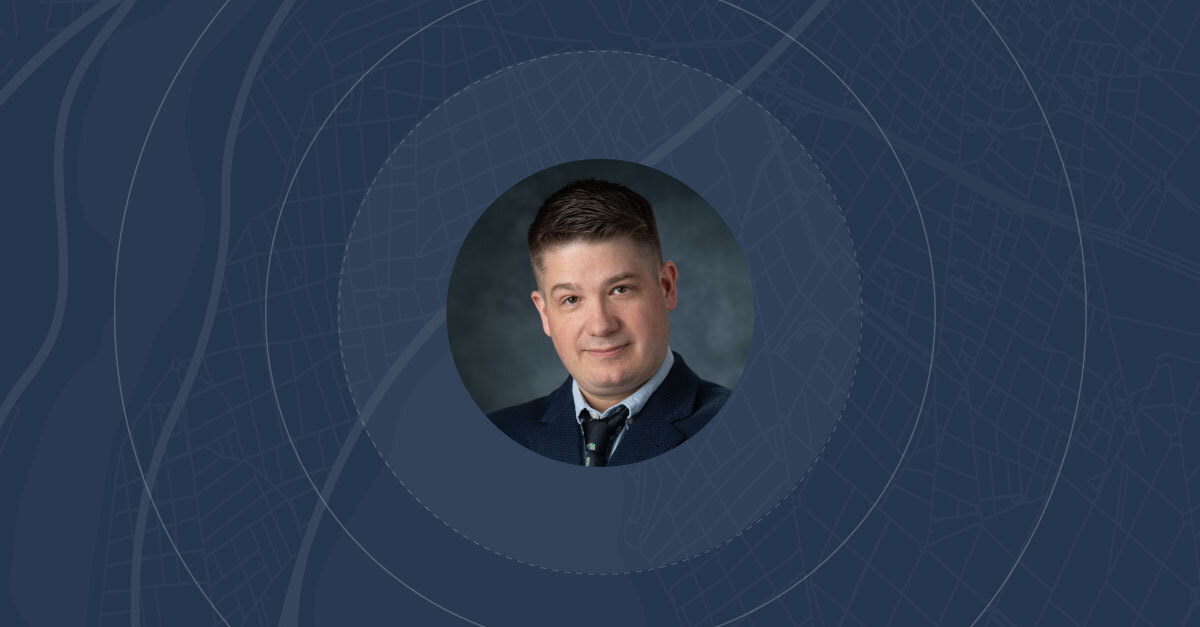



How Director Jessica Nezat is putting data to work, shaping command strategy, and guiding field operations.
- Understand the realities behind the data. Analysis becomes more useful when analysts understand how officers and detectives operate and how information is captured.
- Pair analysis with operational knowledge. Data analysis can focus attention, but practitioners provide the context needed to interpret patterns and choose the right response.
- Make data analysis accessible and sustainable. Executive sponsorship, approachable tools, automation, education, and strong partnerships help make data analytics part of everyday decision-making.
Jessica Nezat has spent her career looking for patterns that others might miss and asking what they mean for the decisions ahead. At the New Orleans Police Department (NOPD), she applies that approach to some of the department’s toughest challenges. helping leaders and investigators understand problems, focus resources, and evaluate what works. By creating tools people can use, connecting analysis with field expertise, and teaching others, she is making data analytics a routine part of how the department operates to deliver better safety and justice outcomes.
Nezat’s approach to data was shaped well before she entered public safety. Before joining NOPD, she worked closely with researchers at the University of Minnesota and then spent 10 years as a middle and high school teacher, using data to tailor instruction and behavioral interventions. Across both roles, she learned to look beneath the obvious answer, identify the underlying pattern, and translate what she found into a practical next step.
“You don’t answer the question; you question the answer.”
At NOPD, Nezat quickly recognized that the department was collecting valuable information without yet having all the tools and processes needed to use it fully. During the rapid rise in Hyundai and Kia thefts, she learned to model NOPD data and created visualizations that made the scale of the increase immediately clear to command staff. The work expanded into more robust mapping and analysis that helped investigators identify where stolen vehicles were recovered, connect those locations to known offenders, and focus investigative resources. The analysis helped reveal the pattern, giving investigators a clear path to act on.
That foundation positioned Nezat to help design NOPD’s Gun Retaliation Interruption Program, or GRIP, from its start in 2024. Each week, analysts, detectives, and partner agencies review crime statistics, clusters of shootings and armed robberies, incident details, ballistic information, and relationships among people and events. These data focus the discussion, with detectives contributing additional context that no dataset can capture. As Nezat explains, “Data analysis, paired with detective insights, helps surface connections in the meeting that we might not find in the data alone.”
Nezat also drives the design, analysis, and reporting for Operation Golden Eagle, NOPD’s multi-agency violent-crime reduction effort. She pairs crime analysis with the knowledge of district commanders to identify specific blocks, corners, and locations requiring attention, then develops the maps, reporting, and strategy to guide field operations. Her work helps translate analysis into coordinated action. The spring and summer 2026 operations netted substantial felony and fugitive arrests, firearm and stolen vehicle recoveries, drug seizures and other enforcement activity – demonstrating the initiative’s reach and operational impact.
Her influence reaches beyond any single operation or unit. Nezat has built a team of experts who tackle some of NOPD’s toughest analytical challenges while strengthening the infrastructure needed to sustain and expand the work. She helps NOPD leaders assess what changed before and after a strategy or initiative, determine whether an adjustment is needed, and use the findings in future decisions. She develops standardized, approachable tools so detectives and commanders can get answers from their data quickly. She also leads in-service sessions on Analytics for Investigations, or “thinking like an analyst,” giving detectives another way to understand problems and evaluate their work.
NOPD’s partnership with Mark43 on its records management system is part of that evolving data foundation. Nezat’s work shows what becomes possible when strong technology is paired with people who understand the data, research, and operational environment, and can turn that understanding into smarter resource deployment, better context for officers in the field, and stronger outcomes for the communities they serve.
What It Takes to Put Data at the Center of Decisions
Drawing on her experience at NOPD, Nezat points to four essentials:
- Start with the workflow. Understand how officers and detectives operate and how the data is generated.
- Build the right relationships. Connect analysts with operational experts, technical teams, vendors, universities, and other partners.
- Make information easier to use. Automate repeatable work so useful information reaches decision-makers quickly.
- Secure an executive champion. Leaders must expect data analysis to inform decisions and give analysts a meaningful voice.
What decisions in your agency are waiting on better data? Learn more about Mark43 Research to Action.