


A Career Spent on Three Sides of the Same Problem
How do we make the most of finite resources to deliver better public safety outcomes?
I have spent my career thinking about this question from different perspectives — embedded inside a police department doing research and analytics, on the funding side of policing research, and on the receiving end of that funding, engaging in research partnerships with agencies. The clearest lesson from these different vantage points: connecting insights from agency data and personnel with the best available research puts us in a much better position to build stronger agencies and safer communities.
Yet the gap between research and practice persists, and it isn’t solely a matter of knowledge transfer or translation. It’s a structural challenge, and each of my past roles exposed a different dimension of this same problem.
The Structural Gap
Agencies hold the data, while researchers develop and have access to the evidence. However, very few organizations have the infrastructure required to connect data and evidence to strategic and operational decisions. I saw this from the funding side, overseeing a national funder’s investments in policing research, where funding studies on the right research questions and getting agencies to act on the answers turned out to be two distinct challenges without consistent or sustainable solutions.
I experienced this again from the other direction, conducting grant-funded research directly with agencies – even well-resourced projects can stall if no one in an agency is positioned to act on findings.
A significant driver of this structural gap is the professional incentives that govern research vs. policing. Researchers build careers on studies that are methodologically ambitious, or that answer a genuinely new question — work that can take years to design, run, and get through review, because that’s what the field rewards and requires. Agencies are working on a different clock entirely, not because the questions they’re asking are any less serious, but because a chief needs critical information to make decisions before a budget hearing, before a new crime pattern gets worse, before procurement is finalized — whether or not a study has cleared peer review by then. Both sides are trying to get things right. They’re just built around different timelines.
Even when a study is published, it can often remain inaccessible. First, it’s written in the language of other researchers, with dense methods sections and statistical framing built for a journal audience rather than a briefing, and a lot of research still sits behind a paywall, out of reach for a department without institutional access or resources to purchase one-off. A finding that’s hard to get to and difficult to understand and apply isn’t much of a finding at all from an agency’s point of view. There’s real wariness on both sides that grows out of this mismatch: agencies unsure a study will ever produce something usable enough to be worth their time, effort and trust, and researchers unsure how rigorous, high-quality work can proceed in an operational setting and on a timeline that makes the work relevant to decision-makers.
How to Close the Gap
While better translation between the two worlds helps, it’s not enough to close the gap between research and practice. In my experience, it closes when both sides start from the same definition of what research actually is in this context: applying the analytic structure of the scientific method to the actual problems of running an agency. What’s the problem, and what data helps us scope it? What do we think is causing it, and how would we test that? What outcomes are we trying to move, and what’s our best guess on the mechanism that gets us there?
Closing the gap means applying that analytical structure deliberately and consistently, and building it into daily work, instead of leaving it implicit and ad hoc.
I saw what that can look like in practice as a research fellow at the Metropolitan Police Department in Washington, DC., where I started with a narrow mandate for the Chief’s office. That mandate quickly expanded as I talked to people across the department, and started digging into the questions that surfaced, drawing on analyses of agency data and existing research on what works to help find and tailor solutions for MPD. This became a repeatable process, leading to the creation of an entire research and innovation function inside the department to support decision-making.
That kind of consistency asks something of both sides. At an agency, it starts with surfacing the right questions and building a culture where flagging an unusual trend is treated as part of the job, not an inconvenience or something to fear. From the research side, it means moving out of academic timelines and building for the pace agencies operate on, so a good answer still arrives in time to inform important decisions.
Where Mark43 Fits In
Mark43 brings the operational data and system expertise to support data needs and connectivity to the research community, which means we can translate research expertise into the systems agencies rely on every day, while the agency retains ownership and control of its data. That combination is unique. A traditional consultant can study a problem from the outside, but they are not already working within the systems where that data lives or bringing firsthand law enforcement experience with the people and operations behind it. We are.
Closing the research gap in public safety requires agencies willing to start with a question they already care about, and a partner equipped to work alongside them without creating additional work or processes that pull focus from the day-to-day mission. That is the work we aim to advance with Mark43 Research to Action: start with agency data to understand priorities and challenges, translate insights from the best available research to agency context, and design and deliver timely, actionable solutions, ultimately driving better public safety outcomes for agencies and the communities they serve.
Key Takeaways for Agency Leaders
- Build an environment that questions or surfaces anomalies early. Agencies that discourage staff from raising unusual trends are cutting off their own best source of research questions.
- Look for a partner already working inside your data. Traditional consultants study your agency from the outside. A faster path to usable findings is a partner already embedded in your systems and understands your policies and processes.
- Start with one question you already care about. A formal research program is not a prerequisite. Identify a well-defined and recurring question or challenge you want to dig into around enforcement, deployment, staffing or more.
You don’t need a research program. You need one question to get started. What’s yours? Learn more about Mark43 Research to Action.
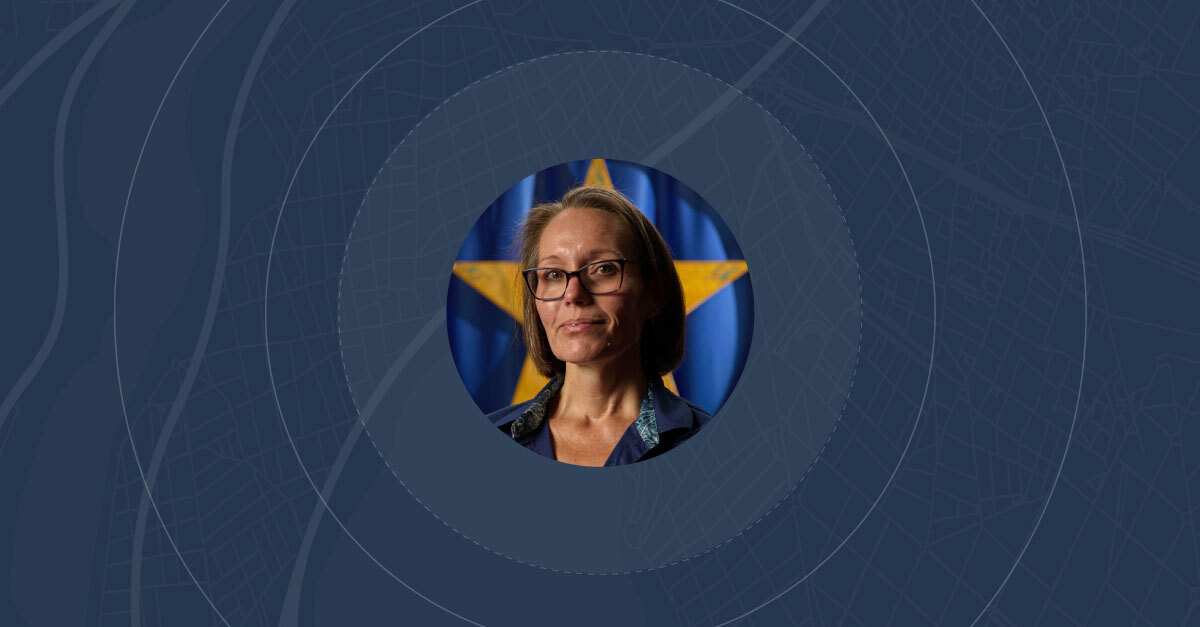
About the Author: Anita brings a rare, three-sided vantage point to the work: she has served as a research fellow at the Metropolitan Police Department, where she built out the department’s research and innovation function from the inside; she has sat as a national funder overseeing investments in policing and public safety; and she has been on the receiving end of that funding, working directly with agencies to put research into practice. That combination of experience inside a department, inside a funding organization, and inside the research itself is what shapes her approach to closing the gap between evidence and everyday policing to improve public safety outcomes.