

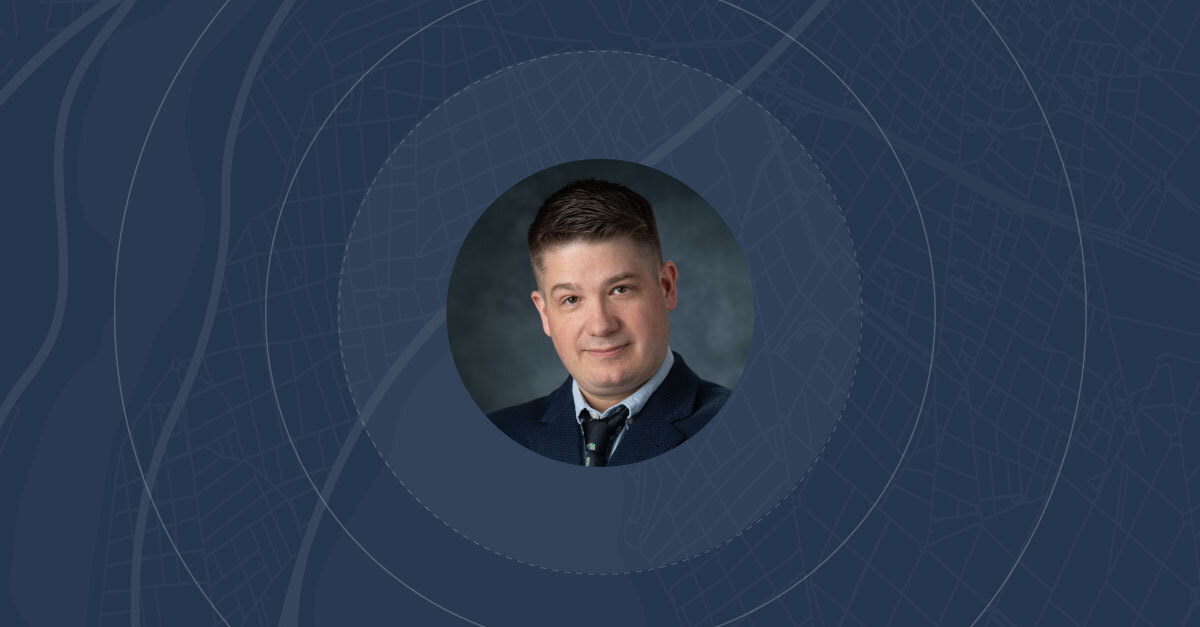
How Dr. Loren Atherley uses research and data analysis to drive learning, strengthen operations, and spark innovation across Seattle PD.
- Build curiosity, not just compliance. Data use becomes sustainable when teams seek evidence to answer questions and strengthen their work—not simply to satisfy a mandate.
- Start with an operational need and build from there. Deliver something useful, observe how people apply it, and let frontline feedback shape the next question, tool, or capability.
- Invest in infrastructure that extends beyond one project. Shared data rules, skilled teams, research partnerships, and openly shared methods allow an agency’s investment to deliver lasting value—both internally and across the broader public safety community.
For Dr. Loren Atherley, the most important impact of 13 years at the Seattle Police Department (SPD) is not a single study, dashboard, or technology. It is a change in how the department approaches answering tough questions. Rather than turning to data primarily to fulfill a requirement or mandate, SPD colleagues now come to his team eager to ask better questions and explore how certain types of analysis can enhance or strengthen their work. Atherley calls this evolution becoming “data curious,” and he considers it the single greatest achievement of his career. That curiosity has now become self-sustaining, shaping decisions across the department every day.
Atherley joined SPD to support federally mandated reforms under Seattle’s consent decree (2012 to 2025). Fresh out of graduate school and motivated to put research to work in public service, he and others quickly responded to the reality that the department lacked the data and infrastructure — the competency — necessary to inform key discussions about use of force, crisis response, and differential impacts of policing in communities across Seattle.
Building that capability required shared data definitions and business rules, consistent analytical methods, strong research partnerships, and a team that could operationalize complex analysis, turning insights into tools and products that officers, analysts, and leaders could readily use. The consent decree provided both the mandate and the investment to build the infrastructure needed. Atherley helped channel that investment into a robust analytics platform and a broader vision for SPD as a learning organization. This all important “tool of critical self-analysis” applies proven practices and, where gaps remain, contributes new evidence to the field to drive continuous improvement.
“Even if you just have the ability to start little tiny sparks, little tiny fires, and kindle the energy that people have, the appetite that they might have to support the work that they’re trying to do, take advantage of that.”
That vision has made SPD a hub for research collaboration. Over the past 13 years, Atherley’s team has supported more than 220 projects involving nearly 100 researchers from 50 organizations worldwide. The work spans a broad range of policing and public safety topics, including evaluating the effects of policy changes, examining factors that influence pretrial risk assessment, and conducting clinical trials of devices designed to treat anxiety, depression, and PTSD among first responders. The value of that work extends beyond formal research projects; it also shapes daily operations.
The Department’s response to people in crisis illustrates what this looks like in practice. A dashboard initially created to reduce the time spent preparing statistics for public presentations evolved into the foundation for a more ambitious evidence-based approach. The team began using the data to identify “high-utilizers” of crisis services and support response planning efforts. From this engagement came the need for more effective and rapid triage, resulting in a tool that uses natural language processing to surface reports that may warrant further review for an Extreme Risk Protection Order (ERPO). It continuously searches relevant reports and refers them to officers for review, so SPD can spend less time finding potential cases and more time evaluating and responding to them, potentially saving lives as a result.
For Atherley, this evolution captures how analytical capability grows: start with a problem people already care about, provide something useful, listen to how they respond, and improve it. Do not wait for a perfect tool if a reliable, timely insight can strike while the policy question is hot and inform the solution to essential problems. He calls this the “on-time delivery of insights” — meeting the policy moment with information people can understand and apply when they need it most.
This approach has made SPD’s Performance Analytics & Research group increasingly valuable across the department. As various SPD units and city leaders saw the team address concrete operational needs, demand for its work grew. And so too did the team, expanding from a single senior analyst in 2013 to approximately a dozen full-time positions with additional contractor support. Seattle resolved the consent decree in August 2025, but the work it helped launch continues. Today, Atherley’s group tackles emerging operational questions, refines analytical tools based on how officers and leaders use them, and shares SPD’s research, methods, and code with agencies facing similar challenges. For Atherley, this is how SPD honors the community’s investment: by strengthening public safety in Seattle while helping other agencies build similar capabilities.
What It Takes To Build Data Curiosity
- Start with immediate value. Solve a problem people already care about.
- Deliver insights on time. Provide reliable information while the question is still active and useful.
- Treat feedback as evidence. Watch how people use the work, listen to what they need, and improve the next version.
- Let demand make the case. Connect analytics to daily work so its value drives investment and growth.
What policy question in your agency is waiting on the right insight, right now? Learn more about Mark43 Research to Action.