Legacy Computer-Aided Dispatch (CAD) systems are reaching the end of life. Meanwhile, Next Generation 911 is transforming how information enters the dispatch center. Agencies are integrating drone-as-first-responder programs, sensor-based alerting, license plate recognition, and real-time video feeds – all while incidents themselves necessitate coordination across police, fire, and EMS dispatch operations. The operational environment has evolved. In many cases, the systems supporting it have not.
As agencies evaluate the next generation of CAD solutions, the question is no longer whether multi-discipline coordination is possible – but whether their technology is built to support it. To explore what this shift means in practice, we sat down with Kyle Seibolt, Senior Director of Product for CAD, and Kevin Fray, Field Chief Technology Officer, about why multi-discipline dispatch is no longer a forward-looking concept, but a present-day requirement.
The Operational Reality Has Changed
Public safety incidents rarely fit neatly into a single discipline.
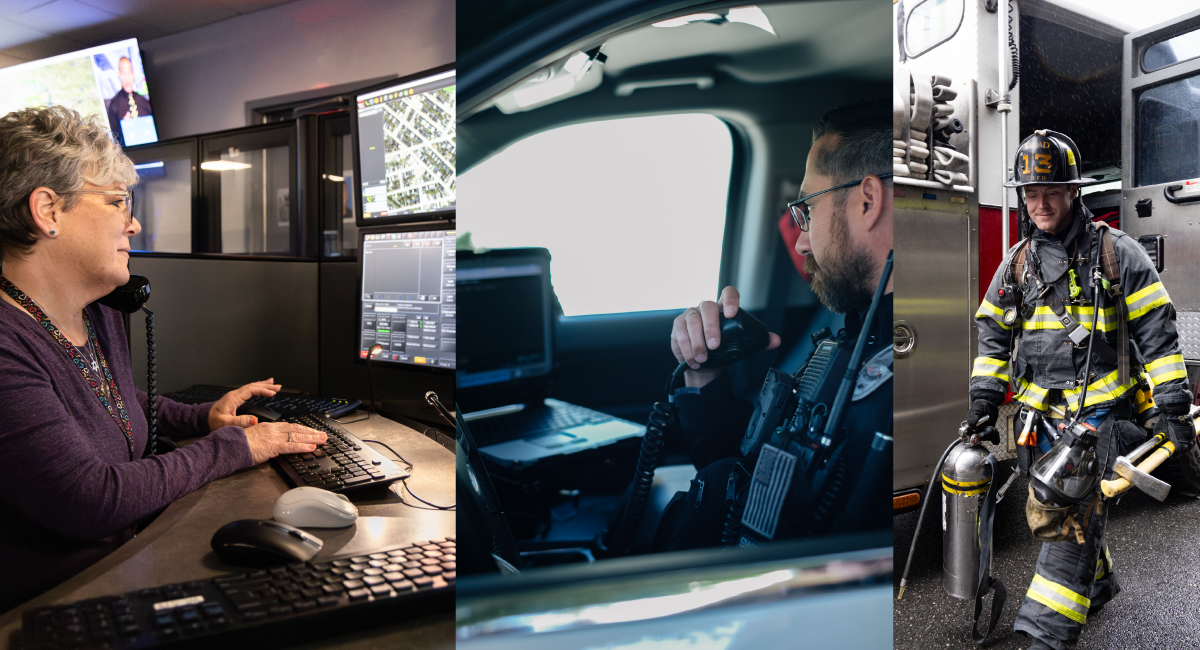
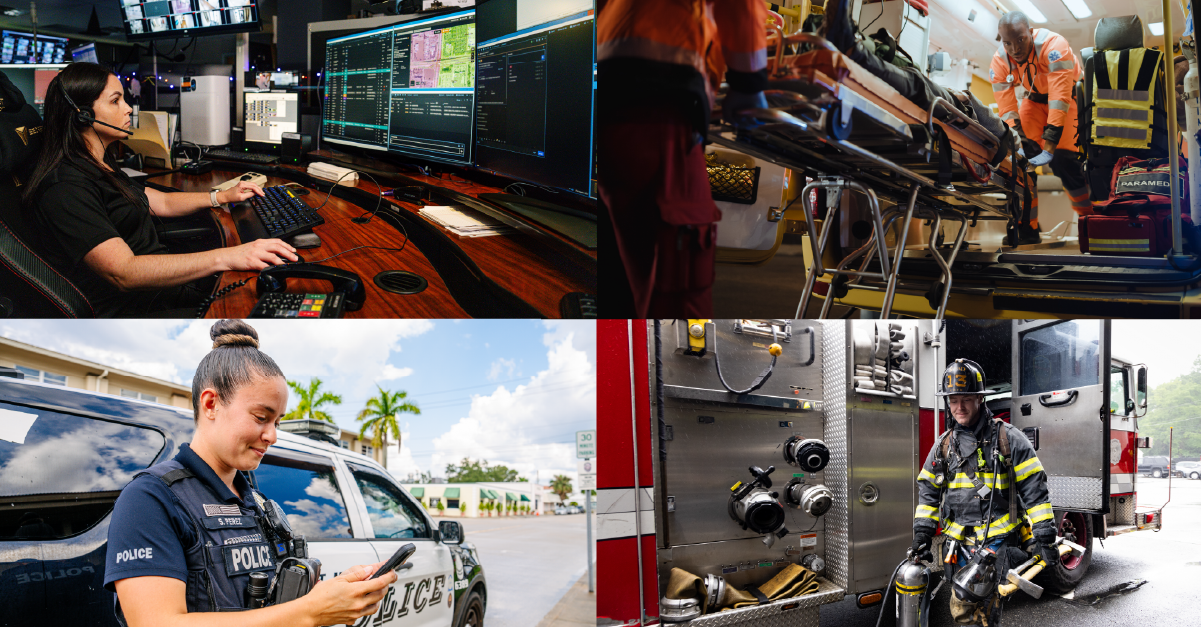
“Public safety operations have fundamentally changed,” said Kyle Seibolt “The highest risk, most complex incidents today, they’re no longer just single discipline events. Medical calls escalate into law enforcement responses. Fire incidents require EMS coordination and traffic control. Large-scale emergencies like severe weather or active shooter threats demand simultaneous coordinated action across PSAPs, fire, law enforcement and EMS.”
Seibolt has seen what happens when coordination depends on workarounds instead of shared infrastructure.
“Instead of being forced into a single discipline system and trying to work through it using phone calls and radio relays, duplication of data entry… that fragmentation creates delays, blind spots, and just a lot of unnecessary risk on agencies.”
Multi-discipline CAD is not about adding complexity. It is about aligning technology with operational reality: shared context, shared data, and native coordination because that is how incidents unfold.
A Market and Architecture in Transition
At the same time, the technology landscape around CAD is shifting rapidly.
“There’s a big technology shift going on right now,” said Kevin Fray. “You have legacy platforms reaching end of life, new platforms being released, Next Generation 911 coming online – and then you start to layer in drones as first responders, sensor technology, and alerting systems.”
This isn’t a routine upgrade cycle, it’s architectural. Agencies are not simply replacing old systems. They are rethinking the foundation of their operational ecosystem.
“The ecosystem of products around CAD is changing,” Fray explained. “You need to make sure that your core system can actually take advantage of it.”
The question is no longer whether CAD can dispatch units. It’s whether CAD can serve as the operational backbone for everything happening around it.
Coordination Without Forcing Uniformity
One of the biggest misconceptions around multi-discipline CAD is that it requires every team to work the same way. At Mark43, the approach is far more intentional.
“We’re very deliberate about our approach at Mark43. We don’t force a convergence of workflows. We allow workflows to naturally line up and support one another across disciplines,” said Seibolt.
PSAPs remain optimized for call-taking and prioritization. Fire operates through apparatus-based responses and run cards. EMS aligns to medical prioritization and patient care models. Law enforcement maintains its tactical and safety frameworks.
What changes is visibility.
When disciplines operate from a shared incident, updates propagate automatically. Supervisors gain stronger situational awareness. Decision-makers share context instead of requesting it.
“You get faster decision-making because everybody has a shared context,” Seibolt shared. “You reduce hand-offs and delays…you have much better situational awareness for supervisors…and a very clear set of accountability during complex actions.”
During large-scale events, those advantages compound.
“[Our CAD] is designed to address operational readiness at its core and to face the realities of the environment that our first responders and dispatchers exist in today,” said Seibolt.
Managing Complexity Without Adding Cognitive Load
Greater coordination introduces complexity. The system supporting it cannot amplify that burden.
“It’s a delicate balance,” shared Fray. “You need to handle the complexity but make it as easy as possible and reduce the cognitive load.” That balance is achieved through workflow-driven architecture. “We like to distill everything down to a workflow.”
Automation supports the Next Best Action. Role-based views ensure users see what matters most to them. Configuration replaces brittle customization. Cloud-native infrastructure reduces lag and downtime.
“As the environment gets more complex, we are streamlining and simplifying,” said Seibolt. Keeping the richness of data from diverse ecosystem partners without overwhelming our dispatchers and responders. Getting the right information to make the right decisions quickly and accurately. The objective is clarity, especially when seconds matter most.
The Risk of Standing Still
Remaining on legacy platforms carries operational and security risk.
Fray shared: “First and foremost, you’re in danger. You’re under attack DAILY. Ransomware, phishing, and sophisticated cyber attacks.”
End-of-life systems introduce vulnerabilities. Slower, fragmented platforms make coordination harder. As incidents grow more complex and natural disasters more frequent, outdated infrastructure becomes harder to scale and defend.
“If you keep doing things the old way, you’re not going to adjust, you’re going to be victimized” he added.
The cost of standing still shows up in response times, situational awareness, and operational resilience. And at the municipal level, there is increased scrutiny or costs on cyber insurance.
Measurable Impact After Go-Live
For agencies that transition to a unified platform, the impact is both operational and cultural.
“After customers have launched our multi-discipline CAD, they express a sense of relief,” Seibolt said. “Relief that the system is stable. Relief that workflows are complete. Relief that duplication and downtime are no longer constant concerns.”
Over time, these operational improvements have become cultural. Teams begin operating less like separate departments and more like a unified public safety organization with shared visibility and shared accountability.
Looking Ahead
The trajectory is clear: fewer silos, less duplication, more shared context.
“We’re seeing unity amongst PSAPs… wishing for information connectivity and less rekeying,” said Fray.
As those integrations deepen, the lines between CAD, real-time crime centers, and command environments will continue to blur.
Multi-discipline CAD is not an ad-on or a future roadmap item. It is quickly becoming the standard for agencies preparing for what public safety now demands. It will serve as the operational backbone for the next decade of response.
What This Means for Agencies Evaluating CAD
For agencies evaluating their next CAD platform, here are some questions that leaders should be asking:
- Does this system allow disciplines to operate in their own optimized workflows while sharing a single source of truth?
- Can it natively support Next Generation 911, drones, sensor inputs, and real-time video?
- Will the new system reduce cognitive load for dispatchers or add to it?
- Is the architecture built to evolve over the next decade or just replace what we have today?
- Is your CAD infrastructure aware of and hardened against the latest cybersecurity threats?
These questions should help guide your decision making.
Learn more about Mark43’s multi-disciplinary CAD here and book your demo today.