

What Does It Take to Build a Model Police Agency?
A three-part blog series on community policing, trust, and the future of public safety leadership.


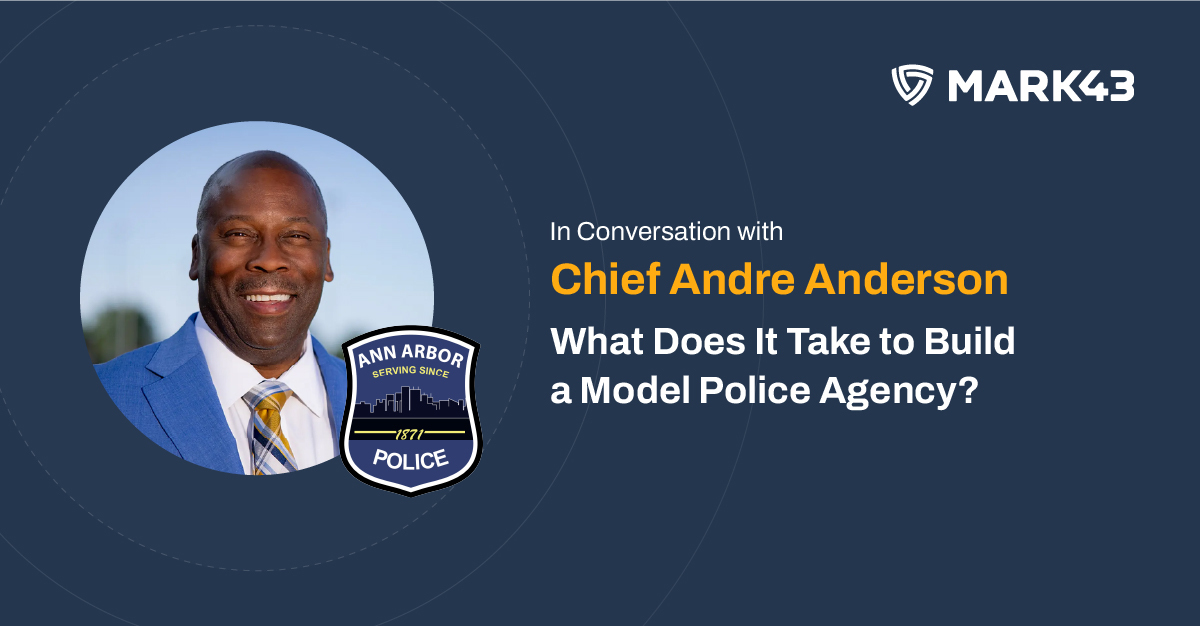
Having led agencies through some of the most challenging and scrutinized moments in modern policing, from Ferguson, MO to Rochester, NY, Chief Andre Anderson of the Ann Arbor Police Department knows what it takes to build trust under pressure. In this conversation, he shares why a model police agency starts with who you hire, how community policing must be part of an organization’s DNA and what must change for that philosophy to stick.
When you came to Ann Arbor, you said you wanted to build the nation’s model police agency. What does that actually look like in practice?
A model agency starts with hiring the best people for the role. And by best, I mean people who are educated, competent, have cultural competency, and understand what it means to be a public servant. You have to create a platform through your hiring practices, your promotional processes, that gleams those types of employees and matches your organization’s cultural norms.
For us, that meant going out and meeting with community members, council members, and city leaders to roadmap a strategic vision for what community policing looks like here. From there, the goal is to permeate that philosophy from the line level through command, through hiring, through promotion, and through me leading by example. That’s the model.
You’ve said that community policing isn’t a strategy — it’s a philosophy. What’s the difference, and why does it matter?
A lot of leaders see foot patrol as community policing. But foot patrol is just the mechanism. What’s authentic about community policing is what happens during that foot patrol — genuine conversations with community members, demonstrating that you’re concerned about the challenges they face, and finding problem-solving partnerships to work through those challenges together.
Community policing is knowing the person personally. Knowing maybe they attended school, knowing about their family. Being willing to share your own life experiences so that you humanize the profession. As you do that, you build real partnerships. People see you as someone there to help them.
It also means admitting when policing alone can’t solve the problem. We’re hiring social workers. We’re bringing in harm reduction experts, housing advocates, people with expertise that allows us to address some of the societal issues we’re seeing. Community policing is bringing those people to the table and working side by side with them.
It’s difficult to measure because it’s reflected in thousands of daily interactions. At it’s core, community policing is about caring, trust and solving problems alongside the people you serve.
For chiefs who still treat community policing like a program, what does the shift actually require?
It requires embedding it into everything. How you promote, how you hire, what you reward, and what officers do in the field. If it’s a program, it ends when the funding runs out or when priorities shift. If it’s a philosophy, it lives in every interaction.
The question I’d ask those chiefs is: what behaviors lead to promotion? What accomplishments are celebrated? If community policing matters, officers should see that reflected in the people who move into leadership roles. If you’re promoting based on arrest numbers, you’re not building a community policing department. If you’re promoting people who have demonstrated genuine concern for the people they serve, you’re getting somewhere.
The model agency isn’t built in a day, and it isn’t built around programs. Hire people who embody your values. Reward leaders who strengthen community trust. Reinforce those expectations every day.
In part two, Chief Anderson talks about what happens when that foundation isn’t there, and what it takes to rebuild trust from the ground up.
Chief Andre Anderson is the Chief of Police for the Ann Arbor Police Department. He previously served in leadership roles in Ferguson, Missouri and Rochester, New York. He also serves as the Special Assistant to the President of NOBLE (National Organization of Black Law Enforcement Executives).


Mark43 is the trusted leader in public safety technology, providing a secure, all-in-one platform for agencies to save time, stay compliant, and ensure community safety.