

How Newark Police Division Gets Critical Intelligence to Officers and Commanders


Newark is turning decades of crime data into information that officers, investigators and commanders can use when it matters most.
Background
Serving more than 320,000 residents with over 1,100 sworn officers and responding to more than 520,000 calls for service annually, the Newark Police Division manages an enormous volume of public safety information every day.
For nearly three decades, the agency has collected and analyzed crime data to identify trends, track activity and guide public safety operations. But turning that data into actionable intelligence remained a largely manual process. Staff reviewed incident reports, verified classifications, and entered information into spreadsheets to prepare reports for command staff. The work took considerable time and the information wasn’t always available when decisions needed to be made.
Modernizing how the division accessed its information became a priority.
The Challenge
Newark’s officers and commanders needed different information at different moments, but finding answers often meant relying on someone else. Patrol officers, typically requested the history of a person or location from dispatch and commanders depended on manually prepared reports or calls to individual units to understand recent criminal activity, identify emerging patterns and determine where resources were needed.
Sergeant Louis Medina, a 32-year veteran of the Newark Police Division and 911 coordinator, described compiling and reconciling information from CAD and incident reports: “Long and tedious. And at the end of the day, when your director, administrator or the mayor wants data for any activity going on within the city, they want it now.”
Public Safety Director Emanuel Miranda explained that crime updates often lacked the context needed to make operational decisions. Learning that two robberies occurred overnight was only a starting point. To find out where they happened, whether the incidents shared suspect or vehicle descriptions, and whether they represented an emerging pattern, he had to contact investigators or precinct commanders to piece together the details.
The division needed a faster way to connect the information it already collected and make it available to the people making decisions.
The Solution
After evaluating several competing solutions, Newark Police Division selected ForceMetrics for its ease of use, launching the platform in August 2026 to give officers, investigators and command staff a centralized, searchable view of information across public safety systems without requiring extensive technical expertise.
Designed to be as intuitive as a Google search, personnel can search people, locations, vehicles and keywords navigating multiple systems or waiting for someone else to retrieve information. “It’s so easy to operate. You can just imagine going to Google and punching anything into Google,” said Director Miranda.
Helping Officers Prepare Before Arrival
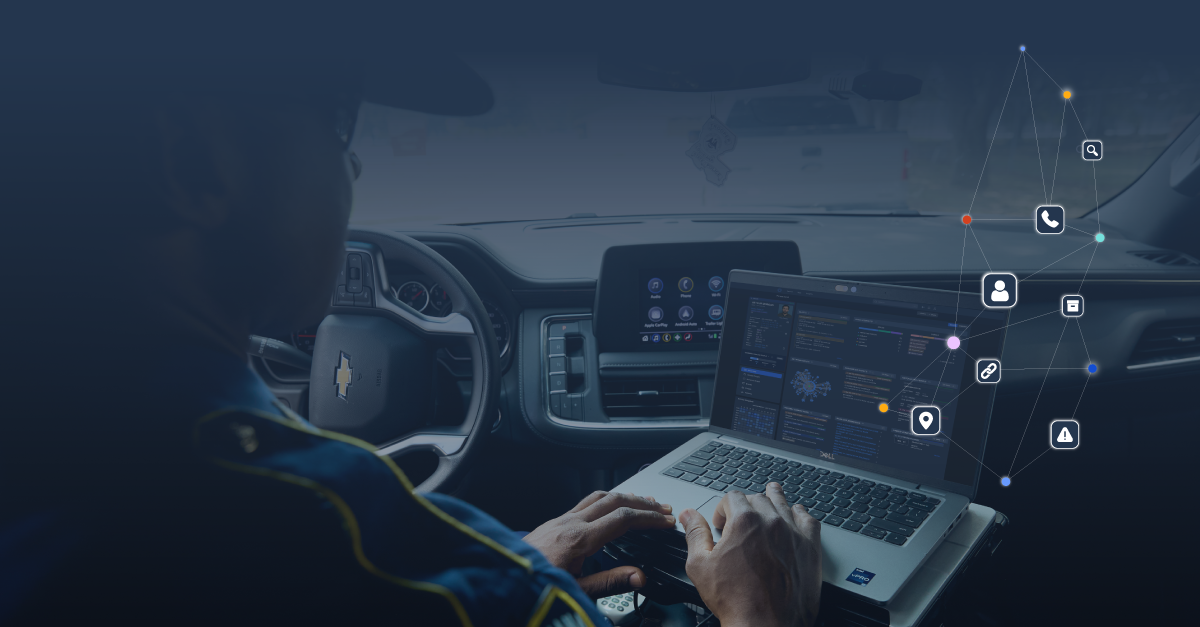
With ForceMetrics on department-issued smartphones, officers can search relevant information while responding to an incident, providing important context before they arrive.
“Our officers have never had access to this kind or quantity of data before,” Director Miranda said. “Now, officers can access that information directly from their phones, while detectives and command staff have additional visibility into investigative activity and crime trends relevant to their roles.”
Turning a Partial License Plate Into an Investigative Lead
Sergeant Medina shared an example from the division’s first day of ForceMetrics training. An officer overheard a bulletin from Woodbridge police about a wanted individual, including a partial license plate and vehicle description. The officer entered the partial plate into ForceMetrics and found a potential match. Newark personnel located the vehicle and notified Woodbridge, whose officers subsequently made an arrest. “That was a home run right off the bat, within an hour of training,” Sergeant Medina said.
The experience reinforced Medina’s emphasis on documenting details that may later become critical investigative leads. “Every detail becomes valuable search criteria in ForceMetrics that later on could help an investigator somewhere down the line,” he said.
Answering City Leaders’ Questions in Real Time
During a meeting with city leadership, Director Miranda was asked about calls for service at a downtown hotel that had become a concern for city officials. Previously, answering that question would have required staff to manually compile information from multiple reports.
Instead, Sergeant Medina searched the hotel’s address in ForceMetrics and pulled up its calls for service, including a breakdown by incident type. Leadership could then examine when incidents occurred and look for patterns. “Right from his fingertips, Sergeant Medina was able to give me all that information,” Director Miranda said. “Before, it used to take hours or even days to get some of this information.”
The Impact
ForceMetrics is helping Newark personel use information that was previously difficult to access:
As Newark continues modernizing its technology systems, including its planned launch on Mark43 in December 2026, the division is focused on making critical intelligence more accessible across its operations.
“Introducing another tool can initially feel like additional work for officers, but having the right information available can make a meaningful difference in how they respond, investigate and collaborate. It unlocks faster access to critical information, better situational awareness, improved officer and community safety, and stronger collaboration across units and neighboring agencies,” shared Sergeant Medina.
Book a demo to learn more.
Mark43 is the trusted leader in public safety technology, providing a secure, all-in-one platform for agencies to save time, stay compliant, and ensure community safety.