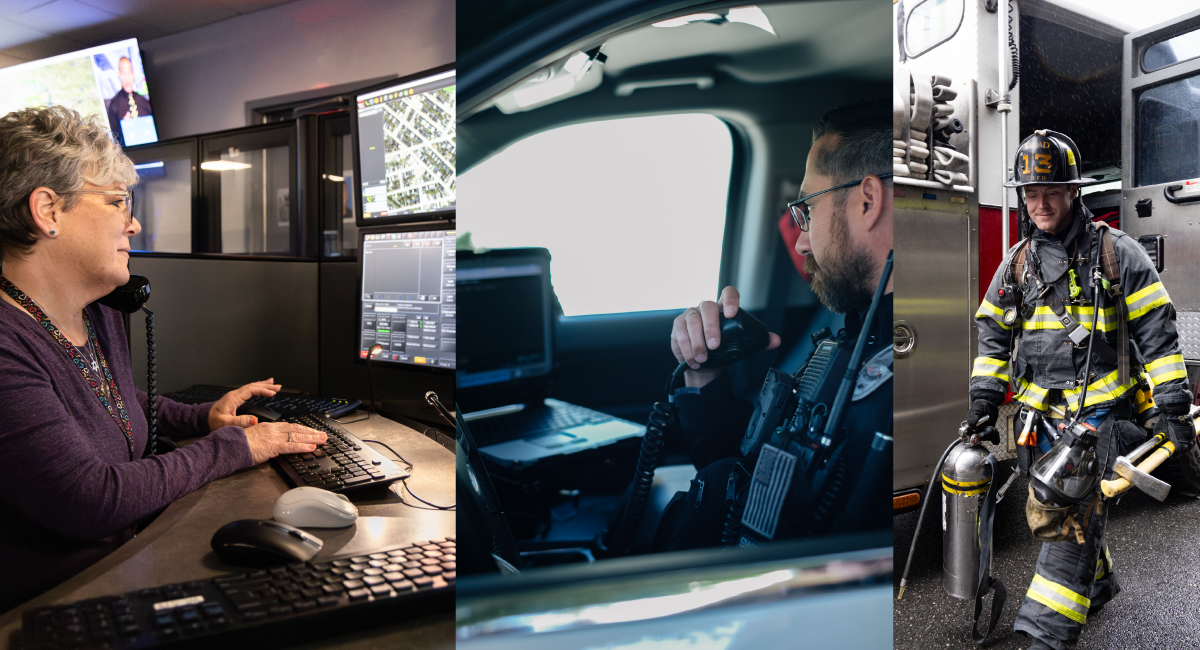


Public safety agencies are being asked to do more with less. Staffing shortages persist across jurisdictions. Administrative workloads continue to grow. Budgets are under pressure. And community expectations for transparency, responsiveness, and accountability have never been higher.
At the same time, a new set of tools is rapidly emerging to help agencies address these challenges while expanding what’s possible. Artificial intelligence is already helping agencies reduce report-writing time, summarize complex cases, surface key information faster, and streamline administrative tasks. In a profession where decisions carry legal, operational, and community consequences, innovation must be paired with strong oversight and clear governance.
Mark43 supports agencies with AI tools like ReportAI and BriefAI, helping officers and investigators work faster and smarter while maintaining accuracy, transparency, and defensibility.
The Mark43 Approach to Responsible AI is grounded in four core principles that guide how the company designs, deploys, and governs AI across the platform: Human-First Design, Workflow and Data Integration, Transparency and Validation, and Security and Compliance. This four-part blog series explores each principle and answers key questions agencies are asking about responsible AI.
Let’s start where Responsible AI must always begin: with people.
How AI Can Support Officers Without Replacing Human Judgement
Principle 1: Human-First by Design
Human-first by design in law enforcement means AI tools support officers with daily operational tasks like report writing and case creation while keeping all final decisions under human control.
According to a recent survey of law enforcement, 91% of respondents support their agency’s use of AI to improve public safety operations, and 79% believe humans must remain in the loop.
That same expectation defines Responsible AI at Mark43.
AI tools are designed to support and elevate human judgment. Public safety work relies on experience, discretion, empathy, and accountability. The Human-First by Design principle ensures AI reduces administrative and cognitive burden while keeping decision-making in the hands of trained professionals.
How does AI reduce reporting time?
AI reduces report writing time by generating draft reports from existing data, allowing officers to complete reports in minutes instead of hours. As a trusted customer, Captain Luis Mejia of Tracy Police Department explains, “Report writing is one of the most time-consuming parts of the job. What maybe took hours can now take minutes with AI-assisted tools. If we can cut that time and get those hours back, that’s a huge win… Efficiency translates directly into cost savings and better service for the community.”
That’s the power of ReportAI. Embedded directly into the Mark43 reporting workflow, it generates draft narratives aligned to agency-approved templates and standards, using available CAD data, body-worn camera transcripts, officer notes, and event context to pre-populate report fields and narratives. Officers can review, edit, and approve every submission, while built-in validations surface potential errors to improve accuracy and compliance. The technology accelerates documentation and review processes with fewer reports returned for correction, while accountability remains firmly with the officer.
“Our officers are expected to apply complex policies and nuanced NIBRS while documenting fast-moving incidents. With Mark43’s AI-powered validations acting as a copilot, we can guide officers in real time, helping them meet reporting standards, capture the right details, and stay aligned with policy without relying solely on supervisor review. This reduces preventable errors, improves consistency and completeness, and allows our Records team and supervisors to focus on higher-value review instead of catching routine issues,” shared Robin Oates, Director of Records Management at Louisville Metro Police Department.
The same philosophy guides BriefAI, which transforms lengthy reports and complex data into actionable case intelligence so supervisors and command staff can quickly understand what matters most. It delivers concise case summaries, surfaces case scope, and highlights next steps, while keeping humans firmly in control. Inline citations link directly to source data for easy verification, and the system flags when information is insufficient to avoid hallucinations, ensuring outputs remain grounded in accurate, underlying case data.
What does a human-first approach to AI look like in public safety?
Just as importantly, Mark43 AI systems are developed in close partnership with public safety agencies and aligns with what agencies are asking for. Through early access and pilot programs, structured validation checks, and ongoing feedback loops, AI systems reflect real-world workflows, policy requirements, and accountability standards. At Mark43, AI evolves alongside agencies and the communities they serve.
Wendy Gilbert, Mark43’s SVP of Product, said: “AI is one of the most powerful tools shaping the future of public safety. At Mark43, we are intentional about how we build and apply AI, always focused on enhancing human judgment… Our goal is to help agencies use AI responsibly to increase efficiency, accuracy, and community confidence.”
Responsible AI starts with people. When designed human-first, AI strengthens the professionals who protect and serve their communities every day.
Book your demo today, learn more about Mark43’s Responsible AI Approach and stay tuned for additional blogs.