
Public Safety at a Crossroads: Leadership, Technology, and the Path Forward
Reflections from the 2026 NOBLE Public Safety Summit


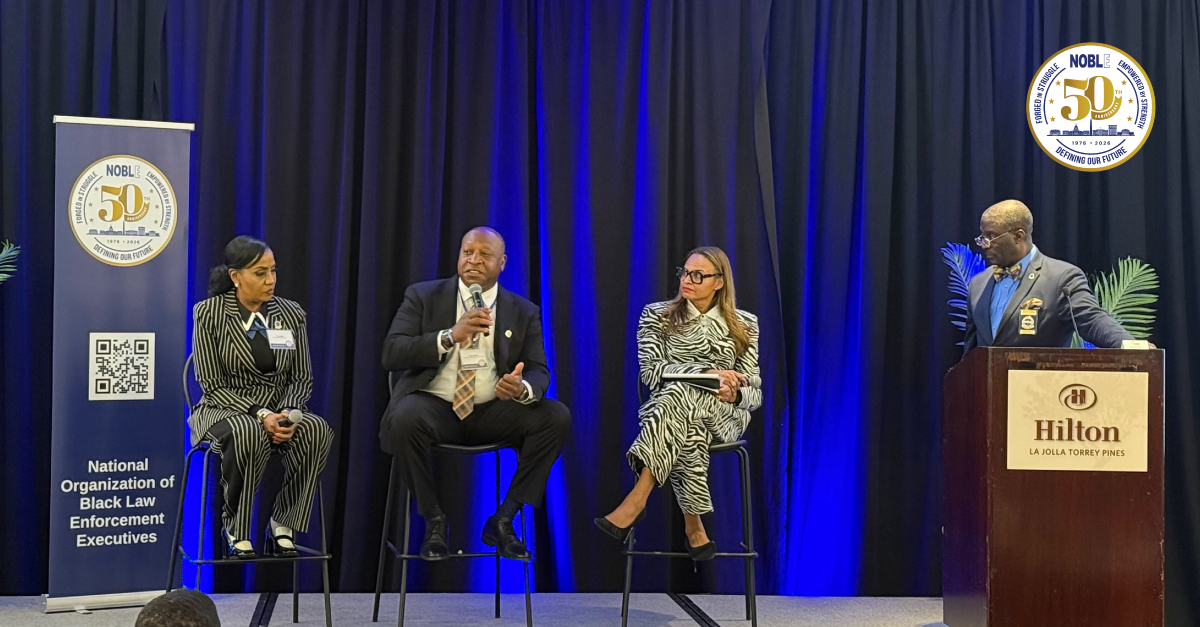
More than 80 public safety leaders gathered in San Diego, representing more than 30 agencies to tackle some of the most pressing challenges first responders are facing across the nation. This year, the theme of the conference was, “Leading with Integrity, Building Trust, Harnessing Innovation.” Attendees came away with actionable ideas and strategies to inform their top priorities for the year ahead. Mark43 is honored to partner with and sponsor NOBLE. Below are reflections from the summit:
Public safety is navigating a defining period — the mission has not changed, but the conditions surrounding it have.
As leaders gathered in San Diego for the 2026 NOBLE Public Safety Summit, the discussions reflected a profession operating under heightened expectations, accelerated technology advancement, and sustained visibility. Safety and service remain foundational. What is evolving is the environment in which those responsibilities are carried out.
Across discussions on leadership, artificial intelligence, community trust, and officer wellness, a clear theme emerged: the defining question is not whether public safety will innovate, but by how intentionally that innovation is led, governed, and sustained.
Leadership as Organizational Infrastructure
In today’s environment, leadership is more than direction-setting. It’s structural.
When scrutiny is constant and information can change in an instant, ambiguity inside an organization creates hesitation and slows execution. Ambiguity outside creates skepticism and erodes credibility. Leaders must define priorities clearly, explain decisions transparently, and reinforce mission constantly.
This moment calls for leadership that is steady rather than reactive. Not performative, but principled.
The next generation of chiefs and command staff will inherit agencies informed by real-time data ecosystems, interagency coordination, technology, and evolving public expectations. Preparing future leaders requires more than tactical proficiency; it requires exposure to complexity in their current roles, mentorship, and deliberate opportunities for training and growth.
Leadership in this context is infrastructure. Without clarity at the top, even well-funded initiatives won’t be successful and trust erodes.
Technology as Strategic Architecture
Technology is no longer a secondary consideration in public safety operations. It shapes how agencies deploy, respond, analyze, and communicate.
Real-time data environments, integrated systems, and advanced analytics have the capacity to increase precision and situational awareness. But the true differentiator is not the sophistication of the tool, it is how it’s integrated across all operations.
Technology must support how work actually gets done. Officers in the field require timely, contextual information. Command staff require clarity without overload. Investigations, patrol, and specialty units must operate within connected systems rather than siloed platforms.
When technology mirrors operational reality and integrates across functions, it reduces duplication, minimizes workarounds and accelerates decision-making. When systems are layered without strategic integration, complexity compounds.
For public safety leaders, the question is not “what new tools should we adopt?” It is “How can tech work for us to advance our strategic priorities?” Thoughtful adoption takes a lot of work. Clear implementation plans, defined outcomes, and long-term sustainability determine whether technology will support the important work those on the front lines are doing, or if it will make it harder for them. Partnership and lifecycle support matter as much as initial deployment.
Alignment — not accumulation — will determine whether technology strengthens operations or fragments them.
Artificial Intelligence: Expanding Capacity, While Preserving Accountability
Artificial intelligence has moved from concept to capability.
AI can streamline documentation, surface insights within complex datasets, and reduce administrative burden. Time can be redirected toward higher-value work —less administrative work and more time spent in the community.
That shift carries real potential. But capacity without oversight and governance introduces exposure.
Leaders must determine where AI strengthens outcomes and where discretion must remain firmly human. Validation protocols, auditability and clear accountability chains aren’t just operational safeguards, they are foundational.
Innovation in public safety cannot operate on autopilot. Decisions influenced by technology carry operational and reputational weight. Responsible AI adoption requires disciplined scoping — identifying where augmentation strengthens outcomes and where human judgment must remain primary.
Governed well, AI increases capacity. Governed poorly, it increases risk.
The objective is not to replace human judgment, but to augment it — pairing AI capabilities with accountable human oversight.
Innovation and accountability with AI are not competing priorities. They are interdependent.
Trust as an Operational Outcome
Every advancement in leadership or technology will influence public trust.
Trust is not built through messaging alone. It is reinforced through consistency, transparency, and visible accountability. Clarity about how tools are deployed and decisions are reviewed strengthens legitimacy.
Modern public safety increasingly reflects a broader understanding of safety itself. This includes public-private partnership, expertise from mental health professionals, co-response models, and proactive engagement. Enforcement remains part of the mission. So does relationship-building.
Communities respond to openness and relationships. When agencies communicate clearly and operate consistently, confidence grows. When systems appear opaque or reactive, skepticism follows.
Trust is essential to public safety. Keeping communities safe can’t solely be the police department’s role, it must be a shared responsibility. When residents and first responders work together, public safety outcomes are improved.
Culture and Wellness as Strategic Safeguards
The effectiveness of public safety depends on the resilience of its workforce.
Officer wellness is essential to performance. Environments that normalize support, encourage honest dialogue, and model care from leadership strengthen long-term effectiveness and retention.
Culture influences every policy, investment, and initiative. Organizational norms influence morale, decision-making, and collaboration more powerfully than formal directives alone.
Technology investments and leadership strategies achieve meaningful results when reinforced by cultures grounded in respect, accountability, and shared purpose.
Investing in people with the same intentionality applied to technology or policy development builds long-term resilience and direction.
A Profession Shaping Its Next Chapter
Public safety stands at the intersection of leadership, technology, and trust.
This moment will be defined by agencies who choose to evolve intentionally:
These priorities are interconnected.
The conversations in San Diego reflected the perspectives of leaders who are working to innovate by aligning modernization efforts with mission, reinforcing accountability structures, and sustaining trust through deliberate governance.
Continuing the Conversation
Organizations like NOBLE play a critical role in fostering dialogue, mentorship, and leadership development across the profession. The exchange of ideas among executive leaders and agencies remains one of public safety’s greatest assets.
Mark43 is committed to supporting leaders and organizations who are driving meaningful, responsible change. If you’re exploring new approaches in your organization or agency, we welcome the opportunity to continue the conversation.

Mark43 is the trusted leader in public safety technology, providing a secure, all-in-one platform for agencies to save time, stay compliant, and ensure community safety.